Trials vs. Leads: What's the difference?
Understand the difference between trial class bookings and general inquiries.
Written by Swathi N
In Lynk Tower, incoming inquiries from your website are organized into different sections so you can manage them efficiently. Two commonly used sections are Trials and Leads.
While both represent potential students or parents reaching out through your website, they serve different purposes. Understanding this difference helps you respond appropriately and organize inquiries more effectively.
What Are Trials?
Trials refer to requests where a visitor books a trial class for a specific program.
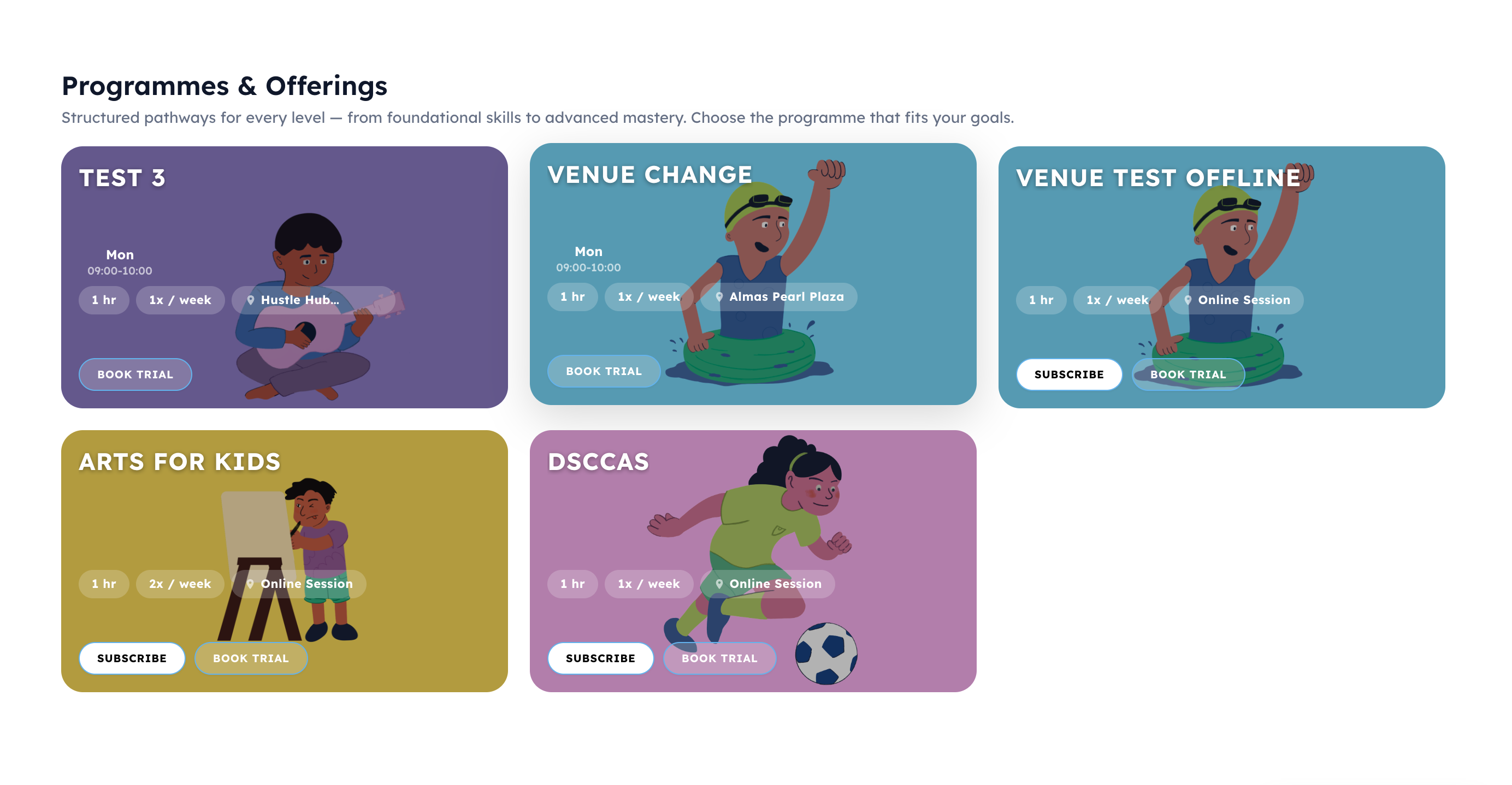
These requests are generated when someone visits your My Storefront website, views a program in the Our Programs section, and clicks Book Trial.
During the booking process, the visitor selects:
A specific batch or class
A preferred session slot
Their name and contact details
Once the form is submitted, the request appears in the Inbound → Trials tab inside Lynk Tower.
Because trials are connected to a specific class and session, they are treated as direct class booking requests.
What Are Leads?
Leads represent general inquiries from visitors who are interested in your services but have not selected a specific class or session.
These typically come from:
Contact forms on your website
Event registrations
General inquiry submissions
Lead capture forms
When someone fills out one of these forms, their information is recorded in the Inbound → Leads tab.
Leads usually include details such as:
Name
Phone number
Email (optional)
Message or inquiry details
Unlike trials, leads are not tied to a specific program or session slot.
Key Difference Between Trials and Leads
The main difference lies in intent and specificity.
Trials
Linked to a specific class or batch
Includes a selected session slot
Represents someone ready to try a class
Leads
General inquiries or interest
Not tied to a specific class
Often require follow-up to understand the visitor’s needs
How This Helps You Manage Inquiries
Separating trials and leads helps your team prioritize responses.
Trial requests typically indicate immediate interest in attending a class, while leads may require additional communication to guide the visitor toward the right program.
By organizing them into different sections, Lynk Tower allows you to quickly identify which inquiries are ready for a trial session and which are early-stage interest or questions.
Conclusion
In Lynk Tower, Trials and Leads represent two types of incoming inquiries from your website.
Trials are bookings for a specific class and session slot.
Leads are general inquiries, event registrations, or contact form submissions.
Understanding this difference helps you manage incoming requests more effectively and respond to potential students based on their level of interest.