Pricing Types: Duration-Based vs. Session-Based
Understand how to structure pricing using time-based, session-based, or hybrid plans.
Written by Swathi N
When creating pricing plans in Lynk, you’re not limited to choosing a single pricing type. The Plan Builder now allows you to configure pricing based on:
Duration (time-based)
Sessions (class-based)
Or a combination of both
Understanding these models helps you design pricing that matches how your classes are conducted.
What is Duration-Based Pricing?
Duration-Based pricing charges students for a specific time period, regardless of the number of sessions conducted within that period.
This works like a subscription model.
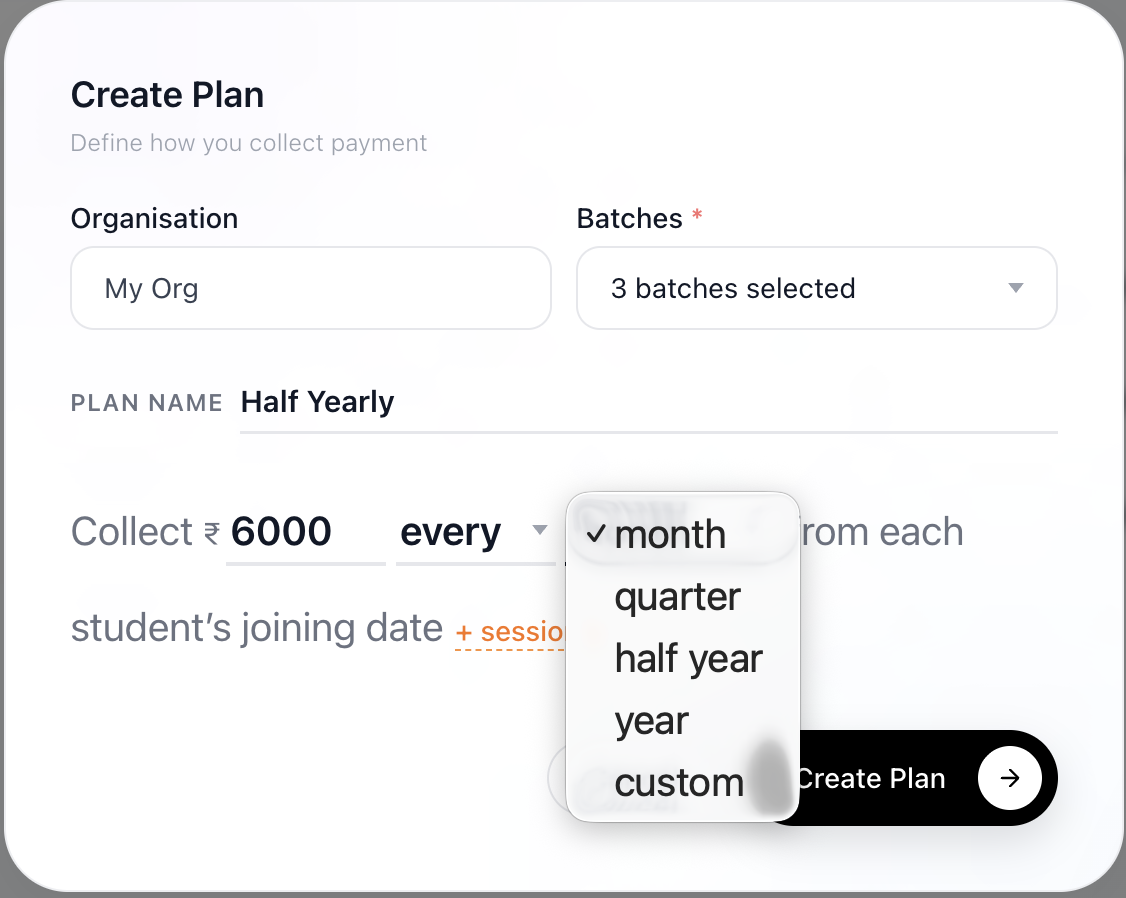
How Duration-Based Pricing Works
The student is charged based on a recurring time cycle
They can attend sessions scheduled during that period
Billing is independent of session count
Billing Frequency Options
You can define how often the payment is collected:
Monthly
Quarterly
Half-yearly
Yearly
Custom intervals
Billing Trigger Options
Duration-based pricing supports two billing methods:
1. Joining Date-Based (Rolling Cycle)
Charges are applied from each student’s joining date
Billing repeats based on the selected frequency using the “every” option
Example:
Collect every month from student’s joining date
2. Fixed Date-Based (Calendar Cycle)
Charges are applied on a specific date in a cycle
Billing is configured using the “on the” option
Example:
Collect on the 1st of every month or quarter
When to Use Duration-Based Pricing
This model is ideal for:
Subscription-based coaching programs
Ongoing classes with fixed schedules
Academies with regular monthly or quarterly fees
What is Session-Based Pricing?
Session-Based pricing charges students based on a fixed number of sessions.
Instead of paying for time, students purchase a defined session package.
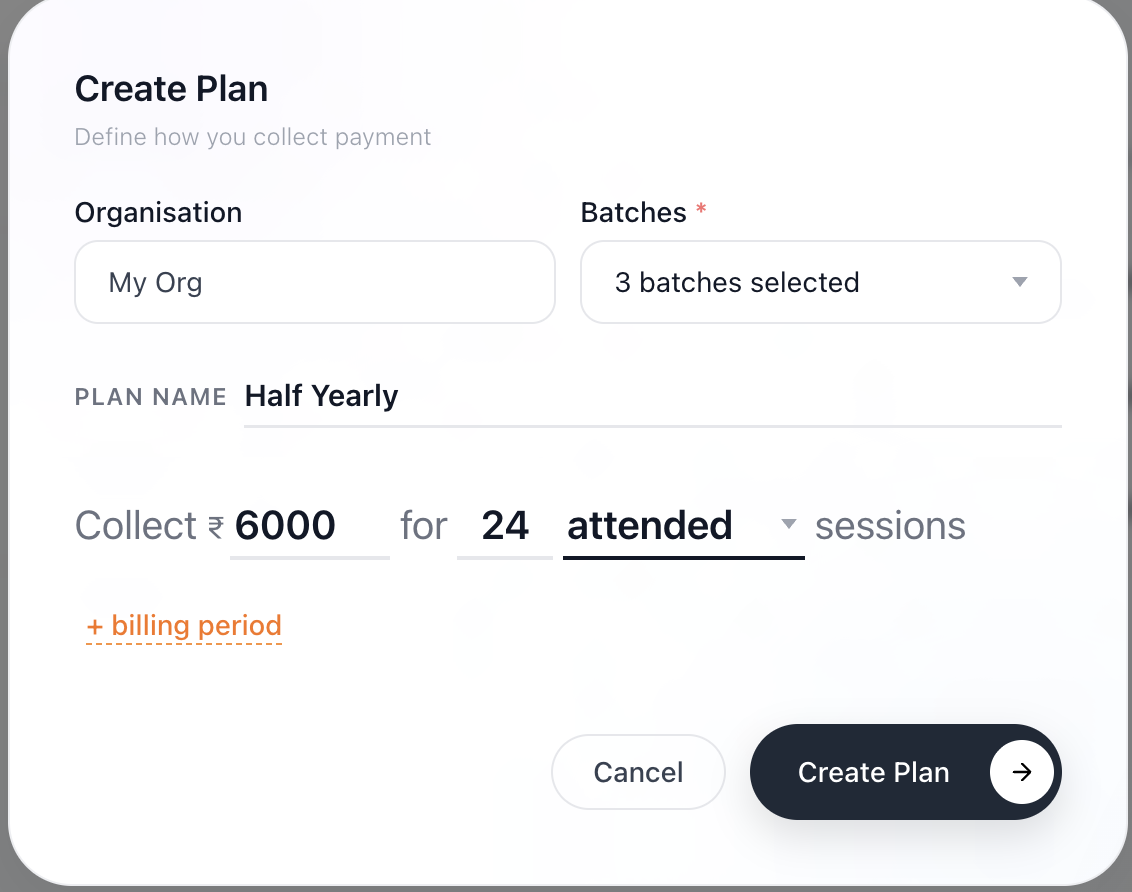
Number of Sessions
When creating a session-based plan, you must define:
The total number of sessions included
Examples:
8 sessions pack
10 sessions pack
12 sessions pack
This determines how many classes the student is paying for.
Session Rule: How Sessions Are Counted
You also define how sessions are deducted:
Conducted sessions
Attended sessions
Difference:
Conducted: Sessions are counted regardless of attendance
Attended: Sessions are counted only when the student is present
How Session-Based Pricing Works
The student purchases a fixed number of sessions
Sessions are tracked based on your selected rule
Once all sessions are used, the plan is completed
When to Use Session-Based Pricing
This model is ideal for:
Flexible learning schedules
Short-term programs or skill-based training
Trial packs or bundled class offerings
Combining Duration and Session-Based Pricing
Lynk also allows you to combine both duration and session logic in a single plan.
This gives you more control over how pricing is applied.
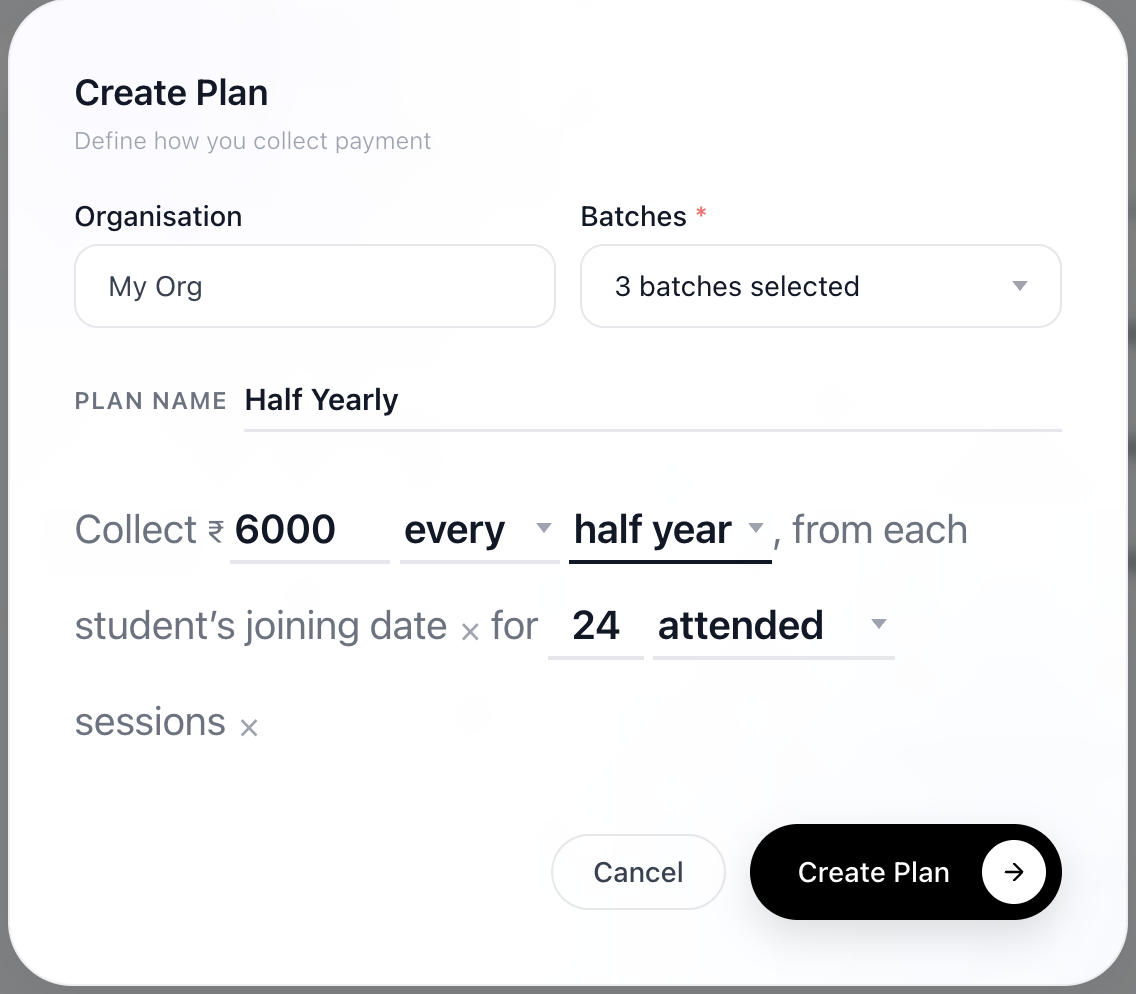
How Hybrid Pricing Works
You define a billing frequency (duration)
You also define a session limit within that period
Example:
Collect ₹2000 every month from joining date for 8 attended sessions
When to Use Hybrid Pricing
Use this when:
You want to limit sessions within a subscription
You want to balance time-based access with session control
You need more structured and controlled pricing models
Key Differences
Duration-Based | Session-Based |
Based on time period | Based on number of sessions |
Recurring billing cycle | One-time session pack |
Not dependent on session count | Requires session count (mandatory) |
Supports fixed or joining date billing | Supports conducted or attended tracking |
Choosing the Right Pricing Model
Use Duration-Based pricing when:
You run regular, ongoing classes
You want a subscription model
You prefer fixed or recurring billing cycles
Use Session-Based pricing when:
You offer class packages
You want to limit session usage
You need attendance-based billing flexibility
Use a Combination (Hybrid) when:
You want structured subscriptions with limits
You want better control over session usage
Your program requires both time and session constraints
Conclusion
Lynk’s Plan Builder gives you the flexibility to design pricing that fits your coaching model. Whether you choose duration-based, session-based, or a combination of both, you can define exactly how and when students are charged. This ensures your pricing remains clear, flexible, and aligned with how your classes are delivered.