What information a prospective student submits
When a prospect shows interest from a shared coach profile, Lynk opens a guided enquiry form that captures verified contact details and coaching intent. It’s simple for consumers, useful for coaches, and creates the lead record for follow-up.
Written by Sumit Kapoor
1. Basic identity details
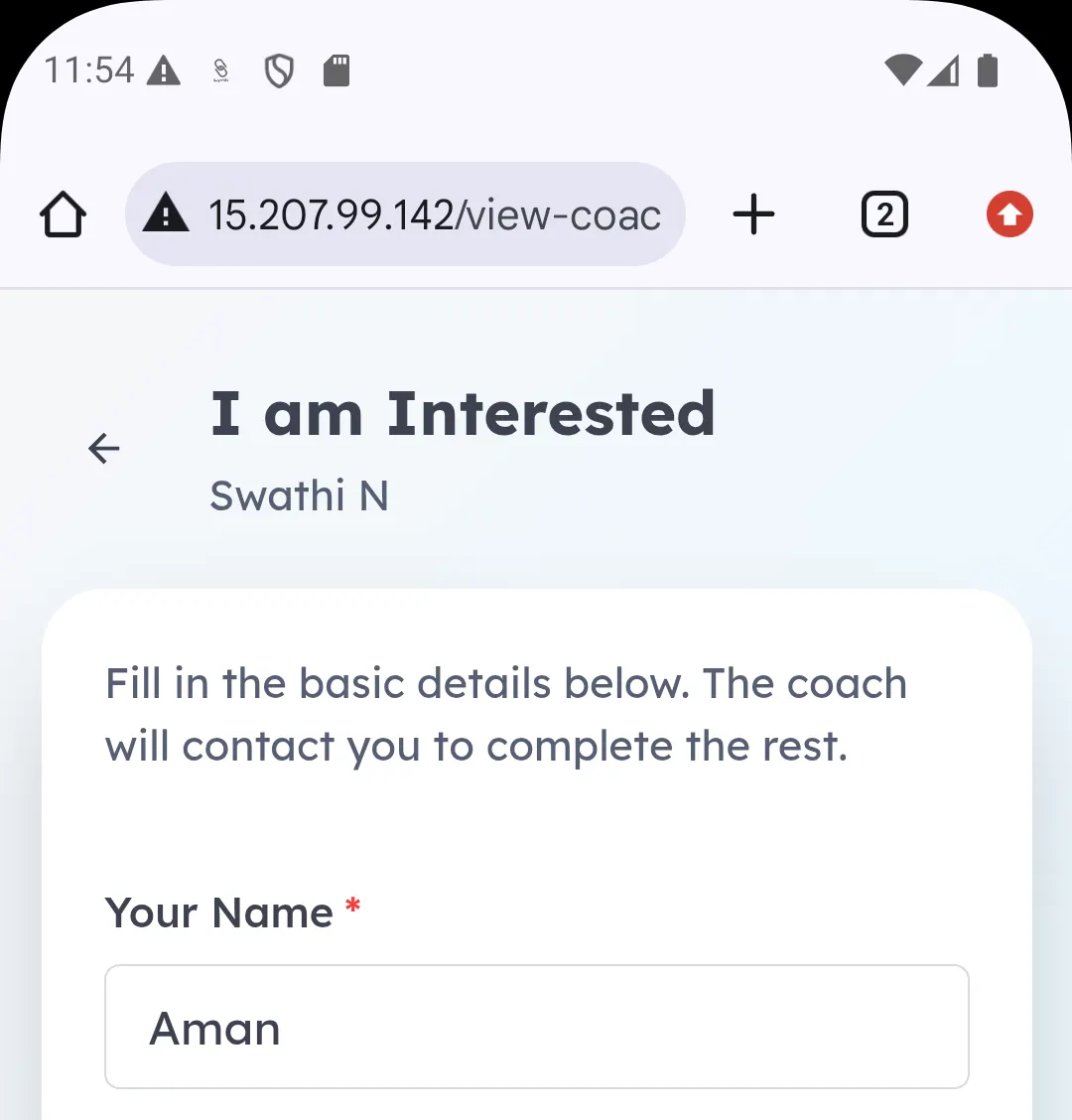
The first information collected is the consumer’s name. This establishes a personal identifier for all future communication and ensures the lead is not anonymous. It also helps the coach personalize outreach instead of responding to a generic request.
2. Verified contact information
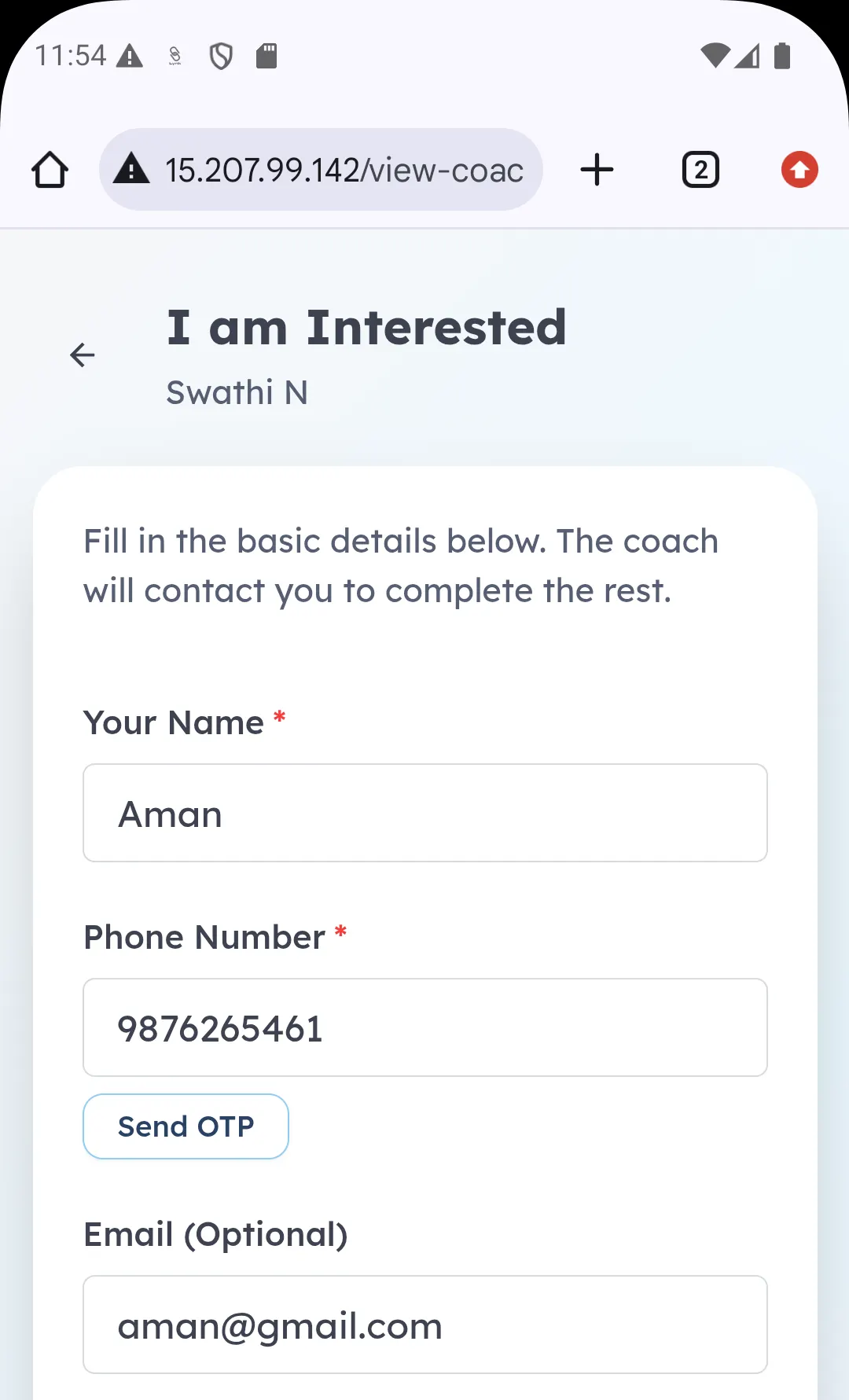
The enquiry requires a phone number, which is verified using an OTP flow. This step ensures that every lead created in Lynk is reachable and genuine. Optional email address input provides an additional contact channel if the consumer prefers email communication.
By validating contact details at the point of submission, Lynk reduces follow-up friction and avoids incomplete or unreliable enquiries.
3. Who the coaching is for
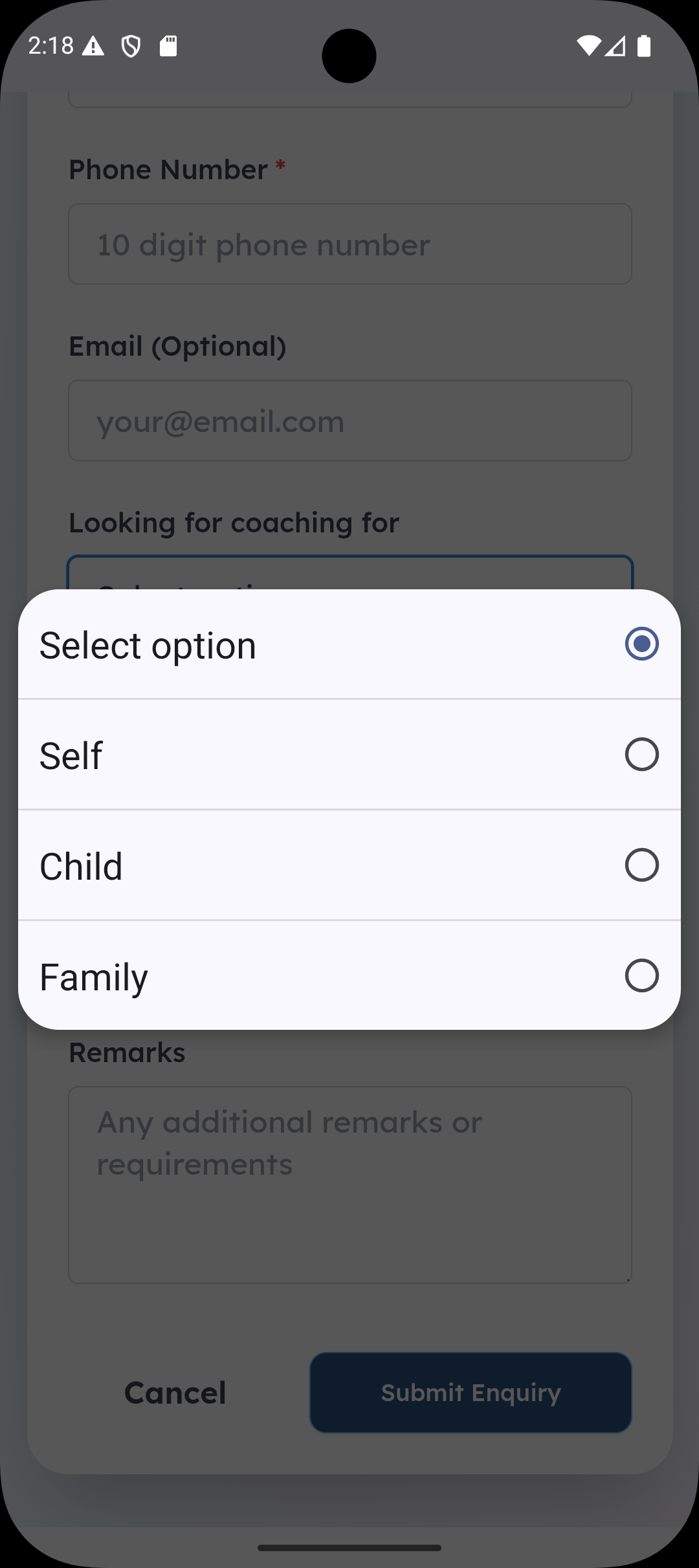
Consumers specify whether the coaching is intended for themselves or someone else. This distinction is important operationally, especially for coaches who work with children, teams, or family-based enrolments.
Knowing this upfront helps the coach ask the right follow-up questions and plan the next steps appropriately.
4. Subject or activity of interest
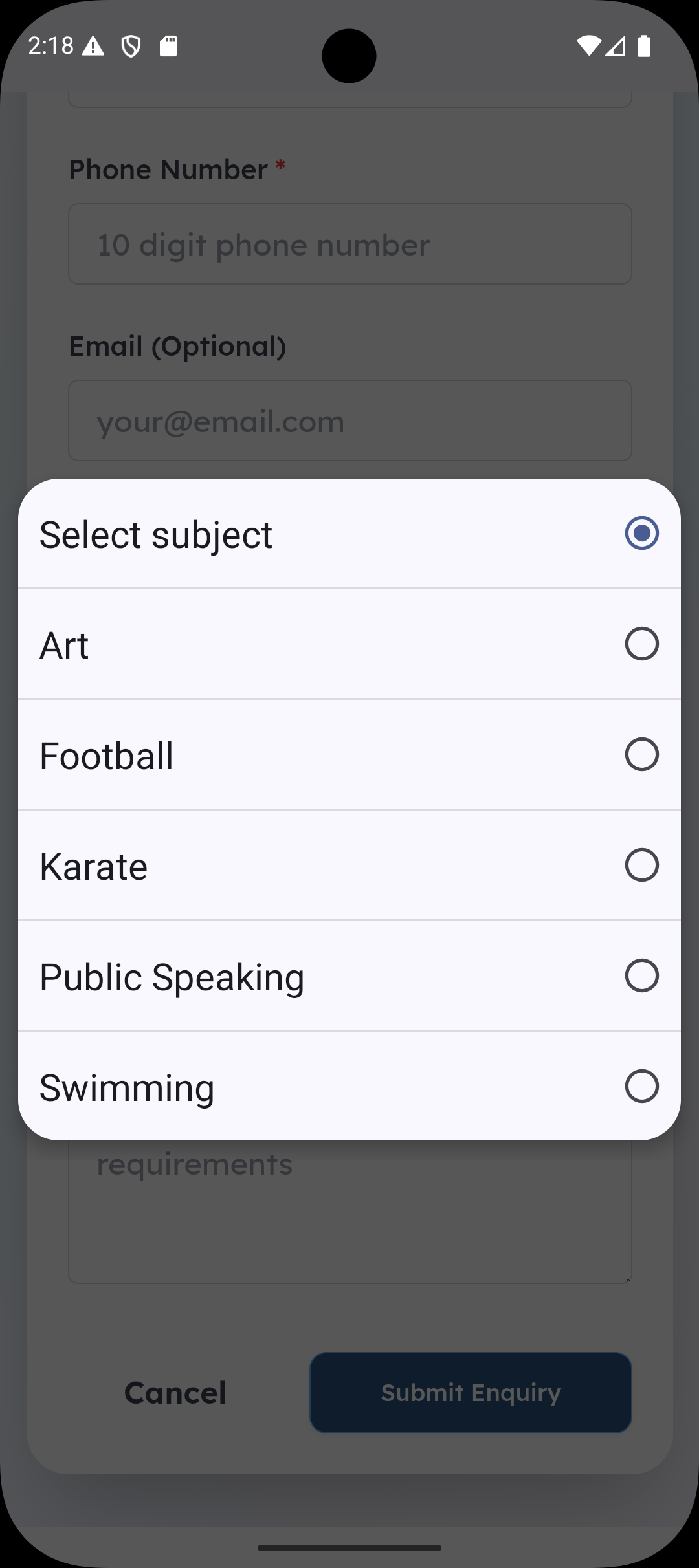
The form captures the subject or activity the consumer is enquiring about, such as football or swimming.
This ensures that each lead is clearly associated with a specific offering rather than being a generic interest signal.
5. Preferred mode of coaching
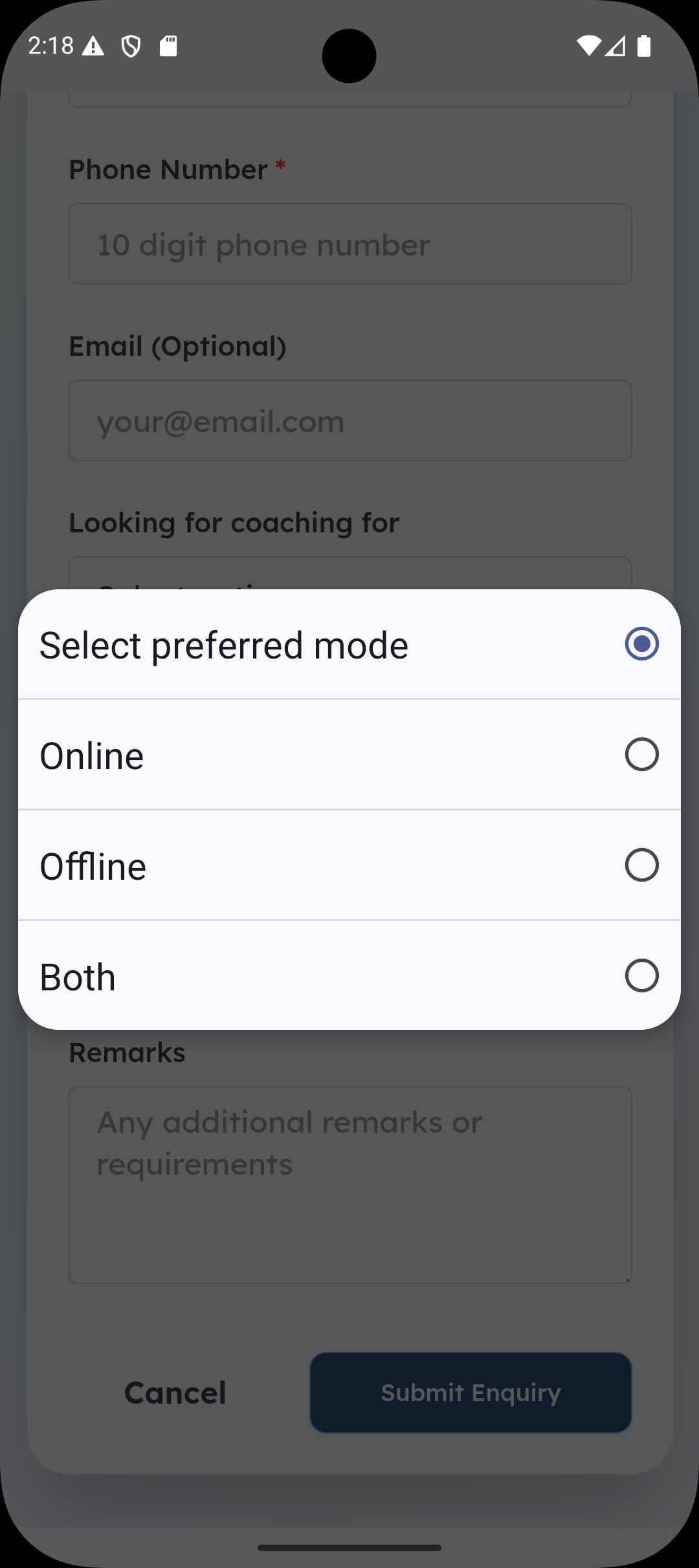
Consumers indicate their preferred mode of class, such as offline. This helps the coach immediately assess alignment between the enquiry and their current delivery model.
It reduces back-and-forth by surfacing expectations early in the conversation.
6. Additional remarks and context
An open remarks field allows consumers to share free-form details—such as preferred location, schedule constraints, goals, or special requests. These notes often provide valuable context that cannot be captured through fixed fields.
For coaches, this section frequently becomes the most useful part of the enquiry when planning the first interaction.
What happens after submission
Once the consumer submits the enquiry:
All provided information is stored as a lead in Lynk.
The lead appears in the coach’s Leads section with a pending status.
The coach can call, message, archive, or convert the lead when appropriate.
No enrollment, batch assignment, or student record is created automatically. The submission is intentionally treated as an interest signal, keeping the coach in control of when and how the relationship progresses.
Why this structure matters
By standardising what a consumer submits, Lynk ensures:
Leads are actionable, not vague
Coaches receive verified, contextual information
Follow-ups are faster and more relevant
Conversion decisions remain deliberate and informed
This enquiry flow creates a clean boundary between interest and enrolment, allowing coaches to manage growth without operational noise.
Summary
When a consumer submits an enquiry, Lynk captures:
Verified contact details
Who the coaching is for
The subject or activity of interest
Preferred coaching mode
Optional remarks and context
This structured submission ensures that every lead is actionable, genuine, and contextual, allowing coaches to follow up confidently while maintaining full control over conversion and enrollment.