What is a progress report
A progress report summarizes a student’s development using session records and coach inputs.
Written by Sumit Kapoor
Introduction
A progress report in Lynk is not auto-generated in isolation—it is coach-driven, evidence-backed, and context-aware.
The report reflects how a learner is progressing across technical and holistic skills, based on what the coach observes and records during sessions.
While Lynk provides structure and reference points, the coach remains the final authority on the assessment. The system ensures that all past data—sessions, attendance, and notes—are easily accessible while the report is being prepared.
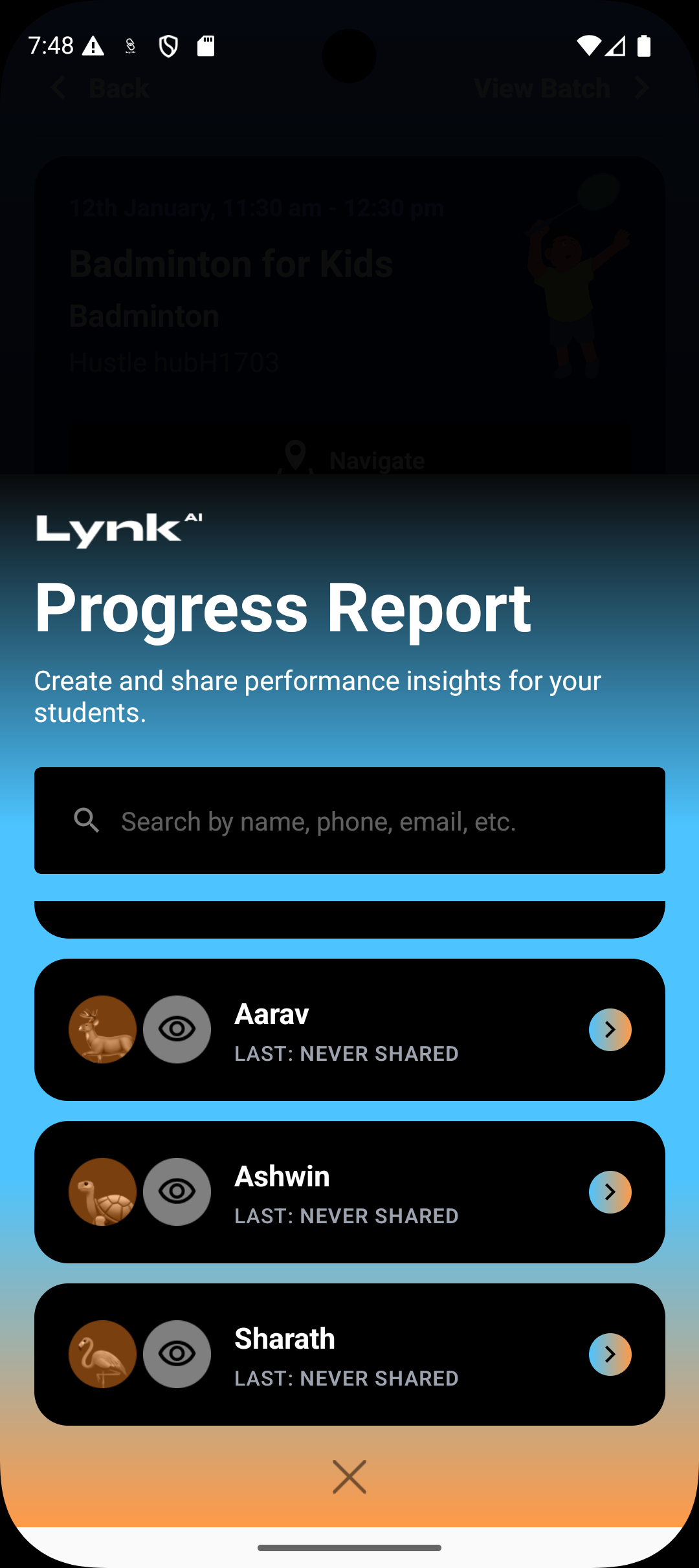
What the Progress Report Reflects
A snapshot of current ability, not just raw attendance
Growth across multiple dimensions including holistic skills, not only technical skills
Coach judgment supported by real session data
Clear milestones that are easy for parents and learners to understand
How Progress Reports Are Used
Progress reports serve multiple purposes within Lynk:
Coach reflection: Review what’s working and what needs adjustment
Student communication: Share clear, structured updates without manual write-ups
Student motivation: Show growth visually to encourage confidence and consistency
Program alignment: Ensure progression matches curriculum and batch goals
Reports are a timestamped view of progress —they evolve as new sessions and notes are added.
Summary
Lynk’s progress reports are designed to balance structured evaluation with coach expertise.
By combining coach-entered skill assessments with session attendance and historical coach notes notes, the platform ensures reports are accurate, contextual, and meaningful.
The result is a shareable, visual progress narrative that reflects both performance and participation, while keeping the coach firmly in control of the final assessment.