Sample Dance Curriculum for Beginners (Editable Template)
By Swathi N ·
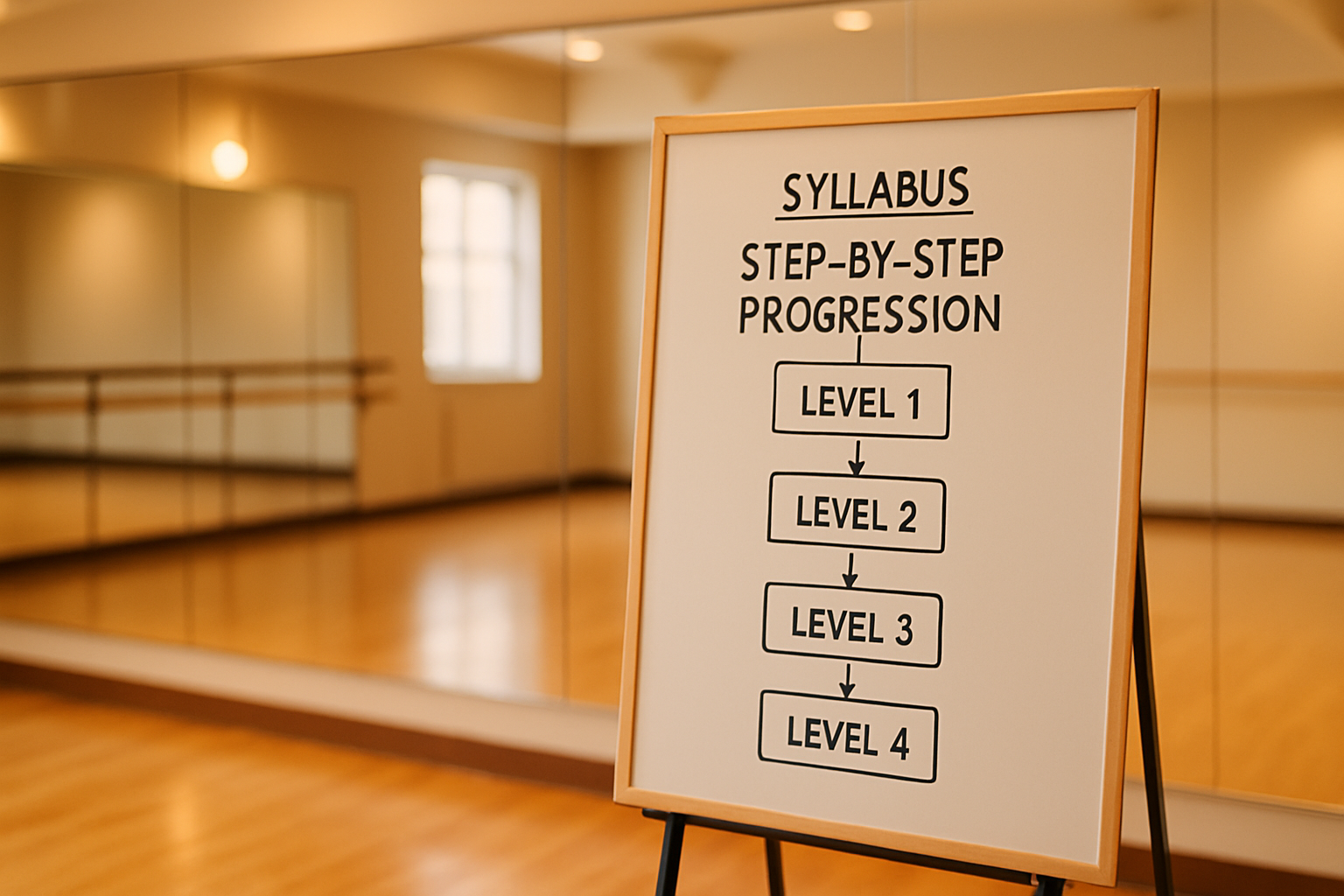
Got a room full of TikTok-trained beginners and complete newcomers? This 12-week dance curriculum handles both — editable, structured, and ready to use.
Picture the first day of a beginner dance class in 2026. Half the room has TikTok trends burned into their bodies — transitions, arm waves, that one viral footwork pattern — but ask them to do a plié and you'll get twelve different guesses, most of them wrong. The other half has barely moved intentionally at all. And somehow, you've got to teach them both.
That's exactly the situation this 12-week curriculum was built for.
Flexibility levels will be all over the place. So will rhythm, spatial awareness, and whatever physical habits students have already locked in from years of screen-watching. What they tend to share, though, is that gap between having seen a lot of dance and having actually felt any of it — the difference between recognising a clean tendu and understanding why your standing leg matters when you do one.
The plan is structured week by week and anchored to the National Dance Education Organisation (NDEO) standards framework — the Creating, Performing, and Responding strands, specifically — so you're not just handing students choreography to copy. Every session has a pedagogical reason for existing. By week 12, the goal isn't performance polish (it's twelve weeks, not twelve months). It's this: students can execute foundational technique across three movement qualities, hold rhythmic accuracy through a short phrase, and use basic kinaesthetic cues to assess their own movement. That's a real foundation. Everything else gets built on top of it.
How this curriculum is built
The biggest mistake in beginner dance curricula? Front-loading combinations before students have any idea what their bodies are actually doing. They're mimicking shapes without feeling them — and that gap doesn't close on its own.
This plan is built differently. Five principles run through every session, and they're worth knowing before you start adapting anything.
Spiral learning, not linear progression. Week one introduces postural alignment, weight transfer, and breath coordination. But those skills don't get "completed" and filed away — they keep coming back, embedded in harder contexts. A student revisiting weight transfer in week seven is doing something fundamentally different from week one, even if the label looks the same.
Body literacy before choreography. Can your student feel the difference between a lifted chest and a collapsed one? Can they find their centre of gravity before you ask them to shift it at speed? If not, combinations are just imitation. This curriculum holds off on movement vocabulary until that sensory foundation is actually there — which, yes, takes longer upfront and pays off significantly later.
The 10/70/20 drill ratio. Every session splits as follows: 10% warm-up activation, 70% skill focus (broken into two or three micro-drills), 20% cool-down and reflection. Traditional formats burn more time on warm-up. This one doesn't — because that recovered time goes straight into practice repetitions, which is where learning actually happens.
Error-first teaching. Before demonstrating correct form, teachers in this plan name the mistake. Out loud, specifically. "Most people collapse their standing hip right here — keep an eye out for that." Students who've heard the error described catch themselves. Students who've only ever seen the ideal version don't know what to look for.
Low-stakes assessment, every week without exception. No grades, no formal tests. Each session closes with a brief self-check or partner observation — small, habitual, genuinely useful. The goal is reflective literacy developing alongside physical skill, which maps directly to the NDEO's Responding strand. And if you want to mark the end of the 12-week programme with something tangible, Lynk's free certificate generator produces printable certificates in a few clicks.
Week 1–4: Foundation
Week 1
Here's something that surprises a lot of first-time dance teachers: week one isn't really about dancing at all. It's about getting students to understand where their body is in space — and honestly, that's harder than it sounds.
The whole session centres on two things: posture and spatial awareness. Neutral spine, plumb-line alignment, the difference between personal space and shared space. Before anyone skips or gallops across the floor, they need to know what their body is actually doing when they stand still.
Skills-wise, you're covering relevé (that's the heel lift) in both parallel and first position, plus locomotor travel — walks, skips, gallops — all in 4/4 time. Dead simple on paper. In practice, you'll have students wobbling all over the place, which is fine. That's the point of week one.
Structure the session like this: ten minutes of activation to open things up — shake-outs, spinal roll-downs, joint circles — then a solid twenty-minute skills block built around two drills: the alignment mirror check and relevé pulses. Finish with a five-minute cool-down, seated forward fold, breath cues, done.
Now, the knee thing. Almost every beginner locks their knees the moment they rise onto the balls of their feet during relevé — and yes, this matters more than you'd think, because it's a compensation pattern that'll cause problems later. The fix that actually works: cue "soft knees even at the top" and have them rest one hand on their quad so they can feel the muscle over-engaging. Proprioception beats correction every time.
For assessment, keep it low-stakes. Students hold neutral spine while a partner taps one shoulder — the question is just whether the stance collapses under that small disruption. No grades, no rubrics. Just "yes, holding" or "needs another look." That's it.
Week 2
Start week two with a call-and-response clapping game — ten minutes, no music yet, just you and the room finding a pulse together. Then move into the main block: chassé across the floor in two lines (twenty minutes), weaving in isolation work between runs. Finish with a neck release and quad stretch. Five minutes. Done.
The chassé is the centrepiece here, and it's where weight transfer stops being a concept and becomes something students can actually feel in their legs. Pair it with step-touch in both 4/4 and 3/4 time so they're not just learning a step — they're learning that the same step behaves differently depending on what the music is doing underneath it.
Body-part isolations sit alongside all of this: head nods, shoulder rolls, hip sways. These aren't warm-up filler. They're building the neurological habit of moving one thing without dragging everything else along for the ride — which is, quietly, one of the hardest things a beginner has to learn.
The clapping work deserves its own mention. Getting students to clap on the downbeat versus the upbeat — and to consciously hear the difference — is what separates rhythm-tracking from just moving to music. It's a small thing. It compounds fast.
Now, the mistake almost everyone makes with the chassé: they lead with the torso. The whole upper body shifts first and the feet scramble to catch up. When you see it (and you will), try this cue — "Your foot goes first, your body follows — not the other way." It tends to land faster than any technical correction.
For assessment, pair students up. One calls out "downbeat" while the other chassés, then they swap and compare notes. It's low-pressure, it's quick, and it tells you immediately who's actually tracking the rhythm and who's just moving.
Week 3
By week three, you're asking students to do something that sounds simple and isn't: breathe on purpose while they move. That's the through-line for everything this week — breath connected to movement, and movement spread across three levels (high, mid, low).
The skill list isn't long, but each item has depth. Pliés in first and second position. Swing kicks — battement dégagé-style, kept low, kept unforced. Level changes where count 1 means reaching upward and count 3 means sinking to mid-height. And then a structured improvisation built on an 8-count phrase that moves through all three levels. That last one is where things get interesting.
Here's how the time breaks down: 10 minutes of activation — breathing expansion work, rib-cage lift — followed by 20 minutes on the actual skills (plié sequences into level-change improv), then a 5-minute cool-down with a child's pose-adjacent floor stretch and calf roll. Simple enough structure. The challenge is filling the middle 20 minutes with something students can feel, not just execute.
And the thing most of them will get wrong? Holding their breath on the way down through the plié. Every single time. Cue an audible exhale on the descent — make it loud, make it obvious — and keep cueing it for the next few weeks until it stops being a conscious decision and just happens.
For self-assessment this week: can your students run through the full plié sequence without a mirror and still feel aligned? Not see it — feel it. That's the bar.
Week 4
By week four, you're probably wondering: when do we actually put this all together? The answer is now.
This is the week students perform their first real phrase — an 8-count combination you've designed yourself, pulling from everything covered so far. Step-touch, chassé, relevé, one level change. That's your raw material. The phrase gets learned on both sides (left and right), and you'll run at least one full pass as counts-only practice — no music, just voices counting aloud. It sounds tedious. It works.
Structure your 35 minutes like this:
- 10 minutes — activation warm-up drawing on the cues from weeks 1 through 3
- 20 minutes — phrase-learning in thirds: counts 1–3 first, then 4–6, then the full phrase
- 5 minutes — cool-down with a standing forward fold and wrist flexor stretch (from the floor work)
Here's what will go wrong: students will freeze mid-phrase to think. They'll stop, recalibrate, start again — and by the time they've figured out count five, the group has moved on. The fix isn't drilling them harder. It's changing what "wrong" means to them. Post this somewhere they can see it, or just say it out loud: "Wrong and moving beats right and frozen." Most of them will get it immediately.
To close the session, split into small groups of three or four. One person watches while the others run the phrase. Then rotate — and every observer has to share one specific thing they noticed. Not "it was good." Something they actually saw.
Week 5–8: Building
Week 5
The pivot foot problem. That's what kills Week 5 for most beginner groups — and if you don't deal with it upfront, you'll spend the entire session watching students spin off in random directions and wondering why nothing is sticking.
Here's what actually works: tape the floor before they arrive. Mark the pivot foot clearly, let them stand on it, feel it, shift their weight onto it — all of that before you ask them to move at speed. Once the foot is in the body, the turn makes sense. Skip this step and you're just drilling confusion.
The week's focus is directional changes and floor patterns — specifically, travelling on a diagonal (downstage right to upstage left), the grapevine step, and quarter and half pivot turns. Reading a basic floor-pattern diagram is also on the list, which sounds like a small thing but genuinely trips people up.
For structure, open with a 10-minute directional warm-up grid. Call out verbal cues — forward, back, diagonal — and let them move on command. It's simple, but it primes the body for exactly what's coming. From there, 20 minutes into the actual skills work: grapevine and pivot sequences across the floor, followed by the pattern diagram exercise (which is where you'll see quickly who can translate a drawing into movement and who can't). Close with 5 minutes of hip-flexor lunges and a side body stretch.
Assessment this week is clean and honest: students recreate a simple two-direction floor pattern from a diagram, no verbal coaching from you. What you're watching for is whether they can read the pattern and execute it independently. If you want to formalise that observation into your planning documents, How To Write A Lesson Plan Format Tips Samples And Examples has solid frameworks worth borrowing.
Week 6
Sharp is not stiff. That distinction is the whole lesson this week, and if you don't nail it early, students spend the rest of the session clenching their way through everything.
The focus is Laban effort qualities — specifically the contrast between quick/light punches and slow/heavy presses, and what happens when you apply that thinking to real choreography. You're also introducing sharp contraction-release in the torso and sustained arm waves, then asking students to take the phrase they learned in Week 4 and remix it with deliberate dynamic choices. Same counts, completely different feel.
Structure your 35 minutes like this:
- 10 minutes — activation via a pop-and-hold game set to music. Gets the room awake fast.
- 20 minutes — quality drills, then the phrase remix with students choosing their own dynamic approach.
- 5 minutes — cool-down: thoracic rotation and shoulder rolls tied to breath.
The error you'll see constantly: students hear "sharp" and immediately go rigid. Every joint locks up. Cue them out of it — "sharp has speed and intention, but the joint is still free." Say it more than once. It takes a few tries before it clicks physically, not just intellectually.
To close, each student performs the Week 4 phrase twice in a row — first fully sustained, then fully sharp throughout. Then a verbal debrief, just one question: what felt different? You'll get better answers than you expect.
Week 7
Here's something that catches teachers off guard in week seven: the moment you put two students together, everything they've learned individually starts to wobble. That's not a problem — it's actually the point.
This week is about partnering awareness and spatial negotiation. Not lifts, not choreography. Just — can you share a room with someone and actually pay attention to them?
The session opens with a trust walk (ten minutes). One partner closes their eyes; the other guides them across the floor using light touch or verbal cues only. It sounds simple. It isn't. You'll see students grip each other's arms like they're crossing a motorway, which tells you everything about how little they trust shared space yet.
Then you're into the skills block — twenty minutes covering two things. First: the mirror exercise, leader and follower working in silence across 32 counts. Second: call-and-response phrasing, where one student throws an 8-count phrase and their partner answers with their own 8-count. The third thread woven through both is kinesphere — keeping ownership of your personal space even while travelling close to someone else.
Watch the followers in the mirror exercise. Specifically, watch their eyes. Nine times out of ten they're anticipating — guessing what the leader's about to do instead of actually watching what they're doing. The fix isn't to tell them to focus harder. Slow the leader way down first. Make the gap between guessing and watching obvious. Speed comes later, once the reflex to react (rather than predict) is actually in the body.
Cool-down is five minutes: partners sit back-to-back and breathe into a shared stretch. Low-key, but it's a nice reset after twenty minutes of trying to read each other.
Assessment — and this one's worth doing — pairs share their call-and-response phrase with one other pair. The observers name one thing they noticed. Just one. It keeps the feedback specific and stops students from defaulting to "it was good."
Week 8
Start by extending the Week 4 phrase — you're taking it from 8 counts to 16, which means adding a turn sequence and a low-level floor touch. That's the task. Once students can move through all 16 counts without stopping, shift their attention to the music itself: where's the intro, where's the verse, where's the chorus? Then give them one 8-count window and ask them to choreograph it so the movement lands on a climax. Not near it. On it.
Here's how the session breaks down. Open with 10 minutes of pure listening — students draw the "shape" of the music on paper (jagged lines, peaks, valleys, whatever they feel) and then talk about what they noticed. It sounds abstract, but it works. Twenty minutes goes to the 16-count phrase and the musical mapping drill. Close with a supine spinal twist and some controlled breathing — 5 minutes, nothing complicated.
One thing you'll almost certainly see: students still counting out loud. By week eight, that habit should be gone. If it isn't, don't make a big deal of it — just say "Count inside. Trust yourself." and move on. Gentle redirect, no shame.
For the assessment, split the group in half. One half performs the 16-count phrase while the other watches — but here's the catch, each watcher is looking for one specific musicality moment, not the whole thing. Then they swap and report back. It keeps the observers focused and gives the performers something concrete to respond to.
Week 9–12: Integration
Week 9
By week nine, you're probably asking yourself: when do we actually let them pick a style? The answer is now.
This is the week you branch. Each track gets its own skill vocabulary — pick one and commit to it for the session.
Contemporary track covers contraction and release of the spine (Graham-adjacent work, if you want to name it), fall and recovery, a floor roll from standing, and a breath-initiated movement phrase. That last one is deceptively hard for beginners. Most of them hold their breath and muscle through it.
Hip-hop track: toprock step, two-step, body roll, groove box.
Folk track — basic clap pattern, step-hop sequence, circle formation, and a call-and-response structure drawn from whatever regional tradition makes sense for your group. You get to choose here, and that choice matters.
Structure the session as: 10 minutes of style-appropriate activation, 20 minutes on the actual skill drills plus folding those drills into the phrase material they already know, then 5 minutes of static stretching matched to whatever physical load the style put on them.
Here's the thing that will derail week nine if you're not watching for it. Students discover a style and immediately put on the face — the hip-hop pose, the floaty contemporary expression — before they've done any of the underlying work. It looks performed rather than inhabited. The cue that cuts through this faster than anything else: "Don't do the face — do the work, the face comes." Say it once, loudly, and you'll only need to say it twice more before it lands.
For assessment, have students film themselves on their phones (check your studio's policy first). One viewing. Then two lines written down: what worked, what needs fixing. That's it — keep it short enough that they'll actually do it.
Week 10
Week 10 is where things get real. Up until now, students have been collecting — moves, rhythms, spatial ideas, moments that worked. This week, they have to make choices.
The task: build a full performance phrase, 24–32 counts, drawn entirely from material covered in weeks 1 through 9. Not new material. Theirs. What they already know, edited down to what actually holds up.
That editing instinct is the real skill here — and it's harder than it sounds. Students need to identify the strongest elements from the past nine weeks, then figure out how to link sections so the transitions don't just happen but feel intentional. Spatial use matters too: are they actually moving across the whole room, or are they camped in one corner the whole phrase? Beginning and ending positions need to land. Both of them.
The session structure keeps it loose by design. Ten minutes of self-led activation to open — students run their own warm-up while you circulate, which by week 10 they should be ready for. Then a 20-minute phrase construction workshop with feedback pairs built in (two heads catch things one head misses). Close with a teacher-led full-body scan and floor rest, five minutes, nothing complicated.
Here's the error you'll see constantly: padding. Students hit count 18, panic, and start inserting filler steps to reach 32. It's avoidance dressed up as choreography. When you spot it — and you will — just say it plainly: "Less is fine. Every count should mean something." That usually lands.
Peer feedback closes the session. Three prompts only: What's clear? What's interesting? What's one question you have? Simple, but it keeps the feedback specific enough to be useful rather than just nice.
Week 11
The biggest mistake beginners make in Week 11? They freeze. One stumble, one forgotten arm, and suddenly they're staring at the floor — silently announcing to everyone watching that something went wrong. It's the single most common thing you'll see, and it's exactly what this week targets.
The real goal here isn't polishing choreography. It's rehearsing under conditions that actually resemble performance — an audience (even if that's just two classmates sitting on the floor), a proper entrance, a proper exit, and the expectation that when something goes sideways, you keep moving.
Skills to build this week:
- Performing in front of others without shutting down
- Entering and exiting the space with intention
- Recovering mid-phrase — cleanly, without telegraphing the error
- Projecting energy all the way to the back wall
Structure the class like this: 10 minutes of performance warm-up (voice activation, breath work, joint prep — not just stretching, actually waking up the instrument), then 20 minutes of full run-throughs with light feedback between each one. Keep the feedback brief. You want them running it again, not standing around overthinking. Finish with a 5-minute group discussion: what actually changes when someone's watching?
That discussion question matters more than it sounds. Most students can't articulate why they perform differently under observation — and just naming it out loud does something useful.
For the freezing problem specifically: drill intentional recovery. Have them make a deliberate "mistake" mid-phrase in rehearsal, then keep going without stopping, without wincing, without the apologetic face. Do it repeatedly until continuing feels like the obvious response. It won't feel natural at first. That's the point.
Assessment this week is a written teacher observation — one technical note per student, one performance quality note. Keep them separate. They're measuring different things.
Week 12
Week 12 is the finish line. And also, somehow, the starting point for everything that comes next.
The goal here is simple: perform the full 24–32 count phrase in front of others, then sit with what that felt like. That's it. No new material, no corrections mid-run. Just show the work.
The warm-up runs 15 minutes — keep it familiar, nothing that'll throw off muscle memory right before they go. Then 30 minutes of showcase performances. Then 15 minutes of reflection, written or verbal, your call depending on the group.
Here's the thing about the reflection piece: you're asking students to assess themselves against the NDEO Performing standard, which means they need to actually look at what they did, not just feel good or bad about it. The prompt that works best is something like — three things I can do now that I couldn't do in Week 1, and one thing I want to learn next. Concrete. Forward-facing.
Now, the mistake you'll almost certainly see: students who under-prepare the opening and closing four counts. They're mentally already in the middle of the phrase before they've even started. The beginning gets swallowed. The ending just... stops. What fixes this — reliably — is a pre-performance intention ritual. Breath. Focus. Find the starting position deliberately, not as an afterthought. It takes thirty seconds and it changes the whole quality of what the audience (and the student) experiences.
That self-reflection at the end isn't just a nice closure activity. It's the actual assessment. What they identify as their next technical goal tells you more about their growth than any rubric you could hand them.
Editable lesson plan template
Honestly, the simplest thing you can do is keep a template like this in your planning folder and just fill it in before each class. Nothing fancy — it's just a prompt sheet so you're not reinventing the wheel every week.
Copy the block below and make it yours.
Date: ____   Class: ____   Level: ____

Goal of session:

Warm-up (5–10 min):
  - Activation exercise:
  - Rhythm/listening cue:

Skill practice (20–25 min):
  - Drill 1 (name + count breakdown):
  - Drill 2 (name + count breakdown):
  - Common error to watch for:
  - Correction cue to use:

Cool-down (5 min):
  - Stretch sequence:
  - Reflection prompt:

Notes / observations:
  - Student(s) to follow up with:
  - What to adjust next session:
The two fields that actually save you the most headaches? "Common error to watch for" and "What to adjust next session." Fill those in right after class, while it's still fresh — not the night before the next one. You'll thank yourself later.
How to adapt for different levels
Beginner to intermediate transition. Start by looking at what they've actually built over 12 weeks: postural alignment, dynamic quality, rhythmic accuracy, a basic turn, a floor touch. That's a real foundation. The move to intermediate isn't about throwing harder choreography at them — it's about compressing and layering what's already there. Reintroduce the week 4 phrase at half-time. Add a full single pirouette. Push the partnering work into unison and canon structures. And here's the one that separates students who are ready from students who think they are: ask them to choreograph a phrase from a written score rather than copying a teacher demo. That task alone will tell you everything.
Scaling to 24 weeks for advanced students. Treat weeks 1–12 as Tier 1 — foundation and integration, nothing more. Then build a second 12-week arc on top of it. What goes in that second arc? Three things. Improvisation scores with actual structural constraints (time, space, energy parameters — not just "explore freely"). One style-specific technique studied properly in depth, like a six-week hip-hop foundations module covering toprock, footwork entries, and cypher format. And compositional principles: ABA structure, motif and development, spatial contrast. The full 24-week version works particularly well as a pre-audition or pre-competition prep programme. If you're invoicing students or studios for a multi-term commitment at this scale, Lynk's free fee invoice generator handles the admin without the headache.
Adapting for mixed-age groups. The structure holds. The language doesn't — and that's fine, that's the point. Under-10s don't need "plumb-line alignment"; they need "tall like a tree." Game-based drills in the skill block will do more work than any technical explanation you give them. Adults, on the other hand, actually want the explanation. Front-load the conceptual framing with older learners. They respond better once they understand why an exercise exists, not just what to do with their bodies.
Common pitfalls when teaching this curriculum
Here's something that trips up even experienced teachers: skipping the alignment baseline in weeks 1 and 2 because it feels too slow. It isn't slow — it's load-bearing. Students who never really internalise neutral spine will bake those bad mechanics into every drill that follows, and you'll spend weeks 6 through 10 unpicking habits that shouldn't exist in the first place. The shortcut costs more than the thing you saved time on.
Over-correcting once combinations get longer is the other big one. Week five onwards, the temptation is to stop and fix everything — and that instinct comes from a good place, genuinely. But pick one correction per student per class. One. More than that and they're no longer dancing; they're auditing themselves on every count, which is its own kind of paralysis.
The 10/70/20 drill ratio is a target, not scripture. Week seven especially — the partnering introduction — often needs a longer activation phase just to build enough trust in the room before anyone's willing to share physical space with a stranger. Read the group in front of you. Adjust.
Don't cut the cool-down.
The five-minute close gets sacrificed constantly in beginner classes when time runs short, and it's almost always a mistake. That's not just stretching time — it's where kinesthetic memory actually consolidates. Skip it enough and you'll notice students arriving to the next session with noticeably less retention than they should have. The pattern is consistent enough that it's worth protecting that window even when everything else is running long.
Last thing: the week 12 showcase should feel low-stakes, full stop. Small in-class audience, no grades, no parents filing in, no one hitting record for Instagram. The moment you change those psychological conditions — pressure, performance, judgement — you change what students are willing to risk physically. And willingness to take physical risks is exactly what intermediate training depends on. Undermine it here and you're starting the next phase with students who've learned to play it safe.
Frequently Asked Questions
What dance style does this curriculum cover?
Picture the first eight weeks: no style labels, no "this is hip-hop" or "this is contemporary." Just movement — weight shifts, spatial awareness, timing, the stuff that sits underneath every dance form you can name. That's deliberate. A student who's built a solid physical vocabulary in those early weeks will pick up folk, ballet-influenced work, or street styles far faster than one who got dropped straight into a specific genre on day one.
Week nine is where you make a call.
The curriculum opens a style track at that point — contemporary, hip-hop, ballet-influenced, folk — and you're the one who decides which direction fits your students and your setting. A community centre with mixed-age beginners needs a different answer than a school programme with teenagers. The template doesn't make that choice for you, and it shouldn't.
How long should each class session be?
The most common mistake? Cramming an hour-long class into forty-five minutes for older students — then wondering why the cool-down always gets axed. It doesn't. The cool-down gets axed because there was never enough time to begin with