How to Start a Table Tennis Academy: A 2026 Playbook
By Swathi N ·
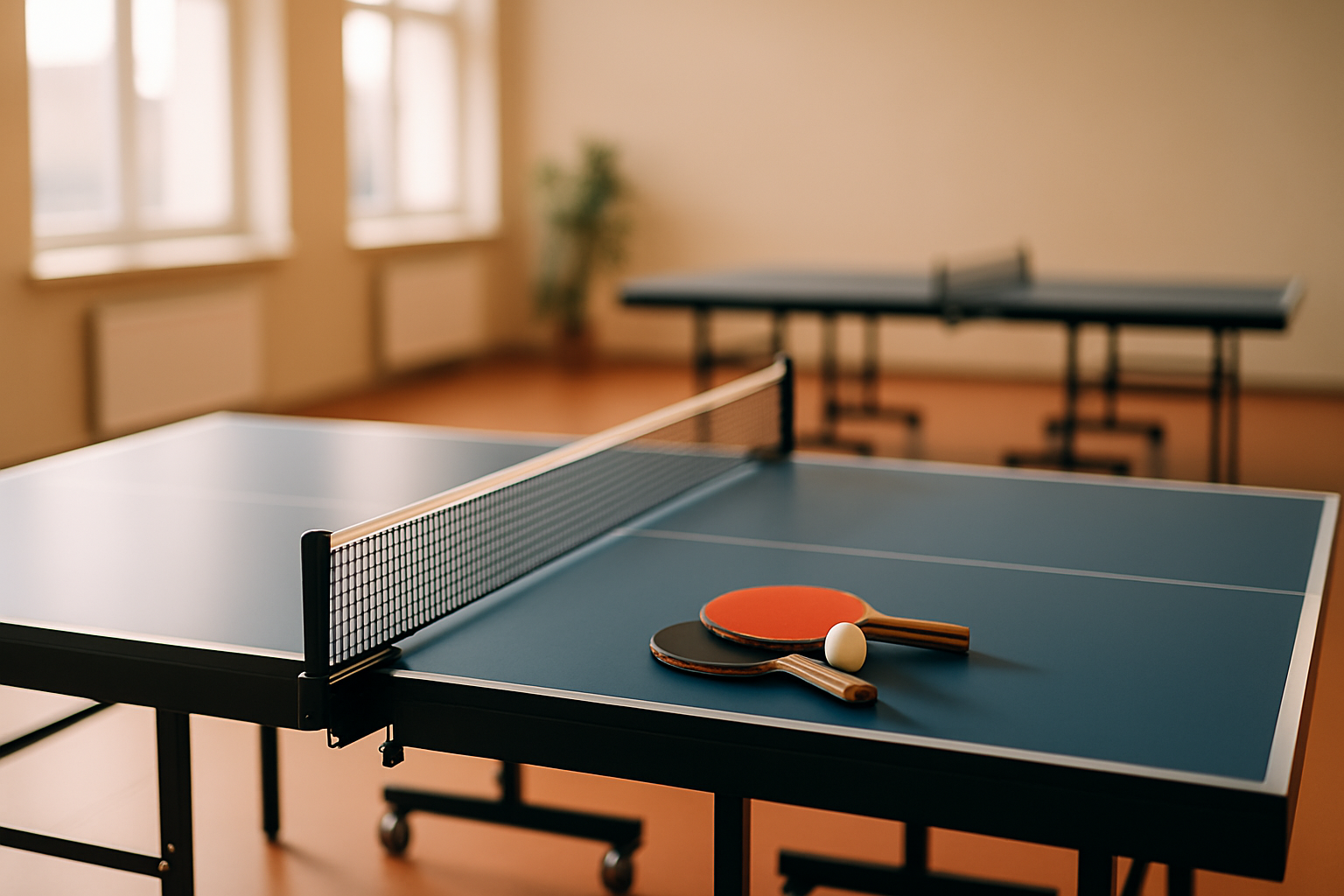
Starting a table tennis academy in 2026? Budget $3K–$12K, expect break-even by month 18, and follow this 4-phase playbook to land your first 50 students.
TL;DR: Starting a table tennis academy runs you roughly $3,000–$12,000 depending on how many tables you're fitting out and what your lease looks like. Break-even lands somewhere between month 8 and month 18 for most operators. The playbook has four phases: sort your legal and compliance stack, build the space and get the equipment in, design your curriculum and pricing, then go find your first 50 students through local outreach and digital channels.
Picture this: a mid-size gym in any Tier-1 city, somewhere between Chicago and Chennai and Manchester, and tucked into the back corner there's a table tennis table with a handwritten schedule taped to the wall. No coach. No structure. Just someone's mobile number and a rough idea of when the table's free. That scene is everywhere right now — and it's basically the entire business case for what you're about to build.
Here's what's happening in the market. Padel courts are overbooked. Pickleball has swallowed the 40+ demographic whole. And table tennis — faster than both, cheaper to set up than either, and genuinely skill-stacking in a way casual players notice within weeks — is quietly filling space in urban sports centres that don't know quite what to do with it yet. The demand is real. The coaching infrastructure isn't. That's the gap.
The unit economics are also just... good. Low capex compared to almost any other indoor sport. Small footprint per student, which means you can run a serious programme in a space that would be useless for most other activities. Session frequency is high — serious players want to come back three or four times a week, not once. And there's a competitive circuit (school, state, national) that gives your better students a reason to stay enrolled for years, not just a season.
That's the structure you're building toward. Here's how to actually do it.
Phase 1: Register the business and handle compliance
The biggest mistake new academy owners make? They put compliance on the back-burner and focus on the fun stuff — finding a venue, ordering equipment, booking their first students. And then six months in, they're operating without the right registrations and someone notices. That's not a fine-and-move-on situation. That's the kind of thing that shuts you down mid-term, with kids already enrolled and money already spent.
So do this first.
Business structure. In the US, an LLC is the default for a single-location academy — it caps your personal liability and you can set it up through your state's Secretary of State portal in an afternoon. Filing fees run $50–$500 depending on the state. In the UK, you can go sole trader or Private Limited Company; Ltd costs a little more to administer but landlords take you more seriously, which matters when you're trying to sign a lease on a sports hall. Australia: register as a company through ASIC or operate as a sole trader with an ABN. Whatever country you're in, the moment you're taking money from families with kids, you can't be an unregistered sole proprietor. The liability exposure alone makes that a bad bet.
Tax registration. US-based? Get your EIN from the IRS — it's free and takes about ten minutes online. Then check whether your state applies sales tax to sports services, because some do and some don't, and you don't want to find out after you've already set your pricing. UK operators: VAT registration kicks in at the £90,000 turnover threshold, but set your accounting up properly from day one regardless. In Canada, GST/HST registration is required once you cross CAD $30,000 in revenue.
Trade licence and premises permission. Most municipalities want a trade or business licence before you run any kind of sports facility — even a small one with three tables. In the US, that usually means your city or county clerk's office; budget $25–$200 per year. The one that catches people off guard is zoning. Some commercial spaces aren't actually permitted for "assembly" use — which is how regulators classify group sports coaching, not how you'd think to classify it yourself. Get written confirmation from your landlord that the space is correctly zoned before you sign anything. Verbal assurances don't hold up.
Child-safety policy. You will be coaching under-18s. Which means you need a formal safeguarding policy — a real one, written down, not a mental note. In the UK, that means following NSPCC guidelines and making sure every coach has a valid DBS check. In Australia, Working With Children checks are mandatory across every state, no exceptions. In the US, background checks through a service like the National Center for Safety Initiatives (NCSI) are standard practice — and most insurance carriers won't cover you without them. Write the policy, train your coaches on it, and put it somewhere visible. It's not just compliance; it tells parents you're running a serious operation.
Insurance. Non-negotiable. You need a policy that covers sports instruction, participant injury, and premises liability — general business cover often won't cut it. In the US, $1M per occurrence is typically the floor; a small academy should expect to pay somewhere between $800 and $2,000 a year. Sports-specific insurers usually offer better terms than generic providers, and if you're in the US, it's worth looking at USATT membership — it gives you access to group liability coverage, particularly useful once you're running affiliated competitions.
Phase 2: Space, equipment, and setup costs
Here's the blunt version: you need more space than you think. A table is 9 × 5 feet, but nobody actually plays on a bare table — add 5 feet of clearance on each end, 3 feet on each side, and you're looking at roughly 19 × 11 feet per table. That's about 200 sq ft per table before you've accounted for a single human being moving around. Six tables (a sensible starting point for a real academy) eats up 1,200–1,500 sq ft of playing area alone. Tack on reception, storage, and bathroom access and a commercial space in the 1,800–2,200 sq ft range is what actually gives you room to run the place.
Flooring matters more than most first-time founders expect. Polished concrete looks cheap and clean — it's also a liability waiting to happen. Players slip, knees go, and you'll hear about it. Sprung hardwood is the gold standard but the installation cost will hurt. The practical call: commercial-grade vinyl sports flooring (Taraflex and similar products), installed at $4–$8/sq ft. For a typical academy footprint, budget $6,000–$14,000.
Lighting is the one everyone ignores until a student misses a ball and complains. Table tennis requires high, evenly distributed overhead light with no glare — you're asking players to track a 40mm ball travelling up to 60 mph, and a single shadow across the table wrecks reaction time. LED high-bay fixtures, positioned specifically to cut glare, run $150–$400 per unit. You'll need six to ten of them.
Equipment costs, broken down:
- Tournament-grade tables (ITTF approved): $400–$900 each — budget $600 average × 6 tables = $3,600
- Table tennis robots for solo drill stations: $300–$1,200 each; start with two
- Loaner racket sets for beginners: $20–$50 per set × 20 sets = $400–$1,000
- Ball hoppers, net posts, and ball supply (Nittaku, Butterfly, or DHS 3-star balls): $500–$800
- Scoreboard and basic signage: $200–$400
All in — flooring, lighting, tables, equipment, basic fit-out — a 6-table facility in a mid-sized US city runs $15,000–$35,000 in upfront capex. Lower-cost markets (Southeast Asia, Eastern Europe, Tier-2 US cities where commercial rent is actually sane) can get you open for $8,000–$15,000. And if you're not ready to commit to a dedicated space yet, starting with 3 tables inside a shared gym to test demand first drops that number to $3,000–$6,000 before any lease-related costs enter the picture.
Phase 3: Curriculum and pricing
Here's something most academy owners figure out too late: the curriculum problem isn't what to teach eventually — it's what not to teach in the first two months.
Start with grip (shakehand or penhold, depending on your student), stance, forehand drive, backhand drive, and basic service. That's it. Coaches who get excited and introduce looping or spin variation in week two? They lose beginners fast. The first 8–10 sessions exist for one purpose: building consistency. Not variety, not spin mechanics, not rally tactics. Consistency.
Batching students. Group by age and level — not just age. A 12-year-old who's been playing at school for two years has nothing in common, technically speaking, with a 35-year-old picking up a paddle for the first time. Putting them in the same batch doesn't serve either of them.
Here's how most functional academies structure it:
- Junior beginners (ages 7–12): 6–8 students, 60-minute sessions
- Junior intermediate / competitive track (ages 10–17): 4–6 students, 90 minutes
- Adult recreational (18+): 6–10 students, 60 minutes
- Adult competitive / fitness: 4–6 students, 90 minutes
Two sessions per week is the floor, not the ideal. Below that, skill development stalls badly enough that students get discouraged and quit. Your competitive juniors will probably push for three or four sessions — let the timetable accommodate that. And when you're modelling revenue, think of the twice-a-week student as your baseline unit. Everything else is upside.
On pricing: monthly memberships retain students far better than pay-per-class. When someone's already paid for the month, they show up. When they pay session by session, skipping feels cheap and guilt-free. In the US, adult recreational batches (two sessions per week) typically land between $80–$150/month. Junior programmes run a bit lower — $60–$120/month — because that's where parents mentally cap discretionary spend. Don't fight that anchor. Private coaching, though, is a different story: 1:1 or 1:2 sessions can go for $40–$80/hour, and you should offer them from day one. In your early months, before batch numbers fill up, private coaching is what keeps the lights on.
One more thing: offer a free trial session. Yes, it costs you table time and an hour of coaching. But motivated prospects convert at somewhere between 40–60%, which is a genuinely good number for any service business. Don't make it casual — run it as a structured mini-lesson, not an open hit-around. Send them home with a printed skill-tracker and a clear fee breakdown. A tool like a free fee invoice generator means you can hand over something that looks properly professional without spending an hour building a document template.
Phase 4: First 50 students
Get your class management software running before you hit double digits. Seriously — don't wait. A WhatsApp group where you're manually ticking names off a list works fine for eight students and becomes a nightmare at thirty. Proper software handles batch scheduling, fee reminders, attendance, and parent comms all in one place. Retrofitting systems at student 50 is painful. Setting them up at student 10 is dead simple.
Google Business Profile. Before you open the doors — even while you're still assembling tables — get this live. Upload photos of the space mid-setup if you have to. List your services, your timings, your trial offer. Then go get 5–10 honest reviews from anyone who's done your trial session. When a parent in your city types "table tennis coaching near me" into Google, this is the result that shows up. Not your Instagram. Not your website. This.
WhatsApp Business is non-negotiable in most markets outside North America. Parents don't check email — not for this kind of thing. Set up a channel, write quick replies for your three or four most common questions (fees, batch timings, how to book a trial), and use broadcast lists for announcements. It takes about an hour to configure properly and saves you from answering the same message forty times a week.
School tie-ups are your fastest route to 20–30 students. Pick 5–8 schools within a 3-mile radius and visit them in person — email gets ignored. Offer a free 45-minute demo during a PE slot or lunchtime. Bring a robot if you have one. Run a speed-serving game. Make it loud and fun. One good school relationship can push 8–15 enrolments in a single month, and the kids tell each other. Always bring printed flyers with a QR code that links directly to your trial booking page — not your homepage, your booking page.
Instagram Reels. You don't need a massive following. What you need is consistency and local relevance. Post three times a week: a technique breakdown ("topspin serve in 30 seconds"), a rally highlight from your sessions, something behind-the-scenes. Use local hashtags. The algorithm will surface your content to users who already follow sports and fitness accounts in your area. Three posts a week, every week, will outperform one brilliant viral attempt every month.
Timing your acquisition pushes matters more than most coaches realise. Back-to-school windows — August to September in most of the Northern Hemisphere, January in Australia — are when parents are actively looking to enrol kids in activities. That's your moment. Run a "term starter" offer, something like 20% off the first month, and push it hard in the three weeks before school resumes. December's quieter for juniors, but adult sign-ups tied to New Year fitness goals are worth targeting with pre-enrolment campaigns.
If you want a deeper look at building local student pipelines, the tactics in 10 Steps To Starting Your Own Dance Studio — specifically the sections on community outreach and referral loops — translate almost directly to any coaching business.
Common mistakes new founders make
Here's the one nobody warns you about: too many tables on day one. Six feels professional. Six feels ready. But if your first cohort is four kids, you've got two tables collecting dust and a utility bill that doesn't care about your enrollment numbers. Open with three or four. Prove there's demand. Folding tables can be sourced and set up in under a week when you actually need them — that's not a constraint, that's just smart sequencing.
And then there's pricing. Most new founders undercharge — not because they've done the math wrong, but because quoting their own rate to a parent feels uncomfortable. Don't use your gut. Look at what swimming academies, badminton coaching centres, tennis programmes are charging monthly in your area. Table tennis coaching should sit in roughly that same band. Not below it. Below it signals something you don't want to signal.
The competitive pipeline problem hits later, but it hits hard. An academy built entirely around recreational play will plateau — students plateau, their motivation goes with it, and then they leave. You don't need a competition squad from day one. You do need a roadmap: local club leagues, district championships, USATT ratings events, something. Students who are training toward something stay enrolled three times longer than students who are just... showing up.
Adult retention deserves its own mention because it follows such a predictable pattern. Month one — enthusiastic, never misses a session. Month three — inconsistent, vague excuses. The fix isn't complicated, but it has to be deliberate: visible skill milestones they can track, informal in-house tournaments, partner pairings that create a little social accountability. People don't want to let down a specific person. Use that.
Certificates sound trivial until you see a parent photograph one and send it to the family group chat. For junior students especially, completing a skill level and getting a printed certificate is a real moment — and it quietly sets up your next re-enrolment conversation ("the next level starts in six weeks"). A free certificate generator handles the design side so you're not building templates in Canva at midnight, which — if you skip this — you will be.
Six batches a day, solo, will break you by month four. Coaching quality drops before you even notice it dropping. A part-time assistant coach — 12 to 15 hours a week — isn't a luxury you unlock once you're profitable. It's an operating cost you build in from the start, same as rent.
Last one. Word of mouth will drive most of your early growth, but it won't happen on its own just because you're doing good work. Give enrolled families a specific reason to refer: one free session credit for every new student they bring in who signs up. That's it. No complicated loyalty scheme, no app. Just a clear, tangible incentive — and it works.
Regional notes — US / UK / EU / India
Are you wondering whether any of this actually applies where you live? Fair question. The regulatory landscape shifts dramatically depending on which country you're setting up in — so here's what you actually need to know, region by region.
United States. USATT membership is your first call. It unlocks affiliate coaching resources, access to rated tournaments, and liability insurance pools — none of which you want to be scrambling for after you've already opened. The coaching certifications (Level 1 through Level 3) aren't legally required, but try telling that to a school partnership committee or a parent who's done their homework. Budget hard for your lease: mid-tier cities are running $15–$40 per sq ft annually, and that range is wide enough to make or break your model depending on where you land.
United Kingdom. Table Tennis England runs the coaching accreditation scheme — Tutor, Coach, Senior Coach — and that's the recognised standard, full stop. DBS checks aren't optional if you're working with under-18s; sort those before your first junior session, not after. One thing coaches often miss: sports facilities can qualify for business rates relief, which can meaningfully cut your premises costs. Your local council sets the eligibility criteria, so check early rather than assuming.
European Union. GDPR hits you from day one. The moment you collect a student's name, age, or payment details — which is literally session one — you're operating under data protection law. A WhatsApp group is not a compliant data management system, no matter how convenient it is. Use a class management platform that actually handles data properly. For coaching qualifications, ITTF-affiliated national associations (all ETTU member bodies) run their own licensing schemes, so check what your specific country requires rather than assuming it's uniform across the bloc.
India. TTFI's state and national competition calendar is genuinely useful here — if your academy sits in the right catchment area, it creates a real student pipeline rather than you having to manufacture one from scratch. GST treatment is the thing most new academies get wrong: coaching services under recognised educational institutions are currently exempt, but a standalone commercial academy is a different story entirely. Get specific advice on your structure before you invoice anyone. POCSO compliance is non-negotiable — written child-safe policy, trained staff, a functioning complaint mechanism. On the capital side, a 4-table leased setup in Bengaluru, Pune, or Delhi is realistically ₹4–9 lakh, with the spread coming down to flooring spec and equipment grade.
Frequently Asked Questions
How much does it cost to start a table tennis academy?
Here's the mistake most people make: they price this out once, get sticker shock, and either over-commit to a full build or under-invest in something that looks amateur from day one. Neither works.
The actual numbers aren't as brutal as you'd expect — if you're realistic about scope. A 3-table setup in a shared or leased space (the smart starting point for most first-timers) will run you somewhere between $3,000 and $8,000 all-in for equipment and fit-out. That's before lease deposits, which can sting, but the core build? Manageable.
Go bigger — a proper standalone academy, 6 tables, purpose-built flooring, decent lighting — and you're looking at $15,000 to $35,000 in most US markets. That's not pocket change, but it's also not the six-figure fantasy some consultants will try to sell you.
UK and EU founders: your costs land in roughly the same ballpark once you convert to USD equivalent. If you're setting up in India, the range tightens considerably — a comparable facility typically comes in at ₹4 to 10 lakh, which is where a lot of the most efficiently-run academies in the country actually started.
The fit-out cost is rarely where people go wrong. It's the lease deposit they didn't budget for, the lighting upgrade they assumed was included, the floor they thought could wait. It can't.
Do I need to be a certified coach to open an academy?
No law stops you from opening a table tennis academy without a coaching certificate. That's just the reality in most countries — there's no licensing board that'll shut you down for lacking one.
But credibility is a different matter entirely. USATT certification in the US, TTE accreditation in the UK, TTFI state coaching licences in India — these don't just look good on a website. Schools want to see them before they'll refer students. Parents notice. Competition organisers notice. The piece of paper signals that someone, somewhere, assessed your coaching and signed off on it.
If you're not planning to coach personally and you're hiring coaches instead, their certifications become your problem. An uncertified coaching staff is a liability — not legally, but reputationally. That's the distinction worth keeping in mind.
How long does it take to break even?
Here's something most people starting out don't want to hear: you probably won't break even for at least eight months — and it could take eighteen. That's not a failure timeline. That's just how batch-fill businesses work.
The maths, once you actually look at it, isn't complicated. Forty enrolled students paying ₹100 a month gives you ₹4,000 in recurring monthly revenue. That covers a modest lease, a part-time coach, and the lights staying on. Forty students. That's it. Not a packed centre with three coaches and a waiting list — just forty people who showed up and stayed.
What moves the needle faster? Running junior batches and adult sessions simultaneously, then layering private coaching on top. Operators who figure this out early — usually because they've watched a single-programme academy limp along for a year — tend to hit break-even well before month eighteen.
Fill your batches fast and you could be there by month eight. Fill them slowly and you won't. That's genuinely the whole equation.
What's the minimum space needed to start?
Three tables, 700–900 sq ft of usable floor. That's your minimum viable setup — anything less and you're not just cutting it close on safety margins, you're actively hurting the experience for students, and they will notice.
Technically, yes, you can coach on a single table in 200 sq ft of cleared space. But "technically possible" and "worth doing" aren't the same thing. Cramped halls kill retention. People stop coming back when they feel like they're playing in a cupboard.
Can't find 700+ sq ft at a price that makes sense? Don't sign a standalone lease out of desperation. The smarter move — and plenty of successful academies have started this way — is to approach an existing gym or community centre about using their space during off-peak hours. Lower commitment, lower risk, and it buys you time to build a student base before you take on a full-time facility.
How do I attract students in a market where table tennis isn't well known?
Nobody's asking "where can I learn table tennis?" — that's just the reality you're working with. So don't lead with the sport. Lead with what the sport does for people.
Parents aren't buying table tennis. They're buying coordination, sharper reflexes, better focus — and honestly, they're buying the fact that their kid is unlikely to come home with a torn ligament. Year-round indoor play doesn't hurt either. For adults, the pitch is different: it's competitive without being punishing on the joints, social enough to not feel like a solo gym grind, and genuinely good cardio if you play hard. Frame your messaging around those outcomes and you'll get a lot further than waving a paddle and hoping people already care about the sport.
School demos work. Corporate wellness tie-ups work. Local sports fairs — yes, those too. But here's the thing that most academy owners figure out only after they've spent money on ads: the highest-converting channel in almost every market is still someone telling a friend. A parent mentions it at pickup. A colleague books a trial after watching their officemate leave early for a session every Tuesday. That word-of-mouth engine is slow to start and then it isn't — so build the conditions for it early, even before your numbers justify it.
> Ready to run your academy like a proper operator? Start your free trial of Lynk — batch scheduling, fee tracking, attendance, and parent communications, all in one place. No spreadsheets.
If you're also thinking about a facility-based setup rather than a pure coaching model, the How to Start a Gym & Fitness Academy: A 2026 Playbook goes deep on lease negotiation, equipment financing, and member retention — worth a read alongside this one.