How to Start a Swimming Academy: A 2026 Playbook
By Swathi N ·
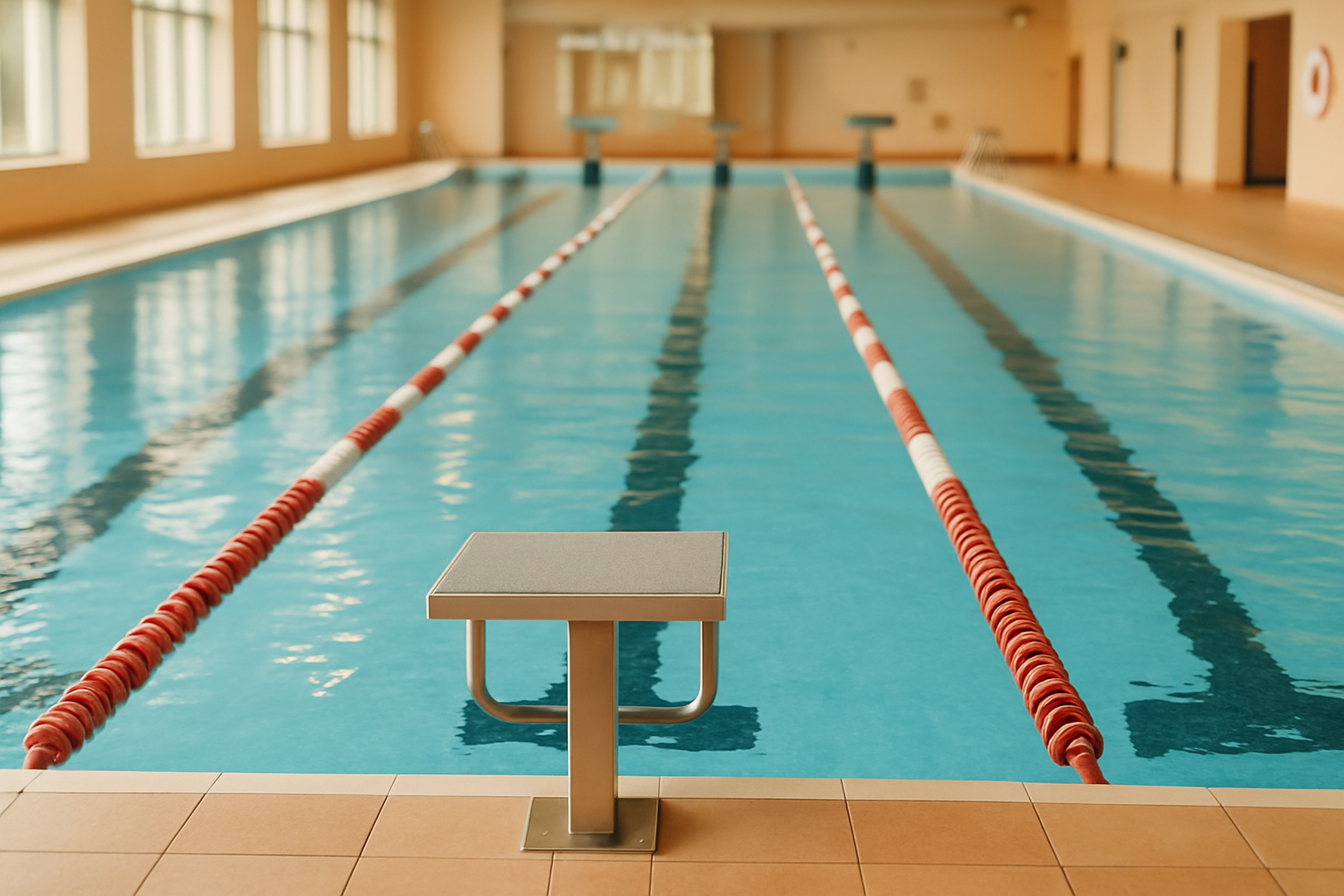
India's swimming academy gap is wide open in 2026. Here's how to fill it — from first costs to first batch — starting under ₹30,000.
Picture a Saturday morning at any mid-sized city pool in India right now. Three lanes roped off for casual lap swimmers, a birthday party inflatable taking up the shallow end, and somewhere in the middle — a group of eight-year-olds clinging to the wall while an underpaid lifeguard halfheartedly counts kicks. That gap, between "we have a pool" and "we have actual coaching," is where a swimming academy makes its money.
And that gap is widening. Urban families are enrolling kids younger than ever. Adult swimmers who've been doing the same sloppy freestyle for a decade are finally looking for structured instruction. The demand is real. The supply of properly run academies? Still catching up.
Starting one in 2026 is more achievable than most people assume — anywhere from ₹8,000 to ₹30,000 in capital expenditure, depending on whether you're leasing pool time or going all-in on a dedicated facility. Most operators hit break-even somewhere between month 9 and month 18. Not glamorous, but solid.
This playbook moves through four phases: legal setup, space and equipment, curriculum and pricing, and getting your first 50 students through the door. All four matter. Skip one — and it's almost always the legal bit or the curriculum, for some reason — and it tends to surface as a crisis around month six, right when you thought the hard part was over.
Phase 1: Register the business and handle compliance
Most people launching a swim academy get this backwards. They book the pool, design the logo, maybe even run a trial class — and then start thinking about registration. By that point, you're already exposed.
Here's the reality: aquatics compliance is genuinely more complicated than almost any other fitness category. It's not just a business licence and a GST number. You've got a water environment (inherently high-risk), you're almost certainly working with minors, and the liability exposure from a single accident — before you're properly covered — can be catastrophic. The paperwork isn't bureaucratic busywork. It's the thing standing between you and a lawsuit that ends the academy before it properly begins.
Sort this first. Everything else waits.
Business structure
Register as an LLC. That's it — that's the advice, full stop, for most solo founders in the US. It keeps your personal assets separate from your business liabilities, and when you're running kids through a pool, liability is not something you want bleeding into your savings account or your house. UK founders use a private limited company (Ltd); Australians go Pty Ltd. Same principle, different paperwork.
Sole trader or sole proprietorship structures are cheaper to set up, yes. But cheaper upfront often means expensive later — and most lawyers who've seen a single aquatic-facility incident will tell you the same thing: don't do it.
One thing people miss: if you're leasing pool time across multiple venues in different states or jurisdictions, you may need to register as a foreign entity in each of them. Don't assume one registration covers everything. Check.
Tax registration
Here's something most new academy owners find out the hard way: tax registration isn't one thing — it's several, and the order matters. Start with your federal or national tax ID. In the US, that's your EIN from the IRS. Free, online, done in ten minutes. Then sort out your state or provincial equivalents.
The sales tax question is where people get confused. If you're selling physical gear — swimwear, goggles, kickboards — you'll almost certainly owe state sales tax on those goods. But pure coaching services? Exempt from sales tax in most US states. The catch is "most." California, Texas, and New York each have their own logic here, so don't assume your neighbour's rules apply to you. Check your specific state's guidelines before you price anything.
Outside the US, the picture shifts. EU VAT thresholds differ country to country — there's no single number to memorise. In the UK, the current threshold sits at £90,000 turnover; cross that and VAT registration isn't optional anymore. Below it, registration is voluntary, but it's worth considering if you're buying a lot of equipment — you can reclaim input tax on those purchases, which adds up faster than you'd expect.
Trade license and premises permission
Get your business operating licence sorted first — this is separate from whatever entity registration you've already done, and most municipalities won't let you run commercially without it. If you're leasing lane time or renting space inside an existing aquatic centre, the facility's pool permits are their problem, not yours. But you still need your own licence. Don't assume their paperwork covers you. It doesn't.
Building or converting a dedicated pool is a different beast entirely. You're looking at building permits, pool construction permits, a health department inspection (water chemistry standards, fencing requirements, depth markings — they check all of it), and then ongoing compliance inspections after that. Not a one-time thing. Ongoing.
The inspection piece catches a lot of new academy owners off guard. You pass once, you celebrate, and then six months later someone's back with a clipboard. Budget time for this, not just money.
Child safety policy
And this is the part where a lot of first-time academy owners underestimate the paperwork — badly. If you're working with anyone under 18 (which, let's be honest, most swimming academies are), a formal child safeguarding policy isn't optional. It's not a nice-to-have you'll sort out later.
In the UK, that means aligning with Swim England's safeguarding framework and making sure every coach holds a current DBS (Disclosure and Barring Service) check. No exceptions. In the US, USA Swimming mandates background screening through their own background check programme for any coach working with age-group swimmers. Australia runs Working With Children checks — mandatory, and the specifics vary state by state, so don't assume one state's clearance carries over.
Don't wing this.
One incident — one complaint, one allegation, one situation where you can't produce the right documentation — and it's not just a fine or a suspension you're dealing with. It's the end of the business. Courts and licensing bodies don't look kindly on "we were still figuring it out." Get the checks done before your first session, not after your first problem.
Insurance
What happens if a student hits their head on the wall during a flip turn drill? Or a parent slips on the pool deck and breaks a wrist? These aren't hypotheticals — they're the exact scenarios that wipe out under-insured academies every year.
Three types of cover you can't skip:
- General liability — someone gets hurt at your facility and points the finger at you; this is what pays
- Professional liability (errors & omissions) — covers you when a coaching call you made becomes the basis of a claim
- Accident/medical coverage — pays out for student injuries during class, no fault determination needed
For US-based academies, you're looking at roughly $1,200–$3,500 per year in premiums. The spread depends on how many students you're running and whether you own or lease your pool. Bigger headcount, higher premium. Simple.
One more thing worth doing: stack an umbrella policy on top. A $1M–$2M umbrella typically costs an extra $300–$700 a year — and if you're running open-water sessions or a competitive programme, that coverage isn't optional, it's obvious.
Phase 2: Space, equipment, and setup costs
Space and pool specifications
The biggest mistake new academy founders make? Treating pool access like it's just another line item. It isn't. The infrastructure question — lease or build — shapes everything: your pricing, your schedule, your brand, your entire first three years.
Most academies start by leasing. Honestly, it's the smarter early move. You're negotiating block booking hours at a municipal aquatic centre, a hotel pool, or a private club — and in the US, that typically runs anywhere from $15 to $60 per hour per lane, depending on the city and what kind of facility you're dealing with. Capex stays low. But here's the trade-off nobody talks about upfront: you don't control the schedule, and your brand is always living inside someone else's building.
Building your own facility is a different animal entirely.
A 25-metre, 4-lane pool — which is the minimum you'd want for a structured academy with real batch programming — runs roughly $500,000 to $1.5 million to construct in the US, once you factor in the mechanical systems. Most early-stage founders aren't going this route without serious capital behind them or some kind of lease-to-own arrangement. If you do build (or are evaluating a shell space to retrofit), the checklist gets long fast: filtration and chemical treatment, non-slip pool deck surfacing (this is non-negotiable — both from a code standpoint and a liability one), changing rooms, a proper viewing area for parents, and ventilation. Indoor pool air quality isn't optional; it's a code requirement in most jurisdictions, and it's also just brutal to work in if it's wrong.
On the capacity side, plan your batch sizes around lane count — not total floor space, which is where a lot of people get confused. One standard lane (2.5 metres wide, 25 metres long) comfortably fits 4 to 6 students in a group lesson. That's your real unit of capacity.
Equipment list and costs
Here's what you actually need to buy, and what it'll cost you.
| Item | Approx. Cost (USD) |
|---|---|
| Kickboards (set of 20) | $200–$400 |
| Pull buoys (set of 20) | $150–$300 |
| Hand paddles (assorted sizes) | $100–$250 |
| Swim fins (set of 20 pairs) | $400–$800 |
| Lane ropes and anchors | $300–$800 per lane |
| Timing system (basic touchpad) | $1,500–$5,000 |
| Rescue equipment (ring buoys, spine boards, AED) | $1,000–$2,500 |
| Instructor platforms / lifeguard chairs | $300–$800 |
| Whiteboard or display for sets | $50–$150 |
| First aid supplies (ongoing) | $100–$200/year |
For a 4-lane setup, that puts your total equipment capex — not counting pool construction or lease deposits — somewhere between $4,000 and $11,000. The timing system is the big swing factor. Skip the touchpad early on if cash is tight; a stopwatch works fine until your programme is actually filling lanes.
If you're leasing pool time (which most first-time academy founders are), the real number to plan around is your all-in startup figure: entity setup, insurance, equipment, a modest marketing budget, and three months of pool rental. That typically lands between $8,000 and $20,000. Tight, but doable.
Purpose-built facility? Different conversation entirely — budget $600,000 to $1.8M and find a different guide. This section is for the person who's renting a pool on Sunday mornings and trying to make the numbers work.
Phase 3: Curriculum and pricing
What to teach first
Water safety first. Always. Then freestyle, backstroke, breaststroke — in that order. That sequence isn't arbitrary; it maps directly onto what your students actually need, from "don't drown" to "swim a length without stopping."
Butterfly? Leave it alone until you've built a competitive track. Most recreational swimmers will never need it, and introducing it too early just muddies the water (no pun intended) for everyone else.
Here's the other thing that trips up new academies: they design ten levels. Don't. Three or four is enough — and it keeps students from feeling like they're stuck in purgatory between Level 4 and Level 5 for six months.
What those levels should actually look like:
- Beginners — water confidence, floating, basic kicking. The goal is just getting comfortable in the pool.
- Intermediate — all four strokes, basic technique. Not perfect, but functional.
- Advanced — stroke refinement, turns, starts, introductory training sets.
- Competitive — periodised training, race strategy, the whole structure.
When the progression is this clean, students know exactly where they stand and what they're swimming toward. That clarity matters more than you'd think — both for retention and for managing parent expectations.
Batch structure
— and this is where most academies leave money on the table — the batch breakdown matters more than people realise.
Here's how it typically shakes out:
- Tadpoles (3–5 years): Pre-beginner level, parent in the water with them. Keep it tiny — 4 to 6 kids max.
- Guppies (6–10 years): Beginner to intermediate. You can push to 6–8 per batch without losing quality.
- Dolphins (11–16 years): Intermediate through advanced. A little more flexibility here — 6 to 10 works fine.
- Adult Lanes (18+): Run separate batches by level. Sizes between 4 and 8 tend to work well.
- Masters (30+): Fitness-focused swimmers. Small groups — 4 to 6 — and they prefer it that way.
Now, the adult and masters batches. Most academies barely bother with them. Which is a mistake.
Adults are chronically underserved in recreational swimming — there just aren't enough programmes for them — and once you've got them, they stick around. Kids age out. A 38-year-old who's finally learning freestyle doesn't "graduate" and disappear; she books the next term, and the one after that. Retention is genuinely easier, and the batches are smaller, which means lower overhead per slot.
Don't treat adult batches as an afterthought you'll get to eventually.
Class frequency and pricing
How often should students actually train? It depends entirely on what they're trying to get out of it. Recreational learners — the kids learning basic strokes, the adults finally conquering their fear of deep water — do fine with two sessions a week. Competitive swimmers are a different story. Once they're on a serious programme, you're looking at four to six sessions per week, sometimes more.
Pricing (group classes, US market) typically shakes out like this:
- Recreational group lessons (4–8 students): $120–$280/month for twice-weekly sessions
- Semi-private (2–3 students): $250–$450/month
- Private 1:1 lessons: $60–$120 per session
- Intensive summer programmes (daily, 2-week format): $300–$600 per student
Free trials convert unusually well in aquatics — and there's a specific reason for that. The barrier to trying is high. Parents are nervous about water safety, genuinely anxious about handing their child over to a stranger at a pool. One good session does more than any brochure ever could. Offer every new student one free trial class. One. Cap it there deliberately, because unlimited free trials will reliably attract people who were never going to pay you anything.
On the admin side: get a proper system in place before your first intake, not after. Swimming academies juggle more moving parts than most — multiple age groups, lane assignments, safety records, progress notes, all at once. WhatsApp payment screenshots aren't tracking any of that. Use a free fee invoice generator for receipts and invoicing from day one; it's the kind of thing that looks minor until suddenly it very much isn't.
Phase 4: First 50 students
Google Business Profile
Most academy owners set up their Google Business Profile after they open — sometimes weeks after. By then, you've already missed the window when early families are most likely to leave a review without being chased down for one. Get it live before your first lesson happens.
For the category, you're looking at "Swimming Instructor" or "Sports Club" — whichever Google's taxonomy actually lets you select at the time you're setting it up (it shifts occasionally). Don't overthink this. Pick the closest fit and move on.
Photos matter more than most people expect here. Pool shots, coaches on deck, kids mid-lesson — these aren't just decoration. They're the visual proof that yours is a real, functioning facility and not a listing someone abandoned after two weeks.
The make-or-break factor, though? Reviews. That first batch of 10–15 determines whether you appear in local pack results at all — and local pack visibility is how most families in your area will find you. Every early student family needs a nudge. A WhatsApp message after their first week, a quick word at pickup — whatever works for your demographic. Don't assume they'll do it unprompted, because most won't.
WhatsApp Business
Set this up before your first batch starts. Not after. A WhatsApp Business account with a dedicated parent broadcast list should be ready on day one — use it for reminders, schedule changes, last-minute cancellations, progress notes, whatever needs to reach parents fast.
And whatever you do, don't run it off your personal number. It feels harmless at first, but the moment you mix business and personal on WhatsApp, you've created a problem you genuinely can't fix later — parents start texting you at 11pm, you can't mute without missing something real, and separating the two accounts down the line is more trouble than it's worth.
Keep them separate from the start. That's the whole tip.
School and club tie-ups
Here's something most new academy owners figure out only after struggling through their first few months of paid ads and pamphlet drops: the fastest pipeline isn't marketing at all. It's a phone call to the primary school three streets away.
Go within a 5km radius — schools, community centres, anyone who works with kids. The pitch is dead simple: offer a single 45-minute water safety session, free of charge, no strings attached. Sounds like charity. It isn't. It's acquisition, and fairly efficient acquisition at that. Academies that get this right end up filling 30–40% of their first few batches just through one or two of these school tie-ups.
Don't stop at schools, though.
Little league sports clubs, triathlon clubs, water polo associations — all of them are worth a conversation. The relationship goes both ways. They send swimmers to you when kids need proper stroke training; you refer children to them when a student's ready to compete. Nobody's competing with anyone. You're just building a referral loop that costs nothing to maintain.
Instagram Reels strategy
Three Reels a week during launch month. That's the baseline — don't negotiate with yourself on this one.
Underwater footage is what stops the scroll. A 15-second clip of a five-year-old figuring out how to float for the first time? Parents don't just watch that — they feel it. They've lived that exact moment, or they want to. That's your hook, and it costs you nothing except remembering to hit record.
Tag your location on every single post. Every one. People searching for swim classes in your area will find you through those tags — and they're already warm leads by the time they do.
One thing that kills swim academy Reels: generic fitness content. Stock-looking footage, motivational text overlays, nothing that says this pool, these kids, this coach. Don't do that. Your content should be so specific that someone who's been to your facility would recognise it immediately. Your coaches. Your lanes. Your students (with written parent consent on file, obviously). That specificity is what builds trust before anyone's even sent you an enquiry.
Festival-season and seasonal acquisition
— and this is where most new academies leave money on the table without realising it.
Timing your enrollment push matters enormously. In the US, the April–June window is when parents are actively searching for swimming lessons — not January, not August. March is when you want your early-bird promotion running, not April. A $20 discount tied to a hard deadline moves more registrations than a glossy flyer ever will. Simple, slightly uncomfortable truth.
If you're operating in a market with a proper monsoon season or a school calendar that doesn't follow the Western template, don't just copy what US academies do. Map your acquisition calendar to the rhythms your parents actually live by. The principle is the same; the months are different.
One thing that catches academies off guard: they hit 40–50 students while still running on a patchwork of WhatsApp messages and colour-coded spreadsheets. By month four, someone's rebuilding the whole system under pressure during peak enrollment. Not ideal. Getting a management tool like Lynk in place before you reach that threshold means your seasonal campaigns actually function — student tracking, batch management, parent communication, all of it running before you need it to run hard.
Worth a look, too: 10 Steps To Starting Your Own Dance Studio. It's not aquatics, obviously — but the operational bones around batch scheduling, parent retention loops, and communication cadence translate almost directly. Sometimes the clearest view of your own industry comes from looking sideways at a different one.
Common mistakes new founders make
Here's a question worth sitting with before you go any further: what's the most likely reason your academy fails in year one? Not bad marketing. Not the wrong age groups. Probably one of these.
1. You sign up students before you've locked down pool time. This one's brutal because it feels fine — until it isn't. Municipal pools bump your lanes for a swim meet and your whole week's schedule collapses. Before you market a single spot, get a minimum 12-month lease agreement, signed, in writing. Not a verbal understanding. Not an email saying "should be fine." A contract.
2. Forgetting that a lifeguard isn't the same person as your coach. Most jurisdictions legally require a certified lifeguard on deck during instructional sessions — and no, your coach doesn't count. That's an extra body, which means extra payroll. In the US, lifeguards typically earn $15–$20 an hour. Run that at 20 hours a week and you're looking at $1,200–$1,600 a month before a single coach gets paid. New founders miss this constantly.
3. Throwing everyone in the same batch. A 4-year-old who won't put her face in the water. A 10-year-old who can already swim a length. Same session. What you get isn't teaching — it's crowd control, and both kids leave frustrated. Level segmentation from day one isn't some nice-to-have pedagogy thing. It directly reduces churn. Students stay when they feel appropriately challenged, not when they're bored or terrified.
4. Running sessions with no liability paperwork. A child swallows water and panics mid-lesson. The parent, two weeks later, claims the session was traumatic. If you don't have a signed liability waiver on file and a written incident report from the day it happened — you're exposed. Both systems need to be in place before lesson one. Not lesson two. One.
5. Guessing on pricing. The nervousness is understandable — nobody wants to scare off their first batch of students. But underpricing doesn't fill your roster with grateful families. It fills it with the wrong families, and it signals that something's off. Check what established aquatic centres in your area are charging. Price within 10–15% of that. Pricing dramatically below market doesn't attract more students; it attracts the ones who'll leave the moment someone cheaper shows up.
6. Having no way to show parents their child is improving. Parents are paying for outcomes, not hours in the pool. If you can't say "your son moved from Level 2 to Level 3 this month, and here's what that means for his development," you'll lose them to an academy that can. A free certificate generator handles the visual recognition piece — but the underlying progress framework has to be baked into your curriculum from the start, not retrofitted later.
7. Launching competitive and recreational programmes at the same time. They look similar. They're not. Competitive swimming runs on periodised training cycles, meet scheduling, and higher-level coach certifications — USA Swimming certification versus a basic water safety instructor qualification, for instance. The operational gap between the two is significant. Build one programme properly, then add the other. Trying to run both from day one means doing neither well.
Regional notes — US / UK / EU / India
United States
The biggest mistake new academy owners make? Assuming that because they're private, the rules don't fully apply to them. They do.
USA Swimming and the YMCA both run coach certification pathways — and if you're operating a serious academy in the US, USA Swimming's Level 1 and Level 2 certifications are the ones that matter. That's the benchmark. Background checks aren't optional; they're mandatory across the board, full stop.
Pool inspections are handled at the state level, and in most states, the health department comes around annually. Plan for it. Build it into your calendar from day one rather than scrambling when the notice arrives.
Title IX is trickier. Technically, it doesn't apply to private academies — but the moment you start exploring partnerships with a school district, you're in different territory. Worth understanding before that conversation happens, not after.
United Kingdom
Swim England runs the show when it comes to aquatics coaching across the UK. Full stop. If you're bringing coaches on board, they need the Level 1 Teaching Swimming qualification as a bare minimum — Level 2 comes into play when they're working across broader teaching contexts, different age groups, mixed ability cohorts, that sort of thing. And every single coach, without exception, must hold a current DBS enhanced check. No check, no poolside. On the facilities side, water chemistry isn't something you wing — PWTAG (Pool Water Treatment Advisory Group) guidelines set the standard, and your facility needs to comply with them.
European Union
Here's something that catches a lot of academy founders off guard: there's no single EU-wide coaching licence. The bloc harmonises plenty of things, but swimming instruction isn't one of them. Germany runs its frameworks through the DSV, France through the FFN, the Netherlands through the KNZB — and each federation has built its own coach licensing requirements more or less independently. If you're planning to operate across borders (say, a summer programme in Amsterdam and a winter base in Lyon), you'll need to satisfy each country's federation separately. There's no shortcut that covers two at once.
VAT is the one area where the EU does give you a break. Sports coaching is generally exempt under Article 132 of the VAT Directive. But — and this is worth flagging — "generally" isn't "universally." Local tax authorities sometimes interpret the exemption differently, so get confirmation from an accountant in each country you operate in before you assume the exemption applies to you.
India
Register with your state sports department first — that's the starting point for most coaching operations in India, and trying to sort the tax side before you've done this tends to create paperwork loops you don't want.
On GST: educational services are exempt, but don't assume swimming coaching automatically qualifies. The line between "educational" and "recreational" is genuinely contested under CBIC service tax circulars, and the wrong classification can come back to bite you. Get a CA who actually knows this area — not just any accountant, but someone familiar with how aquatic programmes have been classified before.
POCSO compliance isn't optional. If you're working with minors — and most academies are — every coach needs mandatory reporting training, your academy needs a written child protection policy, and adult-child interactions need proper supervision in place. No exceptions, no workarounds.
Insurance is more accessible than people expect. New India Assurance and Oriental Insurance both cover aquatic facilities; for a basic commercial aquatic programme, you're typically looking at somewhere between ₹15,000 and ₹40,000 a year in premiums. It's worth getting quotes from both and comparing what each policy actually covers before you sign anything.
Frequently Asked Questions
How much does it cost to start a swimming academy?
What's this actually going to cost you? It's the question every would-be academy founder is running in the background while reading articles like this one — and it deserves a straight answer.
If you're leasing pool time rather than building your own facility (which, honestly, is how most academies start), you're looking at somewhere between $8,000 and $20,000 to get off the ground in the US. That covers the basics: entity setup, insurance, equipment, marketing, and three months of pool rental deposits up front. Not cheap, but not impossible either.
Building your own facility is a different conversation entirely. We're talking $600,000 minimum — before you've even touched land costs. That's a venture capital problem, not a savings account problem.
Do I need to be a certified swim coach to open a swimming academy?
Picture this: a parent watches their six-year-old splash around the pool, then asks the person running the session, "Are you certified?" You want that answer to be yes — and not just because it sounds reassuring.
Here's how it actually works. You don't personally need a coaching certification to own the business. But whoever is standing on that pool deck, giving instruction, absolutely does. Most jurisdictions require it, and the credential they'll need is a recognised water safety or swim instruction qualification — not just a general fitness cert.
In the US, the two you'll hear about constantly are the American Red Cross Water Safety Instructor (WSI) and USA Swimming certifications. Those are the benchmarks. If your coaches don't hold something in that category, you're not just bending the rules — you're handing your liability exposure a loaded weapon.
So, own the business? Fine. But staff it with certified coaches from day one. No exceptions.