How to Start a Shooting Academy: A 2026 Playbook
By Swathi N ·
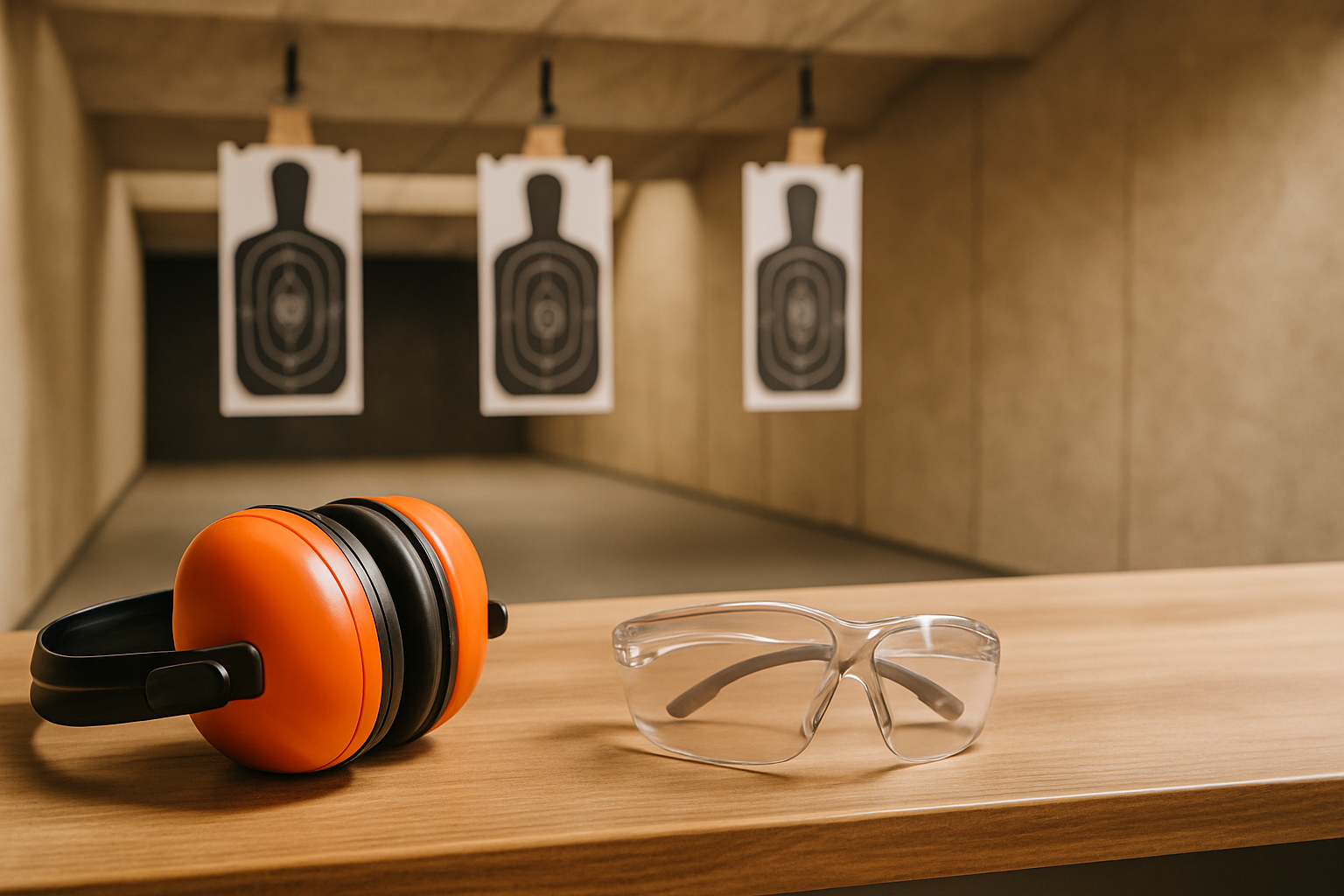
From ₹8K–₹35K upfront to 50 students signed — here's the exact four-phase playbook for launching a shooting academy in 2026 without costly shortcuts.
TL;DR: Budget somewhere between ₹8,000 and ₹35,000 in upfront capital — the gap depends almost entirely on whether you're leasing an existing range or building one from the ground up. Hit 40+ active students in your first two quarters and most academies break even within 12 to 18 months. What follows is a four-phase playbook: sorting your business and compliance foundations, fitting out your range and sourcing gear, building a curriculum and pricing model that actually works, and signing your first 50 students. Do it in order. Founders who skip phase one don't save time — they just pay for it twice, later, under pressure.
Phase 1: Register the business and handle compliance
Most people launching a shooting academy get this wrong: they treat registration like a formality — something to knock out in a weekend before getting to the "real" work of hiring coaches and booking ranges. Then they hit week six, mid-season, and someone notices a licensing gap. Programme suspended. Students refunded. Reputation takes a hit it won't fully recover from.
Here's the actual situation. Shooting is one of the most heavily regulated sport verticals you'll work in — full stop. The compliance load is front-loaded, meaning it sits between you and your launch date, not somewhere you'll sort out later.
Expect 4–10 weeks just on registration and approvals, depending on your jurisdiction. Some states move fast. Many don't.
Don't rush it, and don't underestimate it. A single missing licence isn't a paperwork inconvenience — it's a legal reason to shut your doors while students are mid-programme.
Business structure
Sole proprietorship sounds appealing until someone gets hurt on your range. Don't do it. From day one, structure as a single-member LLC (US), a limited company (UK), or a UG/GmbH (Germany) — whatever your jurisdiction calls it, the point is the same: your personal assets stay out of reach when something goes wrong on premises where firearms are involved. And something will go wrong eventually. That's not pessimism, it's just the nature of the business.
One more thing on this: if there's any chance you're bringing in a co-founder or investor within the next 18 months, skip the single-member structure entirely and go straight to a multi-member LLC or equivalent. Restructuring mid-stride costs you legal fees and time you won't want to lose.
The admin varies by country, so here's what it actually looks like:
- US: File your LLC with the state Secretary of State's office, then get an EIN from the IRS. Here's where people get tripped up — if your model involves selling ammunition or charging for range time, you may need a federal firearms licence (FFL). Don't assume you don't. Talk to a local attorney before you open anything.
- UK: Register at Companies House. Ranges and academies fall under Firearms Act 1968 licensing, handled through your local police firearms licensing department — not optional, not a formality.
- Australia: You'll need accreditation through your state's shooting sports body (the SSAA being the most common route) plus a premises approval from the relevant police firearms registry.
Tax registration
Here's something a lot of new academy owners find out too late: crossing your local revenue threshold triggers a registration obligation for sales tax, VAT, or GST — whichever applies in your jurisdiction. Don't wait until someone flags it.
The slightly good news is that coaching services are sometimes exempt. In the US it varies state by state (some states treat coaching income very differently from product sales). In the UK, if you structure things carefully, coaching can fall outside the VAT threshold entirely. "Sometimes" and "carefully" are doing a lot of work in those sentences, though — the rules are genuinely fiddly.
Which is exactly why you need an accountant who's actually worked with sports businesses before. Not a generic bookkeeper. A generic bookkeeper will file your numbers and miss sport-specific exemptions without ever knowing they exist. Someone who's handled a cricket club or a swim academy will know where to look.
It costs a bit more upfront. It saves a lot more later.
Trade license and premises permission
Start with the municipality. Every local body — whether it's a panchayat-level urban authority or a full district corporation — will ask for a basic business operating licence before you do anything else. Get that filed early, because it tends to sit in someone's inbox for weeks.
The premises is a separate headache. If the building isn't already zoned for shooting or sports use, you'll need a change-of-use approval — and no, a general commercial zoning doesn't automatically cover it. Don't assume. Check.
Indoor ranges bring their own list of non-negotiables: fire suppression systems, proper ventilation (specifically lead dust extraction — this one's not optional, it's a health and safety hard requirement), and acoustic ratings that prove the noise won't bleed into adjacent spaces. All three need official sign-off before you open your doors to students. One missing clearance can hold up everything else, so run these approvals in parallel rather than sequentially if you can manage it.
Child-safety policy
Background checks aren't optional — not if you're working with minors, not ever. And youth programmes are worth protecting for reasons well beyond liability: they're also, practically speaking, where most academies build their reliable, recurring income. So the safeguarding infrastructure has to be real, not a one-page document gathering dust in a drawer.
In the US, that means an FBI fingerprint check at bare minimum for every coach on your roster. Written safeguarding policy. Mandatory reporter training — which varies by state, so check your specific requirements rather than assuming. In the UK, it's a Disclosure and Barring Service (DBS) check for any adult working with under-18s, full stop, plus you'll need a designated safeguarding lead actually employed on staff (not just a name on a form).
Get this wrong and nothing else you build matters.
Insurance
What happens if a student has an accident on your range before you've sorted your insurance? That's not a hypothetical — it's the question you should be losing sleep over right now.
There are four covers you genuinely can't open without:
- General liability — minimum $2M per occurrence, and yes, shooting-related businesses specifically need that threshold written into the policy
- Professional liability / errors & omissions
- Employers' liability — legally required the moment you take on staff
- Firearms-specific coverage — this one trips people up constantly, because standard business insurance quietly excludes firearms incidents in the small print
Budget-wise: a properly covered indoor range in the US will typically run you $3,000–$6,000 a year. In the UK, go through a specialist broker — specifically one with experience handling target shooting associations — and you're looking at roughly £1,500–£3,500 annually.
Don't try to bolt firearms coverage onto a generic commercial policy and assume you're protected. You probably aren't.
Phase 2: Space, equipment, and setup costs
Space
The single biggest mistake first-time founders make? Underestimating how much space an indoor range actually eats up — and completely ignoring the engineering that comes with it.
Here's the reality: a pistol or airgun lane doesn't just need the shooting distance. You need the lane itself, a safety buffer on either side, plus a functional area at the rear for equipment, targets, and basic administration. A 5-metre air pistol setup is the minimum viable configuration. A .22 or centrefire pistol range pushes that out to 25 metres — and the total footprint balloons accordingly.
Rough numbers to work with:
- Air pistol / airgun academy (5m lanes): 1,500–2,500 sq ft, workably
- 25m pistol or rifle range: 4,000–8,000 sq ft at minimum
- Full multi-discipline facility: 10,000+ sq ft
On lane-to-student ratios — don't try to give every student a simultaneous firing position. One lane for every 2–3 students works fine in a coached class. You rotate them through the firing line anyway, which is actually better coaching practice than everyone shooting at once.
And if purpose-built is simply out of budget right now, two alternatives are worth taking seriously. First: lease range time from an existing gun club or military facility — many are underutilised on weekday mornings and surprisingly open to arrangement. Second: mobile laser or electronic simulation setups. No live fire, dramatically lower cost, and (this part surprises people) genuinely excellent for junior programmes where the real goal is building technique before they ever touch live ammunition.
Flooring, ventilation, and acoustics
Bad flooring, poor ventilation, or inadequate acoustic treatment — any one of these will kill your premises approval before you even open the door.
Start with the floor. Poured concrete or a sealed, cleanable surface — that's what you need. Porous flooring traps lead particulate, and once it does, you've got a contamination liability that no amount of sweeping fixes. Don't cut corners here.
Ventilation is where most first-time range builders get a nasty surprise when they see the quote. You're not installing a standard HVAC system — you need one specifically engineered for lead dust, which means forced air moving from behind the shooter toward the target berm. Not across the line. Not from behind the berm forward. The direction matters enormously. Budget $15,000 to $40,000 for this on a full range build, and yes, that number is correct.
Acoustics is a different beast. Hearing protection on the line is non-negotiable, but it does nothing for the neighbours. Local noise ordinances exist, they're enforced, and acoustic treatment is how you stay compliant. Depending on room size, expect to spend somewhere between $3,000 and $10,000 getting this right.
Three line items. All of them load-bearing.
Equipment list and capex
Here's something most people don't realise until they're already deep in the planning process: the range infrastructure — not the coaching, not the marketing — is where your money actually goes. So let's be blunt about the numbers.
| Item | Estimated Cost (USD) |
|---|---|
| Lanes (target retrieval systems, 4–6 lanes) | $8,000–$20,000 |
| Backstop / bullet trap | $5,000–$15,000 |
| Ventilation system | $15,000–$40,000 |
| Acoustic treatment | $3,000–$10,000 |
| Loaner firearms (air pistols / .22 rifles, 6–10 units) | $4,000–$12,000 |
| Safety gear (ear protection, eye protection, range kit) | $1,500–$3,000 |
| Scoring / timing systems | $1,000–$5,000 |
| Signage, safety barriers, range furniture | $1,000–$3,000 |
| Total capex (leased premises, tenant fit-out) | $38,500–$108,000 |
That ventilation line item surprises almost everyone. It shouldn't — a properly engineered HVAC system for a live-fire environment isn't optional, and cutting corners there is how academies end up with regulatory shutdowns six months in.
Now, if live fire isn't your immediate path — either because of budget or because getting premises approval in a dense urban area can drag on for two, three, sometimes four years — an airgun-only setup using simulation technology can get you operational for $8,000–$18,000. That's the whole thing. Urban youth programmes have been quietly moving toward this model for exactly that reason: it's faster, cheaper, and honestly a lot less paperwork.
Phase 3: Curriculum and pricing
What to teach first
Here's something most new academy owners get wrong right out of the gate — they try to teach everything at once. Pistol, rifle, practical, long-range. Week one and they're already drowning in curriculum. Don't do that.
Pick one anchor discipline. Get genuinely good at teaching it. Then expand.
Commercially, two entry points work better than anything else right now. 10m air pistol and air rifle sit at the low end of the barrier-to-entry spectrum — no live-fire licence headaches in most jurisdictions, and they're brilliant for youth programmes (10 and up, realistically). The other is practical and action shooting fundamentals, which has seen serious adult demand spike since COVID and hasn't really dropped off — though the regulatory side is messier, so go in with your eyes open.
Whatever discipline you pick, the foundation is the same. Stance. Grip. Breath control. Trigger discipline. Sight alignment. These five aren't specific to any format — they're universal, and if your students can't nail these, nothing else you teach them will stick.
Build a 12-week beginner course around them. Structure it so there's a measurable accuracy improvement visible by week 8 — not just "students feel better", but actual scored targets showing progression. That's your product. That's what parents tell other parents about, what adult beginners put in their WhatsApp groups. A tight, results-visible 12-week course will do more for your reputation than any curriculum that tries to cram in three disciplines and delivers none of them well.
Batch structure
How many students can you actually coach at once without things falling apart? It depends on the group — and the answer changes more than you'd expect.
With juniors (ages 10–17), keep it tight: 6–8 per batch, twice a week, sessions running 60–75 minutes. That's not a suggestion — attention spans and safety both demand it. You'll also need signed parental consent documentation on file before any junior sets foot on the range. Every session, no exceptions.
Adult beginners are a bit more forgiving. Batches of 8–12 work fine, and 90-minute sessions (once or twice a week) give you enough time to actually cover something without losing people halfway through. They're not in a rush. They just want to learn.
Competitive and intermediate shooters are a different beast entirely. Four to six per batch, two-hour sessions — these are students training for club or regional events, and they'll want more lane time and burn through significantly more ammunition than beginners do. Which is worth knowing upfront, because that affects your pricing, your range scheduling, and honestly your whole week.
Pricing
Walk into most new shooting academies six months after launch and you'll find the same thing: lanes half-full on weekday mornings, a youth programme ticking along, maybe a handful of adult beginners — and zero corporate bookings. Not because corporate events are hard to run. Because nobody thought to price them.
Here's what the numbers actually look like across both markets:
| Programme | Monthly Rate (US) | Monthly Rate (UK) |
|---|---|---|
| Youth beginner (8 sessions/month) | $180–$280 | £120–£200 |
| Adult beginner (8 sessions) | $200–$320 | £140–£220 |
| Competitive/intermediate (8 sessions) | $280–$450 | £180–£280 |
| Drop-in lane hire (supervised) | $25–$45/session | £18–£35/session |
| Corporate team events | $500–$1,200/event | £350–£800/event |
That corporate row at the bottom? That's where most academies leave serious money on the table. A single afternoon booking — four hours, a briefing, some coaching, a debrief over food — can match two weeks of drop-in revenue. The preparation is minimal compared to running a structured programme. And the word-of-mouth from a well-run corporate day travels further, faster, than almost any other format you'll offer.
Price it like it's worth something. Because it is.
Free trial
Most academies kill their free trial before it even starts — too much admin, too many forms, a registration process that makes people feel like they're applying for a bank loan. By the time a prospect shows up, they're already half-switched-off.
Don't do that.
Offer the trial. A 45-minute taster session, supervised, capped at four students — that's the format, and it works better than anything else you'll try for converting first-timers into paying members. Keep the waiver offline until they walk through the door. Hand it to them on arrival, not a week before via a five-email sequence.
Run the session tight. Then, before they leave — not the next day, not over WhatsApp that evening — close with a concrete next step. A specific programme, a specific start date, a specific ask. That window between "I just had a great session" and "let me think about it" is shorter than most coaches realise, and once they're in the car park it's basically gone.
Phase 4: First 50 students
Google Business Profile
Here's something most new academy owners skip entirely: claiming their Google Business Profile before they even open. Don't be that person. Get it claimed on day one, then fill it properly — photos of the range, the equipment, someone actually coaching on the line (just make sure you've got model release forms signed if students appear in any of the shots). Set your service area to somewhere between 20 and 30 km. Not less. People will drive for the right facility.
The Q&A section is where you can save yourself a hundred identical phone calls. Two questions come up before almost every first booking: "Do I need a licence to shoot?" and "What age do you accept?" Answer them there, proactively, before anyone has to ask. It won't feel urgent until the day your phone won't stop ringing — and by then you'll wish you'd done it week one.
WhatsApp Business (or equivalent)
Get the automated welcome message live before you do anything else. Then set up quick replies for the five or six questions you'll get asked constantly — session times, fees, age groups, trial bookings, kit requirements. Done. That's your baseline.
Why WhatsApp specifically? If you're coaching in UK Asian communities, across much of the EU, or in Australia, parents are already on it. They're not checking email at 7pm — they're on WhatsApp. A message sent there gets read in minutes. The same message sent by email might sit unread for three days.
That said, it's not universal. In the US, WhatsApp penetration is patchy enough that you're better off with an SMS broadcast tool instead. Same logic applies — meet parents where they already are, not where it's convenient for you.
School and club tie-ups
Schools are easier than most people expect. PE heads are constantly being asked to justify their programme's variety, and shooting — once you frame it around concentration, breath control, and discipline — practically sells itself. It's not "here's another sport." It's "here's something that'll make your students demonstrably calmer and more focused." That's a different conversation entirely.
A half-day visit with a portable air pistol setup is usually enough. Get in front of the students once, and enrolments follow.
Gun clubs and hunting associations are the other one people overlook. Their members already know they want coaching — structured, proper coaching — they just don't know where to find it. You're not convincing them shooting is worthwhile. That battle's already won. You're simply giving them somewhere to go.
Instagram Reels strategy
Here's something most new academy owners ask themselves around week two: do I actually need to be on Instagram? Yes. And shooting, of all things, is almost unfairly good content — slow-motion trigger pulls, the moment a target gets revealed, a student's groupings tightening week by week. That stuff works. People watch it.
You don't need a production crew. Honestly, a phone propped on a tripod and halfway decent lighting gets the job done. What you do need is consistency — three posts a week, minimum, through your first 90 days. Don't negotiate with yourself on that number. Mix local hashtags in with the discipline-specific ones; that's how you get found by people who are actually nearby and might actually sign up.
Separately — and this is worth sorting out before you open, not after — you'll need a way to manage bookings, track where each student is in their progression, and chase fee payments without it consuming your entire week. A purpose-built class management platform covers all of that in one place: scheduling, payments, communication. If you want a sense of how these tools apply operationally, the How to Start a Gym & Fitness Academy: A 2026 Playbook covers a lot of the same ground and is worth a read.
Festival-season acquisition
Picture this: it's late March, and every parent in your postcode is suddenly panicking about what to do with their kids for six weeks of summer. That's your window — but only if you started talking to them in February.
Timing is everything here, and most new academies get it backwards. They run campaigns during peak season, when parents have already made their plans and corporate budgets are already spent. The smart move is to be in front of people 6–8 weeks before the rush hits.
In the UK, that rush is April through June — parents hunting for holiday activities, junior enrollments spiking, structured programmes suddenly looking very attractive. In the US, Q4 (October through December) does the heavy lifting: gift memberships, corporate experience days, end-of-year team outings. Different countries, same principle. Get there early or get ignored.
So if you're targeting UK junior enrolment, your campaign belongs in February. If you're chasing US corporate gifting, you should be visible in August — well before anyone's thinking about Christmas budgets. It feels counterintuitive. Do it anyway.
Common mistakes new founders make
1. Cutting the ventilation budget
This is the one that kills first-time range operators most reliably. It looks like a good place to trim during fit-out — big number, easy target — so they trim it. Then they either fail the premises inspection outright, or they pass, open, and spend twelve months fielding lead contamination complaints they can't explain. Don't touch this line item. Seriously.
2. Launching with every discipline at once
Airgun, pistol, rifle, practical, 3-gun — it sounds ambitious. It isn't. What it actually does is hollow out your curriculum and blow your equipment budget before you've coached a single proper session. Pick one discipline. Get genuinely good at delivering it. Five disciplines done badly will empty your range faster than anything.
3. Skipping taster sessions
Here's the gap nobody talks about: people are curious about shooting, but walking into a range for the first time feels intimidating. They don't commit — not because they're uninterested, but because there's no low-pressure entry point. A free taster session closes that gap faster than six months of Instagram posts ever will.
4. Pricing by the session instead of by the outcome
"₹X per session" tells a student nothing about why they should keep coming back. "Train for your first club competition in 12 weeks" — that's a reason to commit, and it justifies whatever you're charging. Outcome-anchored programmes hold students longer. Drop-in pricing just builds a revolving door.
5. Treating corporate bookings as an afterthought
Most new academies ignore this for the first year. Most of them regret it. Corporate team events and experience days sell more easily than junior memberships, carry better margins, and don't require you to manage ongoing enrolment or parent communication. It's the simplest revenue channel you're probably not using.
6. Letting the compliance calendar run on memory
Firearms licensing, range safety certificates, instructor accreditations — they all expire, and they don't expire at the same time. Miss one renewal and you could be looking at suspended operations. Build an actual calendar for this on day one, and track your coaches' individual certifications separately from your business-level licences. These are not the same thing, and treating them as interchangeable will catch you out.
7. No real system for tracking student progress
Shooting improvement isn't abstract — groupings, scores, accuracy percentages are all measurable. Students who can actually see how far they've come stay enrolled. Students who can't will drift. If you're logging this in a spreadsheet (or not at all), you're quietly haemorrhaging retention every month. Tools like Lynk's free certificate generator handle milestone recognition without any extra admin overhead, and the free fee invoice generator keeps your billing clean right from month one — both worth plugging into your workflow early.
Regional notes — US / UK / EU / India
United States
Here's something most people launching a shooting academy don't realise until they're already three months into the process: the regulatory environment varies so wildly between states that you're essentially operating in different countries depending on where you set up.
Most states are genuinely supportive. But California, New York, and Massachusetts pile on licensing requirements that simply don't exist if you're operating in Texas or Arizona. Not minor paperwork differences — structural ones that affect how you design the whole programme.
If you're based in one of the tougher states, the simulation and laser-based training model deserves a hard look. It sidesteps live-fire regulation entirely — and yes, that's as useful as it sounds — while still giving you a coaching product that students actually respect. It's not a workaround. For a lot of academies, it's become the main offering.
On credentials: two pathways dominate. The NRA's Training Counselor certification and USA Shooting's coach qualification are what ranges, clubs, and serious students actually recognise. Your instructors will want one or both.
United Kingdom
Affiliate with a club first. Seriously — don't skip this step. British Shooting is your governing body (affiliated with UK Sport), and the NSRA (National Small-bore Rifle Association) handles target shooting specifically, but the practical reality is that standalone academies trying to operate without club backing run straight into an insurance wall. The premiums either become unworkable or insurers won't touch you at all.
If you're running anything involving under-18s, the DBS check isn't optional. Full stop.
European Union
— and this is where a lot of people get tripped up — the EU has a framework (Directive 91/477/EEC, amended), but that framework is essentially a floor, not a ceiling. Every member state builds on top of it differently. Sometimes very differently.
Germany, Austria, and Czech Republic are your friendlier environments. Established club structures, active shooting sports communities, clear affiliation pathways. If you're setting up in one of those three, you've got existing organisations to plug into, which makes the compliance side considerably less painful.
France and the Netherlands are a different matter. Individual licensing requirements are stricter, and that has direct knock-on effects for how you can structure junior programmes — who can participate, under what supervision, at what age. Don't assume what works in Munich translates to Amsterdam. It doesn't.
The short version: get a local sports law consultant. Not someone who does "EU regulatory work" in a broad sense — someone who knows the specific country you're operating in. Cross-border generalisations will cost you.
India
So you're looking at India — where do you even start with the regulatory maze?
Here's the short version: National Rifle Association of India (NRAI) runs the show nationally, and state associations feed into it. If you want your academy to actually matter — meaning serious students, talent pipeline access, the whole thing — you need SAI (Sports Authority of India) accreditation. That's non-negotiable. Without it, you're coaching in a vacuum.
Discipline choice is dead simple at the entry level. Air pistol and air rifle. Both are Olympic events, both carry the strongest institutional backing, and both are where the student volume actually is. Don't overthink it.
Now, the compliance piece — and yes, this is where it gets genuinely complicated — sits at the intersection of the Arms Act 1959 and whatever your specific state decides to layer on top of that. And states vary. A lot. What's a straightforward licence process in one state can be a months-long ordeal in another, so get local legal advice early, not after you've already committed to a location.
On premises: lease first. Always. Buying range real estate before you've even proven the model is the kind of risk that's sunk perfectly good academies before they found their footing. Prove it works, then talk about ownership.
Frequently Asked Questions
How much does it cost to start a shooting academy?
Here's where most people blow their budget before they've sold a single membership: they obsess over the firearms. The guns aren't the expensive part. Not even close.
The ventilation system and backstop will eat your money faster than anything else on the list — and if you're building a live-fire indoor range, there's simply no cutting corners there. Proper ventilation for a full indoor range isn't a nice-to-have. It's a legal and safety non-negotiable, and it shows up in your costs accordingly.
So here's what the numbers actually look like. A simulation-only or airgun academy running out of leased space? You're looking at somewhere between $8,000 and $18,000 to get the doors open. That's genuinely achievable for a first-time operator — lean setup, no lead downrange, manageable compliance burden.
Go the other direction — full live-fire capability, indoor range, real ventilation infrastructure, either purpose-built or a serious fit-out on a leased premises — and you're in the $38,000 to $108,000 range. That's a wide band, and it moves mostly based on how much mechanical wor