How to Start a Music Academy: A 2026 Playbook
By Swathi N ·
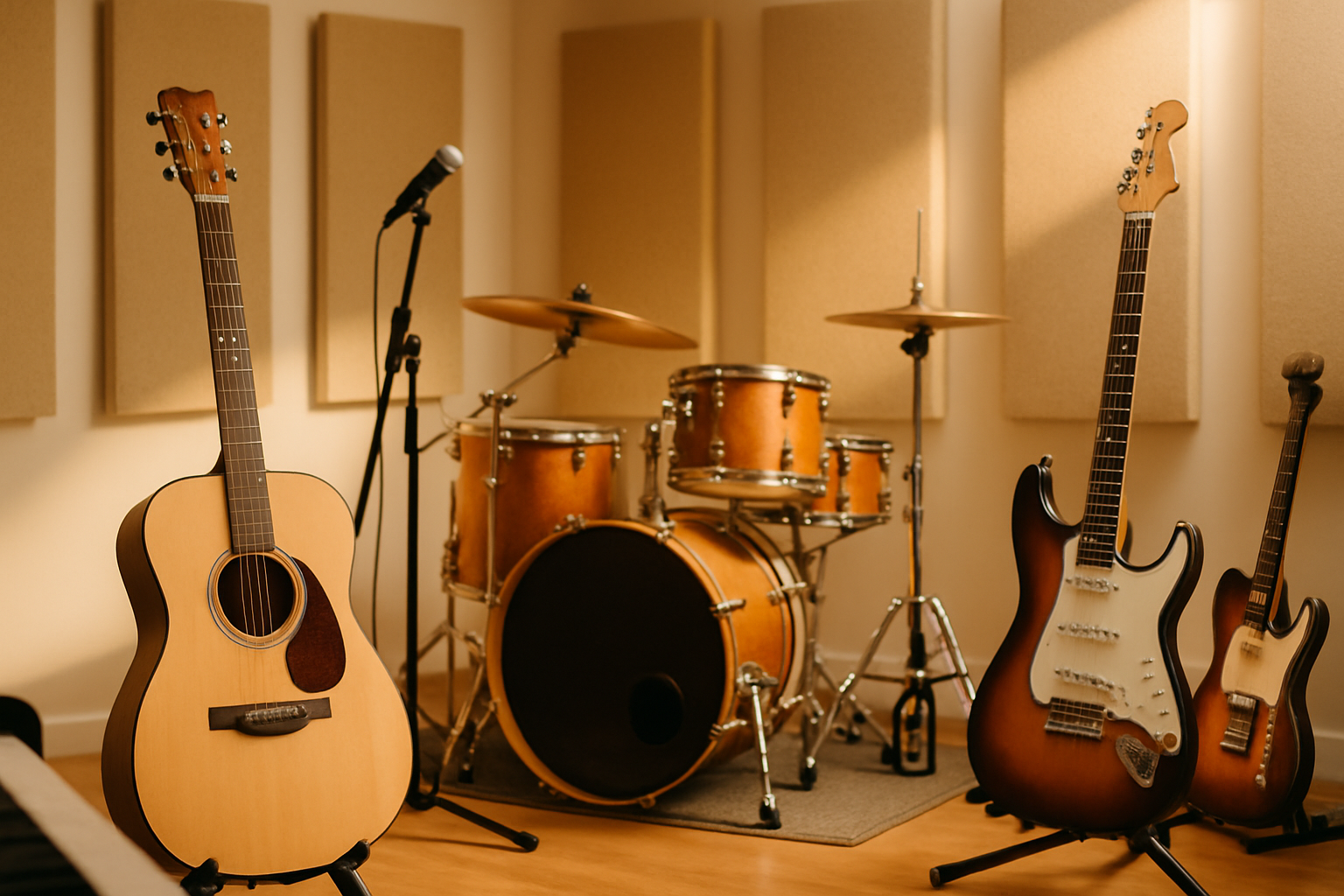
Starting a music academy in 2026 isn't what it used to be. Hybrid models, app tracking, adult learners — here's what the new playbook actually looks like.
Picture this: someone signs a lease on a spare room, buys a secondhand upright piano, prints fifty flyers, and calls it a music academy. That was the playbook for decades. It isn't anymore.
The landscape has shifted — quietly at first, then all at once. Hybrid lesson models (half in-person, half over video) are no longer a pandemic workaround; they're a permanent feature. App-based practice tracking has given parents something they never had before: actual visibility into whether their kid practised. And adult learners — people in their 30s, 40s, 50s who put down an instrument years ago and now want it back — are flooding enrolment lists in a way nobody predicted.
What this means is that "starting a music academy" in 2026 is a genuinely different undertaking than it was even five years ago. More moving parts. More opportunity, too.
This playbook runs through the whole thing — legal setup, space decisions, staffing, and how you actually get to your first 50 students — across four phases. Expect to spend somewhere between $3,000 and $18,000 upfront, depending on how big you're starting and where you're located. Lean single-room operations tend to break even somewhere between months 8 and 14. Larger multi-room setups? Budget for 18 to 24 months before you're in the black.
Phase 1: Register the Business and Handle Compliance
Here's the mistake most new academy owners make: they sign the lease, buy the equipment, start telling people about it — and then, somewhere around month two, realise they never actually registered the business. The compliance stuff felt bureaucratic and dull, so it kept getting pushed to next week. Until a student slips, or the GST notice arrives, or an auditor asks for paperwork that doesn't exist. At that point, the filing fees you were avoiding start looking embarrassingly cheap.
Sort the legal structure first. Before a single student books in.
Your business entity, tax registrations, insurance — get all of it done before you open the doors. Not after you've found your first batch of students. Not "once things settle down." First. The compliance stack isn't exciting, but it's the thing that determines whether a bad month stays a bad month or becomes a catastrophic one.
Business Structure
Here's the blunt version: your business structure determines how much of your personal life is on the line if something goes wrong.
A sole proprietorship costs almost nothing to set up — we're talking $0 to $100 in most US states — but that low entry cost comes with a catch. If a student twists an ankle tripping over a guitar stand and their parents call a lawyer, your personal savings, your car, your house — all of it is fair game. For a single teacher running lessons out of a home studio, that's a risk some people are comfortable taking. Many aren't.
The safer call, the moment you rent a commercial space or hire your first employee, is an LLC (or a Ltd if you're in the UK, Pty Ltd in Australia). Filing fees land somewhere between $50 and $500 depending on your state or jurisdiction — genuinely not a lot of money for what you're getting. And practically speaking, you'll need a business bank account anyway; an LLC makes that conversation with the bank much simpler.
As for a corporation or company structure — don't bother. Not yet. That's the territory of franchises and investor rounds. For a first academy, it's expensive overhead with no meaningful upside.
Tax and Sales Tax Registration
Here's something nobody warns you about when you're setting up a music academy: the tax rules are genuinely weird, and assuming you're exempt because you're "educational" is one of the more expensive mistakes a new owner can make.
Start with the basics. If you're in the US, get your EIN first — it's free through IRS.gov and takes about ten minutes. Then stop and actually check whether your state taxes music tuition, because several states do exempt educational services, but "educational" has a legally specific definition that doesn't automatically include every kind of music lesson. Talk to a local CPA before you assume you're in the clear.
UK situation is a bit more nuanced. Individual teachers delivering private music tuition? VAT-exempt. Group classes? Potentially taxable — and yes, that distinction matters. The mandatory VAT registration threshold sits at £90,000 turnover (as of 2025), so if you're nowhere near that, it may not be an immediate concern. But watch it as you grow.
The EU is its own headache. Germany and France generally exempt private music instruction; Spain taxes it at 21%. Cross-border online lessons complicate things further — fast. If you're teaching students in multiple EU countries, get country-specific advice early rather than untangling it later.
Canada tends to be cleaner on paper. Music lessons from an individual instructor usually fall under the GST/HST "tutoring" exemption. The catch: a corporate academy structure might not automatically qualify for the same treatment. Worth confirming before you incorporate.
Trade License and Premises Permission
Before you sign anything or hang a single sign, get your trade licence sorted. Most municipalities won't let you run a commercial operation out of a space — any space — without one. In the US, that's usually a business operating licence from your city or county clerk, and it's not expensive: somewhere between $50 and $150 a year, depending on where you are. But the cost isn't the issue. Operating without one is.
If you're converting a spare room or a residential property into a teaching studio, stop and check the zoning first. Many residential zones outright prohibit commercial activity, even when it's small-scale and quiet — which, by the way, a music academy is not.
Which brings us to noise ordinances. This is the one thing most first-time academy owners completely miss, and it can unravel everything. Decibel limits, operating hours, building insulation requirements — these vary wildly by location, and a drum studio sandwiched between apartment units is a regulatory nightmare (and a legal one) if you haven't done your homework before signing the lease. Not after. Before.
Call your local council or planning office directly. Ask specifically about noise compliance for music instruction. Get the answer in writing if you can.
Child Safety Compliance
— and if any part of your student base is under 18, this isn't optional paperwork. It's the thing you sort before anything else.
In the US, background checks are required in most states — FBI and state criminal history both. California, Florida, and Texas treat them as effectively mandatory for any adult working with minors in an educational setting, but don't assume your state works the same way. They don't. Check your specific state requirements before you hire a single teacher.
UK academies need DBS checks — that's the Disclosure and Barring Service — for anyone doing regulated activity with under-18s. Enhanced DBS is the standard for music teachers. Not the basic check. The enhanced one.
Outside those two? Australia runs Working with Children Checks at the state level. Ireland uses Garda Vetting. Different names, same idea: you cannot skip the vetting process and hope for the best.
The written safeguarding policy is the other piece people put off. Don't. Two pages is genuinely enough — nobody's asking for a legal dissertation. What creates liability isn't a short policy. It's having no policy at all when the first child walks through your door.
Get this done first. Everything else can be built around it.
Insurance
Have you actually sat down and thought about what happens if a student trips over a guitar stand and breaks their wrist? Or if a parent decides your teaching "damaged" their kid's technique and wants someone to pay for it? These scenarios sound unlikely — until they're not.
Here's what you need, at bare minimum.
General liability is non-negotiable. It covers bodily injury that happens on your premises — a fall, a collision, anything physical. Budget $400–$900 a year for a small academy. Not a huge line item, and the alternative (paying out of pocket for someone's hospital bill) is catastrophic.
Professional liability — sometimes called errors & omissions — is the one people skip, and it's a mistake. Yes, people do sue music teachers. The claim is usually that your instruction caused some kind of harm, whether that's a repetitive strain injury or a student who argues your methods set them back. Coverage runs roughly $300–$600 a year.
And then there's equipment insurance. Instruments, amplifiers, recording gear — it accumulates faster than you'd expect, and standard commercial policies often have gaps. The trickier question is student-owned instruments left on your premises overnight or between lessons. Some policies cover them. Many don't. You need to know which situation you're in — and if they're excluded, tell your students explicitly. In writing. Don't let that be a conversation you're having after something goes missing.
Phase 2: Space, Equipment, and Setup Costs
Space Requirements
Here's the mistake most people make: they find a space they love, sign the lease, and then try to figure out if the rooms are actually big enough. They're not. A 10×10 room sounds reasonable until there's an upright piano in it, a teacher, a student, a music stand, and two people trying not to knock elbows.
Individual lesson rooms need 80–120 sq ft. That's the floor — not a suggestion. Below that and you're basically teaching inside a wardrobe.
Group classes are trickier to plan for, because people consistently underestimate how much space instruments and movement eat up. Budget 25–35 sq ft per person once everything's accounted for. A six-student guitar class? You're looking at 180–200 sq ft minimum, and that's not generous — that's just functional.
Don't forget the waiting area. If you're teaching kids (and you probably will be), parents need somewhere to sit that isn't your doorway. A 100–150 sq ft reception area sounds small on paper but it's the difference between a professional front-of-house and a fire-hazard hallway with folding chairs jammed into it.
The good news: you don't need a warehouse to get started. Two teaching rooms and a small reception area — call it 400–600 sq ft total — is a completely workable first academy. In most mid-sized US cities, that footprint runs $1,500–$3,500 a month in commercial rent. Tight, but doable.
Acoustic Treatment and Soundproofing
Underspend here and you'll regret it. Full stop.
Basic acoustic treatment — foam panels, bass traps, the standard kit — runs somewhere between $300 and $800 per room. That's not a luxury budget line. That's the difference between recorded audio that's actually usable and a lesson room that feels like teaching inside a tin can. If you're in a shared building and you want real soundproofing (decoupled walls, resilient channels, mass-loaded vinyl), budget $2,000–$8,000 per room. Brutal, yes. But if your drum student is bleeding into your piano lesson next door, you'll wish you'd done it on day one.
Can't stretch to full soundproofing yet? Fine — heavy curtains, carpet or rubber flooring, and door sweeps will cut bleed between rooms by 15–20 dB. It's not perfect, but it's livable, and it buys you time until the budget catches up.
Equipment List and Capex Range
Here's something nobody tells you when you're budgeting for a music academy: the gap between the minimum viable setup and the "do it properly" setup is enormous. We're talking $3,000 on one end and $18,000 on the other. Same business, very different opening week.
So let's break down where that money actually goes.
| Item | Low estimate | High estimate |
|---|---|---|
| Upright piano (acoustic or digital) | $800 | $3,500 |
| Guitar (×3, acoustic + electric) | $600 | $1,800 |
| Drum kit (acoustic) | $600 | $2,500 |
| Drum pad kit (for apartments/shared spaces) | $200 | $600 |
| PA system + monitors | $400 | $1,500 |
| Microphones (×2–3) | $150 | $500 |
| Music stands (×10) | $120 | $300 |
| Acoustic treatment materials | $600 | $2,000 |
| Signage and reception furniture | $300 | $800 |
| Software, scheduling, and booking setup | $0 | $300 |
Total capex range: $3,000–$18,000
The $3,000 version is one room, a quality digital piano, no drums yet. Lean, functional, honest. The $18,000 version gets you two rooms, a full acoustic kit, a decent PA, and soundproofing that won't make your neighbours hate you within a fortnight. Both are real starting points — it just depends on what you're launching into.
Phase 3: Curriculum and Pricing
What to Teach First
— and this is where most new academies get it wrong before they've even opened the door. The instinct is to list everything: piano, guitar, violin, voice, theory, beatmaking, the works. Looks impressive on a brochure. In practice, it means you're spreading thin across subjects you may not teach well, chasing demand you haven't actually verified yet.
Start with two or three instruments. That's it. Pick them based on two things: what you (or your instructors) can genuinely teach at depth, and what families in your area are already asking for. Guitar and piano alone will cover 60–70% of what most parents walk in wanting. If you've got a qualified voice teacher on board, singing rounds that out nicely.
The most common starting structure for new academies — at least in English-speaking markets — is keyboard, guitar, and singing. Three pillars. Clean, teachable, marketable.
Drums are a different conversation entirely. Don't add them until you've sorted proper soundproofing, because the moment you do without it, you're counting down the days until your landlord has a problem with you. And they will.
Batch Structure
How do you actually split students into batches without it turning into chaos? Most new academy owners either overthink it or ignore it entirely — both end up costing them.
The age breakdown that works in practice:
- Ages 5–8: 30-minute individual lessons, once a week. That's it. Their attention spans simply won't hold for longer, and pushing it creates bad habits on both sides of the lesson.
- Ages 9–14: 45-minute slots — either individual or small groups of 2–3 students at the same level. Group format works surprisingly well here, especially for guitar basics. Kids this age actually learn faster when they're watching a peer struggle with the same chord.
- Ages 15+ and adults: 45 to 60-minute individual lessons, or structured group classes of up to 8 students for theory, songwriting, or ensemble work. Adults, interestingly, tend to enjoy the group format once they get past the initial self-consciousness.
When you're just starting out, stick to individual lessons. Operationally, it's far simpler — fewer scheduling headaches, fewer "but my child is more advanced than the others" conversations.
But here's where group classes become impossible to ignore: the revenue-per-hour jumps dramatically. A 45-minute guitar batch with 5 students at ₹25 each — that's ₹125 for the slot. A private lesson in that same window? Maybe ₹60. Same teacher, same room, same time. The maths isn't subtle.
You do need enough students to fill those groups, which is why individual lessons come first. Build the base, then consolidate.
Pricing
Picture this: a parent calls, asks your rates, and hangs up without booking. Happens constantly — and usually it's not the price that lost them, it's that the number landed with no context around it.
So here's what the market actually looks like in a mid-cost US city (go ±30% for NYC or San Francisco on the high end, smaller towns on the low):
- Private lesson, 30 min: $35–$55
- Private lesson, 45 min: $55–$80
- Private lesson, 60 min: $70–$100
- Group class, 45 min, 4–8 students: $20–$35 per student
- Monthly membership (4 private lessons): $140–$300
The monthly membership tier is worth paying attention to. It smooths out your revenue, reduces the "skip a week, skip a payment" headache, and — frankly — it's what most parents prefer once they understand it.
On free trials: offer one. A 30-minute slot, not a full lesson. Studios that actually track this number see 65–75% of trial students convert to monthly enrolment — which is a remarkable close rate for something that costs you half an hour. The logic for keeping it short is dead simple: long enough that the student walks away having genuinely experienced something, not so long that you've given away the whole thing for free.
Don't skip the trial trying to protect your time. The studios that quietly dropped it saw enquiries stall.
Phase 4: First 50 Students
Here's the mistake almost everyone makes: they wait until they're drowning in students before setting up any real system. They start with a WhatsApp group and a spreadsheet, which works fine at five students, still okay at ten — and then falls completely apart somewhere between student 15 and 20. Suddenly you're chasing fee payments through chat threads, losing attendance records, and double-booking slots. All while teaching eight hours a day.
Don't do this to yourself.
Get class management software running before you open, not after. The retrofitting process — migrating data, re-onboarding parents who already got used to your WhatsApp chaos, rebuilding your scheduling logic from scratch — costs you far more time than the setup would have. Platforms built specifically for music and arts academies (not generic small-business tools) handle scheduling, automated reminders, and fee collection in a single dashboard. You're looking at $30–$80 a month. That's not a lot, and yes, it's worth paying even before you've hit capacity.
Google Business Profile
Don't wait on this. Get your Google Business Profile live the same week you open — not six weeks later when you finally "get around to it."
A half-empty profile does almost nothing. What actually works is the full setup: photos of the studio space, close-up shots of the instruments, your bio. That's what surfaces when someone types "music classes near me" or "music academy [city name]" into Google — and those are exactly the searches you want to catch from day one.
Reviews. Get five of them fast. Family, friends, your first few students — ask directly, make it easy, follow up if you have to. People won't leave reviews on their own initiative, so stop waiting for them to.
And the star rating? It genuinely affects whether people click. 4.2 is perfectly fine. 3.6 — even with a handful of glowing written reviews — will quietly kill your click-through rate. That half-star gap is not trivial.
WhatsApp Business / Messaging
Here's something most new academy owners figure out too late: people who message you are ready to book right now. Wait until tomorrow and they've already called someone else. So set up a WhatsApp Business account under your academy's name — today, not eventually — and make it the single destination for every inquiry coming in through Google, Instagram, referrals, wherever.
The quick-reply feature is genuinely underused. Write one template. Something like "Thanks for your interest — here's our trial booking link:" and have it ready to fire in two taps. That's it. No typing the same paragraph seventeen times a week.
Two hours is roughly your window. Respond within that and conversions are solid. Push it to next-day and you've lost them — not maybe lost, actually lost. People don't wait around.
School Tie-Ups
Find the three closest elementary or middle schools and walk in. Don't email — walk in. Ask whoever handles enrichment programmes whether they have music covered after school. Most don't. They want to offer it; they just don't have the staff or the bandwidth to run it themselves.
That's your opening. Bring a single-page proposal (one page — if it's longer, they won't read it) and pitch something dead simple: you run weekly sessions on their campus, they provide the room, parents pay either you directly or through the school. Everyone wins. You get a built-in cohort without spending a rupee on advertising; they get to tick the enrichment box without hiring anyone.
Realistically, expect somewhere between 6 and 10 students per school in your first term. Three schools, and you're already looking at a meaningful early batch.
If you want a structural playbook for how to approach these school and community partnerships more broadly, the 10 Steps To Starting Your Own Dance Studio guide is worth reading — the early-stage acquisition tactics for dance studios translate almost directly to music, and the thinking there on community tie-ups is sharper than most music-specific advice you'll find.
Instagram Reels Strategy
And you don't need a ring light or a gimbal or any of that. Seriously — a phone with a window behind you is enough. What actually works: film a student's very first lesson, then film them again eight weeks later. Put them side by side. That's it. That's the content.
A teacher playing a 30-second riff with the sheet music in frame. The room being set up before class — chairs dragged out, instruments laid on tables. Unglamorous stuff. Nobody's asking for a cinematic production here.
Three to four Reels a week for the first 60 days. Not because you're chasing viral moments (you're probably not going to get one, and that's fine), but because you need to show up when someone in your city searches "music classes" on Instagram. That's a real search behaviour, and it favours accounts that post consistently and use location tags — not just hashtags, actual location tags.
The algorithm notices. More importantly, local parents notice.
Festival Season Acquisition
Here's a question worth sitting with: when do most parents actually decide to sign their kid up for something new? Not in January, despite what the "new year, new habit" crowd will tell you. In North America and Europe, the answer is September — back-to-school energy is real, and a surprising chunk of it flows straight into music lessons. Parents are already buying stationery and new shoes; adding a Tuesday guitar lesson to the routine feels natural. Mid-August is your window. Get a promotion out before the rush — an early enrolment discount, a free first month of group theory, whatever makes sense for your academy — because by the time September actually arrives, decisions are already made.
December is the other one.
Gift lesson packages sell well over the holidays — genuinely well, not just "a few trickle in" well. But only if people can actually buy them without jumping through hoops. If purchasing a gift package means calling your front desk during business hours, you're losing sales every single night between 9pm and midnight, which is exactly when people are sitting on the couch doing their holiday shopping. Put it online. Make it buyable in three clicks.
Common Mistakes New Founders Make
Picture this: someone signs a three-year commercial lease in month one, hires two salaried teachers by month two, prices lessons at ₹30 a session to fill seats fast — and by month eight, they're done. No students, no cash, no way out of the lease. It happens more than you'd think, and almost all of it is avoidable.
The lease trap. Zero students plus a 3-year commercial commitment equals serious financial exposure. Start with a 6–12 month lease, a sublease, or a month-to-month coworking music space if your city has one. Prove demand exists before you sign anything long.
Under-pricing. This one's brutal. Drop your rates to ₹30 a lesson to attract early enrolments and you've just anchored every future pricing conversation at the wrong number. Students who came in at ₹30 are, almost by definition, price-sensitive — the moment you move to ₹55, they leave. Price at your sustainable rate from day one. Offer a free trial instead of a discount.
Salaried teachers at month two, when you've got 12 students, is how academies quietly drown. The maths doesn't work — not yet. Use freelance or contract teachers paid per session until enrolment volume actually justifies fixed payroll. It's not ideal forever, but it keeps you alive long enough to get there.
Acoustics matter. Students can't always tell you why a room feels off, but they feel it. Parents definitely feel it. An untreated, echoey practice room signals that you don't take the space seriously — and that impression sticks. Cheap acoustic treatment goes a long way.
Here's the retention thing nobody talks about enough: acquiring a student is hard. Losing one because nobody followed up after a missed lesson — or because their enrolment quietly expired with no reminder — is expensive and completely preventable. Automated renewal reminders and absence follow-ups aren't nice-to-haves. Build them into the system from the start, not as an afterthought you'll "handle manually for now."
Don't try to teach everything on day one. Four instruments, three age groups, online and offline — that's not an academy, that's an operational fire. Pick a lane. Focus produces quality. Quality produces word-of-mouth. Word-of-mouth is how you grow.
And the free trial intake form — don't skip it. Every student who comes in for a trial should fill out something short: instrument interest, age, prior experience, how they found you. That's the data that tells you which channels are actually working and what your real conversion rate is. Running trials without capturing any of this is just burning feedback you'll wish you had later.
Regional Notes — US / UK / EU / India
United States
Self-employment tax is the first thing that'll bite you. Music lesson income gets classified as self-employment income by default, which means you're on the hook for both sides of Social Security and Medicare — roughly 15.3% before federal income tax even enters the picture.
Once you're clearing around $40,000 a year, it's worth talking to a CPA about an S-corp election inside your LLC. Done right, it splits your income into salary and distributions, and only the salary portion gets hit with self-employment tax. Not a DIY move — but the savings can be significant at that income level.
Sales tax is its own mess, and it varies wildly by state. California, New York, and Texas all have specific rules around music instruction, and they don't agree with each other. Most states carve out some kind of exemption for educational services, but the definitions matter. Don't assume you're exempt just because you're teaching — confirm it with someone who knows your state's code.
United Kingdom
Here's something a lot of new academy owners miss entirely: if you're operating as an individual music teacher, you're VAT-exempt right up to the £90,000 threshold. That's a meaningful buffer, especially in the early years when cash flow is everything.
DBS checks are non-negotiable the moment you're working with under-18s — and in practice, Enhanced DBS is what everyone expects. Don't cut corners here.
One thing genuinely worth your time: Local Authority Music Education Hubs (LEMEs) exist across most areas, and they're not as closed-off as people assume. Some of them are actively looking for private academies to partner with or refer students to. Cold-approaching your local hub isn't a long shot — it's just an email most people never bother sending.
European Union
Germany first: if you're setting up there, look into registering as an eingetragener Verein — a registered association. Musikschulen structured this way often qualify for tax advantages that a standard commercial setup simply won't get you. Worth the paperwork.
The Netherlands handles it differently. Private music tuition is generally BTW-exempt, which keeps the admin lighter — but don't assume that exemption extends automatically to every service you attach to lessons.
Here's where it gets complicated. The moment you start selling online lessons across EU borders, VAT doesn't just follow your business address anymore. It can follow the student's country of residence instead. So a Dutch teacher with German students and French students might — technically — be dealing with three different VAT regimes at once. Most academies don't think about this until they're already scaling, which is exactly the wrong time to find out. Get proper cross-border VAT advice before you grow the online side of things, not after.
India
— and this is where a lot of first-time academy owners get caught flat-footed. GST, for instance: music instruction falls under the education services exemption, so you're generally in the clear. But run a batch of group classes with any commercial character and suddenly a CA is explaining why CBIC took a different view. Get someone who actually knows these guidelines before you open enrolments, not after.
If you're teaching students under 18 — and most academies do — POCSO compliance isn't optional, it's non-negotiable. That means a written safeguarding policy (not a one-pager you drafted at midnight), background verification for every staff member, and a designated child protection officer. Real ones, not box-ticking ones.
On the registration side, sole proprietorship or Pvt Ltd, both done through MCA. Neither is inherently better — it depends on your growth plans and your appetite for compliance paperwork. What people often overlook: Udyam registration as an MSME. It's dead simple to get and quietly opens doors to government schemes that can matter quite a bit when you're bootstrapping.
Costs vary wildly. A two-room setup in Bengaluru or Pune will typically run you somewhere between ₹4 lakh and ₹12 lakh in capital expenditure — the spread comes down to how serious you are about soundproofing and what instrument quality you're willing to start with. Cut corners on soundproofing and your neighbours will have opinions about your business model.
Tools Worth Bookmarking
What tools do you actually need on day one — and what can wait? Honestly, two are worth grabbing right now regardless of where you are in the setup process.
Completion certificates sound like a small thing. They're not. Students share them, parents frame them, and that one piece of paper does more for word-of-mouth than most