How to Start a Horse Riding Academy: A 2026 Playbook
By Swathi N ·
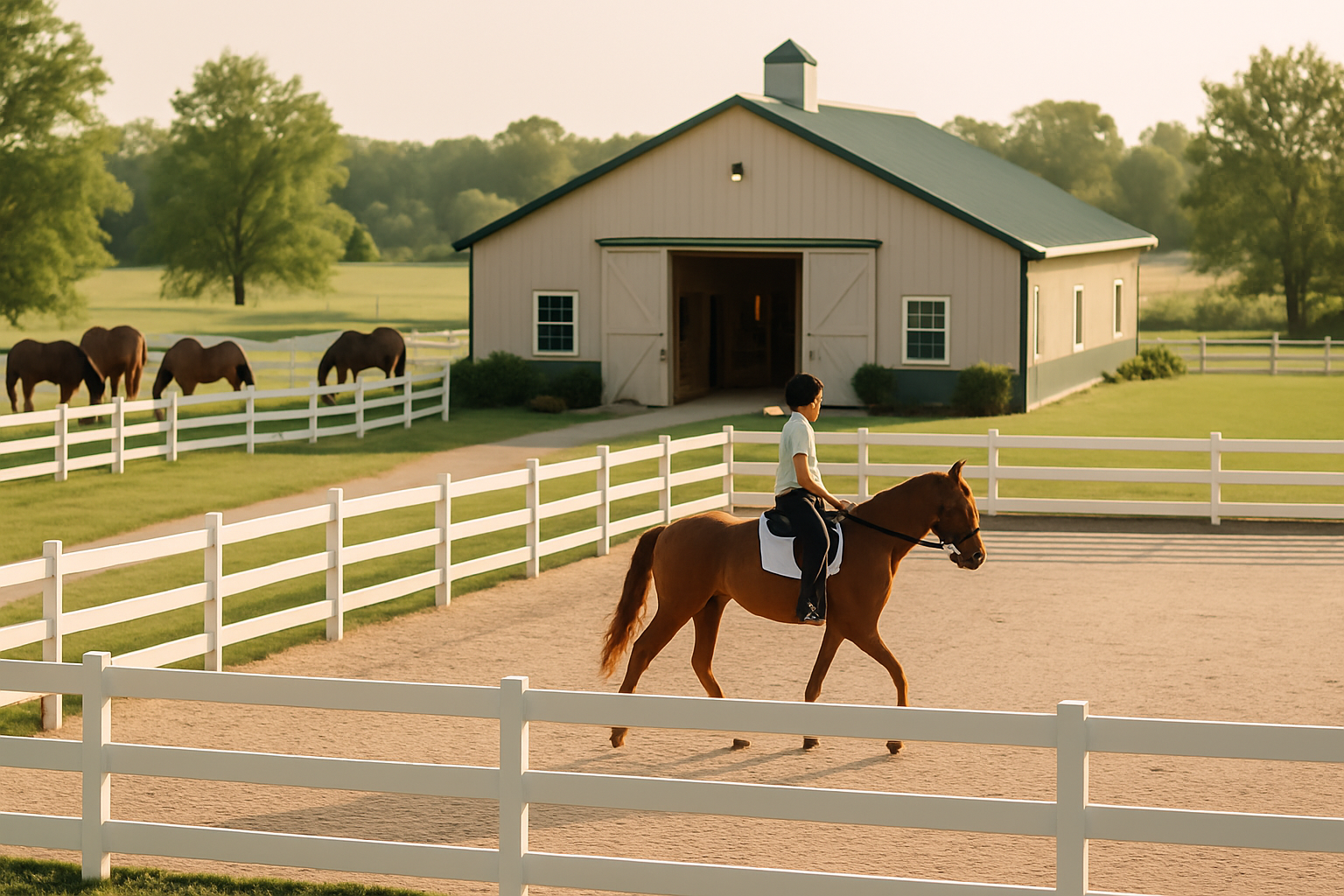
Starting a horse riding academy in 2026? Costs range from $18K to $75K — and one early decision drives that gap. Here's what actually works.
Picture this: a twelve-year-old shows up for her first lesson, nervous, eyes wide, gripping the arena fence like it's a life raft. Her parents are standing off to the side doing the mental arithmetic — is this hobby going to bankrupt us? Meanwhile, you're doing your own arithmetic, wondering whether this academy you've spent two years planning is actually going to work.
That scene plays out constantly at new equestrian schools. And honestly? The parents aren't wrong to think about money. Neither are you.
Here's the honest picture for 2026: equestrian sport is quietly on the rise — suburban and peri-urban markets especially — but the numbers involved aren't small. Startup costs run anywhere from $18,000 to $75,000, and that gap is almost entirely determined by one decision: are you leasing horses or buying them? Get that right, and the rest gets easier. Get it wrong, and you're haemorrhaging cash before a single student has posted a trot.
Break-even? Expect 18 to 30 months. Not because the demand isn't there — it is — but because the regulatory surface area here is genuinely bigger than most fitness businesses people launch. You're not just renting studio space and buying resistance bands. You're managing animals, insurance liabilities, land-use approvals, and a curriculum that has to actually keep children safe on 500-kilogram animals.
This playbook cuts through it in four phases: getting your legal and compliance foundation right, setting up your space and equipment, building your curriculum and pricing structure, and — the part everyone underestimates — landing your first 50 students.
Phase 1: Register the business and handle compliance
Most people launching a riding academy get this backwards. They find the horses first, maybe lease a paddock, tell a few people they're open — and then, three months in, they're scrambling to sort out registrations, liability gaps, and land agreements they never properly formalised. Don't do that.
Here's what makes equine businesses legally messier than most: you've got large, unpredictable animals in close contact with children and paying adults, frequently on property you don't actually own. That combination — animals, minors, commercial activity, third-party land — means your exposure is unusually high before a single lesson has been taught.
Sort the structure first. Before you book a single student.
Business structure
Pick the wrong structure and you're personally liable the moment a horse steps on someone's foot. That's not a hypothetical — it happens, and courts don't care that you're a small operation.
In the US, the default answer is an LLC. It's cheap (registration runs $50–$500 depending on which state you're in), it keeps your personal assets ringfenced from liability claims, and it's not complicated to set up. If you're bringing in a partner or want outside investment down the line, a multi-member LLC or an S-Corp gives you more flexibility — but for a solo founder just starting out, a single-member LLC is almost always the right first move.
UK founders should register a Limited Company through Companies House. Yes, sole trader status is technically an option. But it leaves you personally exposed, and given how quickly a riding accident can turn into a legal claim, that's a risk you genuinely don't want to carry.
In the EU it gets more fragmented. Germany uses a GmbH, France goes with an SAS, the Netherlands has a BV — all broadly equivalent to a private limited company, but each comes with its own minimum capital requirements and registration quirks. Don't assume the rules transfer across borders; check what applies locally.
Australia is simpler: a PTY LTD is the standard structure, full stop.
Tax registration
Here's something a lot of new academy owners get wrong: they assume tax registration is a one-size-fits-all thing. It isn't. In the US, the threshold varies state by state — there's no single federal answer. In the UK, you're looking at £90,000 turnover before VAT registration kicks in. Hit that number, and you need to register. Simple enough.
But here's the part worth actually paying attention to. Equestrian instruction — not competition entry fees, just the teaching itself — qualifies for tax-exempt or reduced-rate treatment in a lot of jurisdictions. That's real money if you're invoicing students regularly, and it's the kind of thing that's dead easy to get wrong if you're guessing.
Don't guess. Get a local accountant involved before you send out your first invoice. Seriously — before the first one.
Trade license and premises permission
Before you do anything else — get your change-of-use permission sorted. If the land is classed as agricultural or greenbelt (and most stable sites are), you legally can't run commercial riding instruction on it without approval from your local planning authority. This isn't a grey area. It's the step that catches founders out more than any other, usually because they assumed it was someone else's problem or that it wouldn't apply to them.
In the US, your first call is to the county zoning board. In the UK, you're looking at either permitted development rights or a full planning application to shift the land's use from agricultural to equestrian business — two very different processes with very different timelines.
Speaking of timelines: budget 3–6 months. Minimum. Don't sign a lease with a clause that hinges on fast planning approval, because fast planning approval rarely happens. The process moves at the pace of local bureaucracy, not your launch schedule.
Most founders who skip this step don't do it out of ignorance — they do it because they're impatient, or because a landlord told them it'd be fine, or because a previous tenant "got away with it." They regret it. Planning enforcement orders, forced closures, lease disputes — none of that is recoverable quickly. Sort the permission first, then sign the lease.
Child safety policy
Every single instructor on your payroll needs a background check before they set foot near a child. That's not optional, and if you're in the US, it means going through the FBI Criminal History Summary or whatever your state's equivalent process is — not a quick Google of someone's name, an actual verified check. Beyond that, you're looking at compliance with state-level child protection statutes and keeping your staff-to-student ratios within whatever your insurer specifies. Find out what those ratios are before you hire anyone.
The written safeguarding policy itself? Don't build one from scratch. Seriously, don't. The British Horse Society and the Pony Club both have model frameworks that UK operators can lift and adapt — they've already done the hard thinking, and a vetted template is going to hold up far better than something you cobbled together at midnight before opening day.
Get this document in place before minors ever set foot on your property. Not after. Not "in the first few weeks." Day one.
Insurance
What happens if a student falls on day one and breaks their wrist? That question should be keeping you up at night — and if it isn't, you haven't thought it through yet.
Equestrian insurance is its own beast, totally separate from standard business cover. The bare minimum you need: public liability (student injuries — the big one), professional indemnity (covers you when someone claims your instruction caused harm), employer's liability if you've got any staff at all, and equine liability because horses are legally unpredictable animals and insurers know it.
In the US, go straight to specialist equine insurers. Markel and KSIA both offer combined policies built for exactly this kind of operation — don't try to patch something together through a generic commercial broker who's never insured a horse in their life.
Cost-wise: a small academy running 4–6 horses is typically looking at $3,000–$8,000 a year in premiums. Not cheap. But it's not negotiable either.
Don't open your gates without it.
Phase 2: Space, equipment, and horses
Space requirements
The most common mistake first-time academy founders make? Underestimating how much of their budget disappears into the ground before a single horse sets foot on it.
Let's start with arenas. The 20m × 40m indoor (roughly 8,600 sq ft) is the recognised minimum — it works, but it's tight for group lessons. If you can stretch to 20m × 60m, do it. The extra length transforms what you can actually teach. Building from scratch, you're looking at $80–$150 per sq ft for a basic steel-framed structure with a sand or rubber-chip surface. Not cheap. Not optional either, if you're in a climate where winters shut down outdoor riding for months.
Speaking of which — if you're somewhere temperate, an outdoor sand school is a perfectly reasonable entry point. A 20m × 40m outdoor arena with post-and-rail fencing and a decent surface runs $15,000–$35,000 installed. That's a fraction of the indoor cost, and for many academies it's exactly the right starting point.
Stabling is the other place people get caught short. Each horse needs a 12×12 ft box stall minimum — and that's before you've accounted for a feed room, tack room, wash bay, and somewhere sensible to deal with muck. For a yard of four to six horses, block out 4,000–6,000 sq ft and don't try to squeeze it.
Then there's the bit most business plans quietly ignore: student facilities. Changing rooms. A proper viewing area. A basic briefing space. Parents at junior lessons will stand and watch for 45 minutes straight — and if you put them in the middle of a working stable yard, you'll hear about it. Give them somewhere to stand that isn't directly behind a horse.
Footing and surface
Bad footing ruins everything. It lames horses, drops students, and — more quietly — destroys your reputation one bad lesson at a time.
The surface itself is the single biggest variable in how your arena actually performs. Not the fencing, not the lighting. The ground your horses work on every single day.
Current standard for both indoor and outdoor arenas is washed river sand blended with rubber fibre or textile fibre. It compacts without setting hard, drains reasonably well, and gives horses something to push off without hammering their joints. You'll find this mix at most professionally managed academies — there's a reason it became the default.
For a 20m × 40m arena, budget somewhere between ₹8,000 and ₹20,000 (or the equivalent in your currency) for material and installation combined. That's not a small number, but it's also not where you want to cut corners.
Equipment list and capex
Here's something most business guides won't tell you upfront: the $53,000–$216,000 capex range for starting a riding academy isn't really a range — it's two completely different businesses sitting inside the same table.
Look at the numbers. Horses (4–6 school-quality animals) will run you anywhere from $12,000 to $60,000 depending on age, training, and how lucky you get. Saddles — general purpose plus jumping, one per horse — are $800–$2,500 each. Bridles, halters, and grooming kit add another $300–$600 per horse. So far, so manageable. Then you hit the infrastructure line items: arena construction or an outdoor school ($15,000–$80,000), stable construction or renovation ($20,000–$60,000). That's where the spreadsheet starts to look terrifying.
The rest of the kit — cavaletti poles, jump wings and fillers ($2,000–$6,000), a loaner set of 10–12 helmets and body protectors ($2,000–$5,000), mounting blocks, cross-ties, and an arena drag ($1,500–$3,000) — is almost rounding error by comparison.
The trick is the facility question.
If you're building from scratch on bare land, you're looking at the top end of that range. But a lot of founders don't do that. They come in through a lease-on arrangement — you pay a monthly fee to an existing yard owner and run your lessons on their property. Suddenly your startup capex shrinks to somewhere between $18,000 and $40,000 (horses, tack, equipment, insurance), and your financial exposure drops considerably. It's not glamorous, but it's a much saner way to find out if you actually want to run this business.
Don't forget the ongoing costs, either — and people always underestimate these. Each school horse costs $600–$1,200 per month to keep when you're counting feed, farriery, vet bills, and bedding. Run four horses and you're already spending $3,000–$4,500 every single month just on horse maintenance. Before rent. Before wages. Before anything else.
Phase 3: Curriculum and pricing
What to teach first
Here's something most new academy owners get wrong from the jump (pun intended): they build the beginner programme and figure they'll sort out the advanced stuff later. Then week three arrives, and a nine-year-old is already asking when she gets to jump. Have an answer ready.
The cleanest approach is a single progression pathway — no branching chaos, just a clear ladder from first mount to competition-ready. Something like this:
- Beginner / Lead Rein (ages 5–8): Walk-only, instructor-led. The whole point here is position, confidence, and basic horse handling — not speed, not transitions, not anything else.
- Novice (ages 8–adult): Walk, trot, early canter. Most students spend 6–12 months at this level before they're genuinely ready to move on, not just eager to.
- Elementary: Canter is established and consistent. Trotting poles enter the picture, and so do small jumps — 40 to 50cm, nothing heroic.
- Intermediate / Jumping: Course work, a first taste of cross-country, and for the motivated ones, prep for local competition.
Don't bolt jumping onto the end of a flatwork-only curriculum six months after opening and call it a plan. That's not a pathway — that's improvising. Map the whole thing out before you take your first booking, because your students won't wait for you to figure it out.
Batch structure and frequency
How many riders can one instructor actually manage without the whole session turning into controlled chaos? The honest answer: three to four. That's it. Go beyond four and you'll notice the instructor's attention starts fracturing — someone's stirrups are wrong, someone else has drifted off track, and the pace of the whole lesson drags to accommodate the confusion.
Sessions run 45 to 60 minutes. Not 90. Not 30. That window is deliberate — long enough to cover something meaningful, short enough that neither the horse nor the beginner rider is mentally checked out by the end.
For timetabling, weekend mornings are your highest-demand slots (expect waitlists before you've even opened properly). After that, a couple of weekday after-school slots fill up fast with younger riders. One midweek adult slot rounds things out — and don't underestimate that last one.
Adults who've never ridden before are genuinely one of the stronger growth segments you can tap right now. Leisure riding among the 25–45 age group has been climbing steadily in both India and the UK in the post-pandemic years — people want outdoor, screen-free, physically demanding activities, and horse riding ticks every one of those boxes. They're also more consistent with payments, less likely to drop out mid-term, and — frankly — easier to coach than you'd expect once they stop being nervous.
Pricing
Walk into almost any riding school on a Saturday morning and you'll see the same thing: a waiting room full of parents who have absolutely no idea what they just agreed to pay for. Pricing in this industry is all over the place, and if you don't anchor your rates clearly from day one, you'll spend half your admin time fielding awkward questions.
Here's where the market sits in 2026:
- US: Group lessons (45–60 min) run $50–$90. Semi-private bumps to $80–$150. Private lessons land at $100–$200.
- UK: Expect £35–£65 for group, £55–£100 for private.
- Australia: Group lessons typically sit at AUD $60–$110.
Per-class pricing feels flexible, but it's a retention killer. Students drop off the moment life gets busy, and you're left with unpredictable horse workloads and instructor schedules that are impossible to plan around. Monthly membership packages — say, four group lessons for $240–$320 — fix both problems at once. Students know exactly what they're paying; you know exactly what's coming in.
On free trials: don't. Or at least, don't make them actually free. Charge a token $25–$35 introductory rate — roughly what the horse time costs you anyway. It sounds counterintuitive, but no-show rates on genuinely free trials in equestrian are brutal. A small fee does something important: it filters for people who are actually curious versus people who clicked "register" on a whim at 11pm.
One more thing worth setting up early. As students clear milestones, issuing lesson completion certificates keeps them motivated — and parents love having something tangible to show for it. Lynk's free certificate generator handles this in a few clicks, which beats rebuilding a Canva template every single time.
Phase 4: First 50 students
Google Business Profile
Don't wait until opening day. Get your Google Business Profile live weeks before you launch — upload arena shots, photos of the horses, and (with permission sorted first) a few shots of students actually riding. Set your categories to "Horseback Riding School" and "Sports Instruction." Both. Not one, both.
Here's something most new academy owners don't realise: the local pack for "horse riding lessons near [city]" is barely contested. You're typically looking at 3–5 competitors, not the 20-odd businesses scrapping for visibility in yoga or gym searches. That's a real opening — if your profile is set up properly and your photos aren't just a logo on a white background.
WhatsApp Business
Here's something that'll surprise you if you're new to marketing riding schools: a huge chunk of your serious enquiries won't come through your website contact form. They'll land in WhatsApp. Parents — especially those researching lessons for their kids — want to ask awkward, specific questions before they hand over any money, and a DM feels lower-stakes than an email or a phone call.
Set up a WhatsApp Business account (not a personal one — the Business version gives you the catalogue feature, which matters). Build out your catalogue with each lesson package clearly listed: duration, pricing, age range, what's included. When someone messages asking "do you have anything for a nervous seven-year-old?", you can drop a direct catalogue link instead of typing it all out again.
Response time is everything here. Slow replies lose enquiries — not because parents are impatient, but because they're messaging three or four stables at once and they'll book with whoever gets back to them first.
School and Pony Club tie-ups
Pick two or three local primary schools and pitch them a riding day. Simple as that. You handle the horses — either bring them to the school or arrange transport for the kids to come to you — and the school hands you a room full of children who've never sat in a saddle and are absolutely desperate to. One of these events, done well, typically generates somewhere between 8 and 15 genuine student enquiries. That's not foot traffic. That's families who've already watched their kid light up around a horse and are now actively looking for a programme.
Don't stop at schools, though.
Pony Club and Riding for the Disabled affiliations are worth pursuing — not because they flood you with students immediately (they might not), but because they signal something to parents who are doing their homework. When a family is comparing two academies and one has RDA affiliation and one doesn't, they notice. These tie-ups also build a referral network among people who are already embedded in the equestrian world and talk to each other constantly.
Instagram Reels strategy
Phone footage. That's genuinely all you need — don't let anyone convince you otherwise. A shaky clip of a seven-year-old trying to groom a horse twice her height will outperform a polished brand video nine times out of ten, because people aren't scrolling Instagram looking for production quality. They're looking for something that makes them stop.
Horses are basically made for this. They're unpredictable, they're beautiful, and they involve children doing things children aren't supposed to be able to do — which is exactly the kind of content that spreads without you pushing it. A nervous beginner's first canter. A jump training session where everything goes slightly wrong. A school horse standing extraordinarily still while a six-year-old attempts to brush its mane with the focus of a neurosurgeon. Post that stuff.
Three to four Reels a week for the first three months. Not more, not less — that cadence is enough to stay visible without burning yourself out before the academy's even found its footing. And tag your location on every single post (every one — this isn't optional). Local parents aren't searching hashtags; they're clicking locations.
The biggest mistake new academies make here is waiting until things look "ready." They're not going to look ready. Post anyway.
Seasonal acquisition windows
When do families actually start looking for riding lessons? Not when you think. By the time August turns into September, most of those back-to-school extracurricular decisions are already half-made — parents have been quietly comparing options for weeks. Same story in January. The "new year, new activity" crowd isn't browsing on the 1st; they're browsing in mid-December, bookmarking things, then circling back.
So if you're running your introductory lesson promotions during the surge, you've already missed the window that matters.
The two peak acquisition periods are late August–September and January–February — and the trick is to get your offer in front of families roughly two weeks before either window opens. That's when the searching and comparing is actually happening. By the time they're ready to commit, you want to already be the academy they've been thinking about.
Student management from day one
Picture this: forty-odd lesson slots a week, six horses with their own working-hour limits, a waiting list that's grown past what fits on one screen, and three parents who haven't paid for last month yet. You're managing all of it in a spreadsheet. It's 11pm. You have a 6am lesson tomorrow.
That's where most academies end up when they scale without a system — and it's entirely avoidable if you sort the admin infrastructure early. The moment you're past 20 students, manual tracking starts costing you real time. Horse scheduling alone is fiddly: each animal has a hard ceiling on daily working hours, and if you're cross-referencing that against lesson bookings in a separate tab, something eventually slips.
A class-management platform built for coaching businesses handles all of this in one place — online booking, recurring billing, parent communications, waiting lists. Lynk is worth looking at here. Set it up from the start rather than halfway through your second year, because migrating students and payment records mid-growth is exactly as painful as it sounds.
For one-off invoicing — corporate package clients, private lesson top-ups, that sort of thing — the free fee invoice generator does the job without you needing to format anything manually.
If you want to see how similar businesses have thought through the same systems question, the 10 Steps To Starting Your Own Dance Studio guide is a useful reference — dance academies deal with near-identical admin headaches, and the solutions translate well.
Common mistakes new founders make
1. Underestimating horse costs. The purchase price is the easy part. What gets founders is everything after — four school horses at $900/month each in upkeep is $43,200 a year, and that's before rent, before instructor wages, before a single lesson has been booked. Run the full numbers from day one. Not week three. Day one.
2. Launching with too many disciplines. "We offer dressage, show jumping, Western, and trail riding" doesn't sound impressive — it sounds unfocused. Pick one or two, get genuinely good at them, then expand. Trying to be everything to every rider from the start is how you end up being mediocre at all of it.
3. Skipping planning permission. This one can actually kill your school. Running a commercial riding operation on agricultural land without change-of-use approval isn't a grey area — it's an enforcement risk. Councils act on complaints. A disgruntled neighbour or a competitor with a grudge files a single objection, and you're shutting down mid-term with students to refund and horses to rehome. Get the paperwork sorted before you open, not after.
4. No plan for horse retirement. School horses don't work forever. Buy a 12-year-old and you've probably got five to seven good years of teaching work in them, if you're lucky. Now picture three horses hitting that wall in the same year — because it happens. You need a replacement fund running from year one, not a panicked conversation with your accountant in year six.
5. Pricing low to "attract beginners." It attracts enquiries. What it doesn't attract is committed students. Low prices bring in the browsers — people who quit after six weeks when it gets harder. It also burns through your horses' working hours faster than higher-volume income justifies. Price at market rate and put your energy into being worth it.
6. Forgetting the parents entirely. For junior lessons, the parent is the actual customer. They're the one renewing the booking, signing the cheques, and deciding whether this academy is worth their Saturday mornings. A cold car park and zero communication about what their child is learning? That's a family gone after one term. A monthly WhatsApp update, clear progression milestones, a decent viewing area — small things that keep families enrolled for years.
7. Buying horses before you have somewhere to put them. It sounds too obvious to mention, and yet. You spot three perfect school horses, the price is right, you move fast — and then spend the next four months paying commercial livery fees while you're still hunting for a premises. Expensive. Stressful. Avoidable. Secure the facility first. Always.
Regional notes — US / UK / EU / India
United States
Here's something a lot of first-time academy owners discover too late: there's no single federal authority telling you how to run an equestrian instruction business in the US. It's handled at the state level — and what that means in practice varies considerably depending on where you set up. Agricultural business licensing, liability waiver requirements, the specific language you need in your intake forms — all of it differs state to state.
Most states do have Equine Activity Liability Acts (EALAs) on the books, which offer instructors some legal protection when a student gets hurt. Don't treat them as a full shield, though. They're not. A well-drafted liability waiver still matters, and so does the advice of a local attorney who actually knows equine law in your state.
On the credentials side, certifications from the Certified Horsemanship Association (CHA) or USEF-recognised instructors won't unlock a government licence — but they'll do something arguably more valuable: they'll convince parents to hand you their kids. That market credibility is real.
Location is where the decision gets interesting. The sweet spot most viable academies seem to land in is the 30–60 mile band outside major metros — exurban and outer-suburban areas where land is still affordable but your ideal clients (families with children, dual incomes, discretionary spending) are clustered. Go too rural and you're fighting the distance. Go too urban and the land costs will eat you alive before you stable a single horse.
United Kingdom
Register with both the BHS and ABRS from the start — don't treat it as optional paperwork you'll get to eventually. Parents in the UK actively search for approved schools before they book a single lesson, and showing up without that accreditation means you're invisible to a significant chunk of your market before you've even opened the gates.
The BHS approval process is thorough. Inspectors will look at your facilities, your horses, your instructors' qualifications, and how you're managing safety across the board. Budget 6–12 months between submitting your application and actually receiving approval — it's not a rubber stamp, and rushing it won't help.
On the instructor side, the floor is BHS Stage 2 Coach (or the British Riding Schools' equivalent). That's the minimum. Anyone teaching at your academy needs to meet it.
One thing that catches new operators off guard: if you're running programmes for children under certain frameworks, OFSTED inspection applies to you. It's worth getting clear on whether your setup triggers that requirement before you're operational, not after.
European Union
Take Germany or the Netherlands as your reference point — both have well-developed leisure riding markets, the kind where demand is consistent and the federation infrastructure (FN, in Germany's case) actually functions the way it's supposed to. But that established ecosystem comes with real expectations attached.
Animal welfare legislation across the EU runs stricter than US equivalents in a number of areas, and ignoring that isn't an option. You're looking at compliance on three fronts: welfare law, agricultural permit frameworks (which vary by country — sometimes significantly), and sports instruction licensing where national rules require it.
That last one catches people off guard. Instructor qualifications aren't treated as an internal HR matter in most EU member states. They're formally regulated at the national level. Meaning the credential that's sufficient in one country may not satisfy requirements two borders over.
So if you're setting up in the EU, the country-by-country variation isn't a technicality — it's the whole game. Get local legal advice before you assume your operating model transfers cleanly from one market to another.
India
Where exactly do you set up a riding academy in India — and does location even matter? It does, more than most people expect. The bulk of established equestrian centres cluster around cantonment