How to Start a Gymnastics Academy: A 2026 Playbook
By Swathi N ·
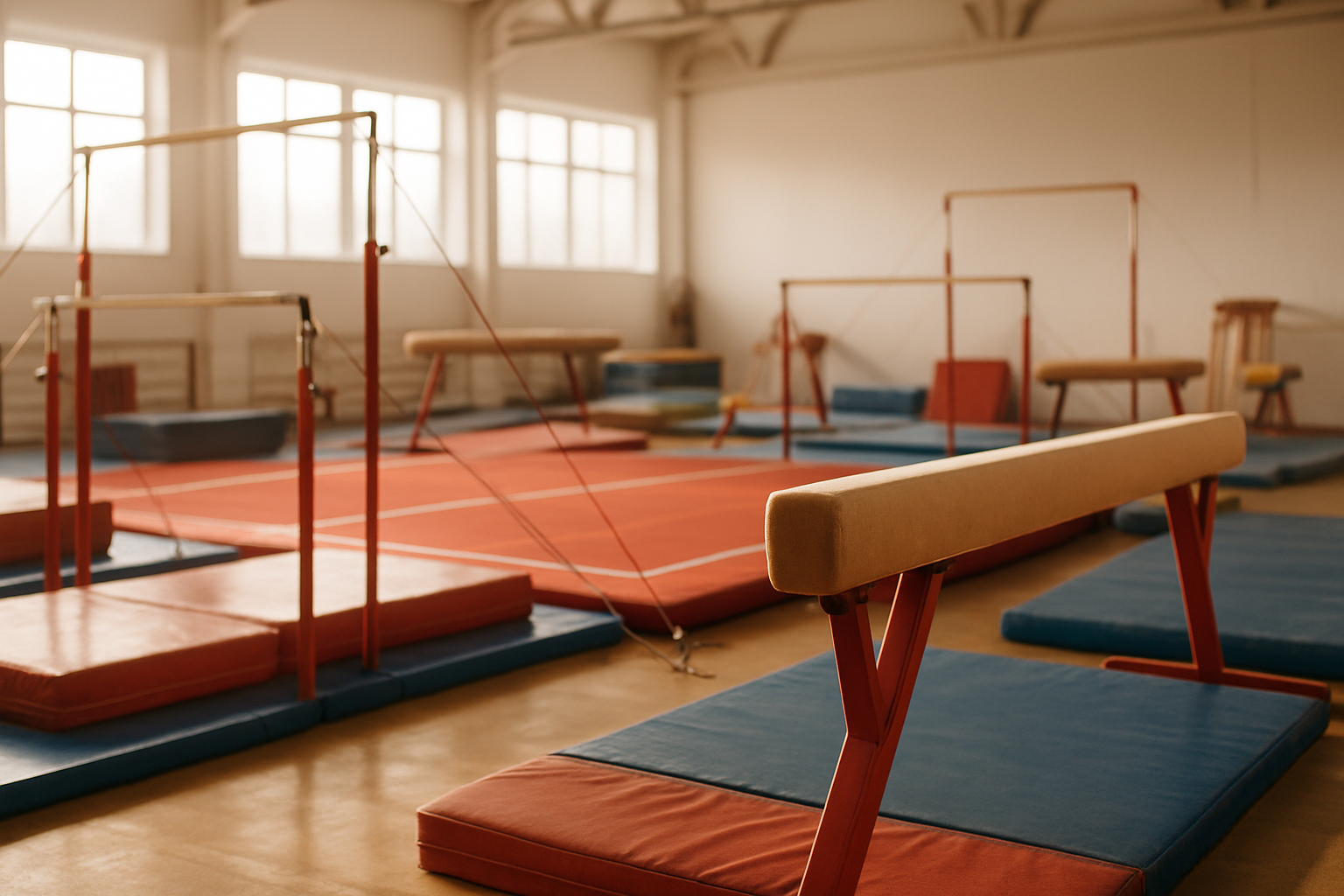
Starting a gymnastics academy in 2026 costs £8k–£35k and breaks even around month 12. Here's the four-phase playbook that covers what most guides skip.
Picture this: you've found the perfect warehouse space, you've got a head coach lined up, maybe you've even started designing a logo — and then someone asks if you've filed your liability waiver requirements with the state. Silence. That moment right there is exactly what this playbook is built to prevent.
The numbers first, because they matter: launching a gymnastics academy in 2026 will run you somewhere between $8,000 and $35,000, and that spread isn't arbitrary. It comes down to how big your facility is and how deep you go on equipment from day one. Break-even? Most operators hit it between month 10 and month 18 — not month three, not month six, no matter how optimistic your enrolment projections look right now.
What follows is a four-phase sequence: getting your legal foundation sorted, building out your space properly, structuring your curriculum and pricing so it actually holds up, then going out and finding your first 50 students. In that order. The sequencing isn't arbitrary — it's the difference between a business that was built correctly and one that has compliance bolted on after the fact, usually at significant cost and stress.
Work through it in order and you won't be doing that retrofit.
Phase 1: Register the Business and Handle Compliance
Most first-time academy owners get this backwards. They spend months sourcing equipment, designing leotards, building a website — and then scramble to register the business three weeks before opening. Don't do that. The compliance side of a gymnastics academy is genuinely complicated (you're dealing with minors, high-liability equipment, and a paper trail that insurers and local councils will actually scrutinise), and leaving it for last means you're solving problems under pressure, which is how costly mistakes happen.
Business structure
- Sole proprietorship is the bare-bones option — quick to set up, almost no paperwork, and fine if you're a single coach running small trial batches out of a rented studio. But here's the catch: every injury claim comes straight to you personally. Your savings, your car, your assets. All of it exposed.
- LLC (US) / LLP or Limited Company (UK/AU) — this is where most academy founders should land. The moment you're signing a lease on a dedicated space, you want that wall between your personal finances and your business liability. Registration costs anywhere from $50 to $500 depending on your state or jurisdiction. Not expensive. Very much worth it.
- Corporation is, honestly, overkill for the vast majority of people starting out. It only makes sense if you're pulling in outside investors or you've got genuine plans to franchise across multiple locations from day one. If that's not you, don't bother.
Tax registration
Here's something a surprising number of new gym owners skip until it's too late: tax registration. Don't be that person. In the US, get your federal employer identification number (EIN) sorted before you even think about opening a business bank account — the IRS.gov online application takes ten minutes, genuinely. In the UK, you've got a three-month window from the day you start trading to register with HMRC, either as self-employed or for corporation tax, and that clock starts whether you're ready or not. EU rules are messier, because VAT registration thresholds differ country to country — in Germany, for instance, you won't hit that threshold until your annual turnover clears €22,000, but the rules in your specific country may look very different.
Trade license and premises permission
Get your general business licence sorted first — most municipalities charge somewhere between $25 and $150 a year, and it's dead simple to obtain. Then, if you're going into a commercial zone (which most gymnastics facilities do), check that the space is actually permitted for "recreational use" or "sports/fitness." Don't assume. A lot of landlords will tell you it's fine without actually knowing, and that assumption will cost you later.
Why does the zoning classification matter so much for gymnastics specifically? Two reasons: ceiling height requirements, and assembly-occupancy classification under most building codes. Gymnastics isn't treated the same as a yoga studio or a boxing gym — the overhead clearance alone can push your space into a different regulatory category entirely.
Confirm the permitted use in writing before you sign anything.
Insurance — non-negotiable
Let's be honest — most new academy owners spend weeks agonising over logo colours and then spend about forty minutes on insurance. Don't be that person.
Gymnastics involves kids flying through the air and landing on equipment that costs tens of thousands of pounds to replace. The liability exposure is real, and it's not small.
Here's what you actually need:
General liability — this is your foundation. Minimum $1 million per occurrence, $2 million aggregate. Budget somewhere between $800 and $2,500 a year depending on your location, facility size, and how many students you're running through the door. Don't lowball this one.
Professional liability (sometimes called coaching malpractice cover) protects you when a parent decides a coaching decision caused their child's injury. It happens. Factor in $400–$900 annually.
Participant accident insurance is the one that catches people off guard — it covers student injuries regardless of who was at fault. And it's not optional if you're seeking affiliation. USA Gymnastics, British Gymnastics, and most other governing bodies require it before they'll recognise your academy. So sort this out early, not after you've already applied.
Once you've put real money into spring floors and foam pits — and you will — property and equipment insurance stops being a nice-to-have. One burst pipe or one break-in and you'll understand why.
Talk to a broker who actually works with sports facilities. Generic small-business policies routinely miss gymnastics-specific exposures. The difference in premiums is usually not worth the gap in coverage.
Child-safety policy
Here's something every new academy owner asks at some point: "Do I really need a formal safeguarding policy, or is just being careful enough?" The answer — and there's no softening this — is that informal isn't good enough. Not legally, not ethically, not practically.
Gymnastics works almost exclusively with under-18s. That means child-safety frameworks aren't optional extras you bolt on later. In the US, if your programme has any affiliation with USA Gymnastics, the SafeSport Authorisation Act (2017) applies to you directly — background checks for every coach and staff member, no exceptions. In the UK, British Gymnastics requires mandatory safeguarding training before any coach gets a licence. These aren't bureaucratic hoops. They exist because the sport has a documented history of what happens when they're skipped.
Write your policy down. All of it. Who can be alone with a child and under what conditions, how allegations get reported, what happens during that process. Then — and this part gets overlooked constantly — make it visible to parents before they sign anything. Not buried in the welcome pack. Actually visible.
If a parent asks to read your safeguarding policy before enrolling their kid, that's not suspicion. That's exactly the kind of question you want parents asking. Have a clean, readable version ready.
Phase 2: Space, Equipment, and Setup Costs
Picture this: it's week six of your new programme, you've got 28 students enrolled, and someone's back walkover is about to take out the kid doing a forward roll three feet away. That's what "we'll grow into the space" actually looks like in practice — and it's not pretty. Space is, without question, the single biggest variable in your total capital expenditure. Underestimate it and you're scrambling at 30 students, rearranging mats like a puzzle that has no solution. Overestimate it — rent a warehouse when you've got 10 kids signed up — and you're haemorrhaging money every month before a single cartwheel happens.
How much space do you actually need?
The most common mistake? Signing a lease before checking the ceiling height. You find a space, the rent works, the location's great — and then someone points out it's 12 feet from floor to beam and suddenly half your curriculum is off the table. Twelve feet is fine for preschool tumbling. It is absolutely not fine for bar work or aerial passes. You need 16–18 feet minimum for anything beyond the basics.
Now, floor space. The rule most working coaches use: 60–80 sq ft per student on the floor at any one time. Run a recreational beginner class of 10 kids and you're looking at roughly 700–900 sq ft of actual training area — not office, not lobby, not the space the drinking fountain takes up. Just clean, usable floor.
Scale that up and the numbers get serious fast. A full competitive programme with a tumble strip and foam pit? You're talking 4,000–8,000 sq ft at the low end. That's not a starter number.
Most academies open somewhere between 1,500 and 2,500 sq ft and grow into bigger premises once the waitlists make the case for it. That's a sensible approach — don't overbuild on day one. But don't compromise on ceiling height. That one's non-negotiable from the start.
Flooring
Spring floor panels will eat the biggest chunk of your equipment budget — full stop. A proper spring floor (30' x 30' or 40' x 40') costs anywhere from $4,000 to $15,000, and where you land in that range depends on the manufacturer and how much square footage you're covering. If you're running a beginner-only programme and the budget's tight, foam flooring tiles are a legitimate option — $3–$8 per square foot installed, and they'll do the job. But here's what you shouldn't do: swap in a vinyl gym floor or rubber mat and call it a gymnastics surface. Injury rates climb. Skill development stalls. It's not worth the short-term saving.
Equipment list and cost ranges
Here's something nobody warns you about when you're pricing out a gymnastics academy: the equipment list alone can swing by tens of thousands of rupees depending on where you buy, whether you go new or refurbished, and frankly, how well you negotiate. So before you freeze up at the numbers below, know that these are ranges — not sentences.
The spring floor (30x30) is your single biggest line item, sitting somewhere between $4,000 and $8,000. That gap isn't arbitrary — it reflects the difference between a bare-bones recreational surface and something with actual competition-grade give. Don't cheap out here if your students are going to be tumbling on it daily.
Beams come in two flavours. A floor-level balance beam runs $300–$900, which is perfectly reasonable for beginners who are still figuring out where their feet are. Bump it up to competition height and you're looking at $800–$2,500 — a meaningful jump, but necessary once your intermediate kids start training routines that need to replicate real competition conditions.
Uneven bars for beginner use: $600–$1,800. Vault table: $800–$2,200. These two tend to surprise first-time academy owners because they look simple but the structural engineering behind them isn't cheap. A vault table that wobbles is a liability nightmare, full stop.
The smaller stuff adds up faster than you'd expect. Cartwheel beams and low beam sets ($200–$600), foam pit blocks to fill an 8x8x4 pit ($1,500–$3,500 — and yes, that's just the blocks, not the pit structure itself), panel and landing mats ($1,200–$3,000), and spotting blocks with wedges ($400–$900). None of these feel expensive individually. Together, they'll quietly eat through your fitout budget before you've touched the big apparatus.
Capex total
Here's what you're actually looking at to open the doors: $9,000–$22,000 in equipment for a basic recreational setup — spring floor, two beam levels, a bar set, landing mats, no foam pit. That's before you've touched the space itself. Leasehold improvements (mirrors, wall padding, getting the lighting right), the security deposit, first month's rent — once all of that's in, your total startup capex for a purpose-built studio sits somewhere between $18,000 and $45,000.
The shared-space route changes the picture dramatically. Rent off-peak hours from an existing sports facility and your launch costs drop to $3,000–$8,000. Genuinely. But that saving doesn't come free — you'll carry higher per-hour operating costs for as long as you're in someone else's gym, which eats into margins over time.
Neither model is wrong. They just front-load the pain differently.
Phase 3: Curriculum and Pricing
What to teach first
Here's what most new academy owners get wrong before they even open: they try to launch everything at once.
Don't. Start with two tracks — preschool gymnastics (ages 3–6) and recreational beginners (ages 6–12). These are the classes that fill fastest, carry the lowest injury risk, and actually keep the lights on while you're still figuring out the rest. They're your foundation. Everything else — the competitive squads, the advanced streams — comes later, once you've found your footing.
And when we say later, we mean it. Don't launch a competitive team until you've had at least 18 months of operation under your belt and a coach on staff who's already worked in a club or invitational environment. Competitive gymnastics isn't just a harder version of recreational — it's a different world entirely. The liability exposure is higher, training hours are longer, and (arguably the trickiest part) parent expectations run at a completely different intensity. You want that particular headache after you've built some operational muscle, not before.
For the preschool track specifically, don't reinvent the wheel on progressions. Borrow from an established developmental framework — USA Gymnastics' Xcel Foundation is a solid starting point, or use a comparable national programme — so you've got a proper syllabus to teach from, not just a loose collection of drills you're assembling on the fly.
Batch structure
Picture your first Saturday morning: a three-year-old in a sparkly leotard bursting through the door, zero attention span, maximum chaos — and a parent hovering two feet behind her, not sure whether to follow or step back. That's your Tiny Tumblers cohort. Ages 3–5, six to eight kids per class, 45 minutes (any longer and you've lost them entirely), and it's parent-and-child format for the youngest ones because honestly, you need that adult in the room.
Once kids hit 6–9, they're ready to work independently. Recreational Beginners run 8–10 per class across a full 60 minutes. The 9–14 bracket — Recreational Intermediate — stretches that to 75 or 90 minutes, and the same 8–10 cap applies. Don't be tempted to squeeze in more students to fill revenue gaps. The mats get crowded, the coaching gets thin, and parents notice.
Then there's the batch most new academies ignore: Teen and Adult Fundamentals. Six to eight per class, 60 minutes, wildly underserved in most cities — and surprisingly profitable once you build even a small waitlist. Adults are motivated, they show up consistently, and they don't need you to chase them about attendance.
One class per week keeps gymnastics a hobby. That's fine for some families, but it won't build real skill, and it quietly kills your retention numbers. Two sessions a week per level is the floor if you want students to actually progress — and if they're progressing, they stay.
Pricing
- Recreational (2x/week): $80–$180/month. Metro markets — New York, LA, Chicago — typically land at $140–$200; smaller cities sit closer to $80–$120.
- Competitive team: $200–$500/month, meet fees billed separately. Don't fold this into a recreational upsell — it's a different product and it should be priced like one.
- Drop-in / trial class: $15–$30 per session.
The most common pricing mistake? Overcomplicating the trial offer. Here's what actually works: one free trial class per new student. That's it.
You'll convert somewhere between 40–65% of the people who actually walk through the door — and that phrase "actually walk through the door" is doing a lot of work here. Showing up is the real filter. So once someone books a trial, confirm it via WhatsApp or SMS 24 hours before. And when they arrive, have enrollment paperwork waiting. Don't make them come back. Don't send a follow-up email three days later. Close it on the day.
Phase 4: Getting Your First 50 Students
You don't need a marketing agency. You need three things working at once.
Google Business Profile — do this before anything else
Before you touch your website, before you post on Instagram, before you do anything else — set up your Google Business Profile. Verify the address. Add photos of your space, even if the mats aren't laid out yet and there's still a ladder in the corner. Write a description that actually names your city and your neighbourhood, not just "our facility" and vague language about excellence.
Here's why this comes first: when a parent types "gymnastics classes near me" into Google, it's not your website that shows up front and centre. It's the Business Profile. That little card with your hours, your photos, your star rating — that's the thing doing the selling before anyone clicks anything.
Reviews are what make or break that card. One month in with a new family — not week one, when they're still figuring out where to park — send them a direct link and ask. Most people won't think to leave one otherwise, even if they loved it.
WhatsApp Business
Set up your WhatsApp Business profile properly from day one — catalogue, class listings, pricing, all of it visible without the parent having to ask. Yes, WhatsApp isn't the dominant messaging platform in the US the way it is elsewhere, but for group communication with enrolled families it genuinely pulls its weight. You'll find it's where a lot of parents are already comfortable.
The one thing that'll kill your conversion rate faster than anything else? Slow replies. Two hours is your ceiling. Go beyond that and the parent has already filled out a form at the gym down the road — they're not waiting around. Most coaches don't realise how short that window actually is until they've lost a few enrolments to it.
School and preschool tie-ups
Most first-location academies burn through their ad budget in month two and wonder why the phone isn't ringing. The answer is usually two miles away — literally. Five preschools, five primary schools, within that radius. That's your pipeline.
Don't overthink the pitch. A flyer on the notice board works. But if you can get a teacher to hand you a 30-minute PE slot, take it — you're suddenly in front of 20 to 30 families who are already primed to say yes, because their kid just spent half an hour doing forward rolls and loved it. Teachers are almost always open to this kind of thing, by the way. Low-prep, no cost to them, the kids are entertained. It's an easy yes.
Paid ads, for a brand-new single-location academy, rarely beat this channel. Rarely.
Instagram Reels
Wondering whether you actually need to be good at this? You don't. Seriously.
A phone propped on a tripod, a kid sticking her first cartwheel — that's your content. No lighting rig, no editor, no brand kit. The clips that actually get parents stopping mid-scroll are the unpolished ones: shaky framing, genuine reaction, a six-year-old beaming because she finally didn't fall off the beam. That stuff travels. Slick promotional videos don't, not for a local gym trying to build trust with families who've never heard of you.
Three posts a week during your launch month. That's the target.
Use local hashtags — #ChicagoGymnastics, #DenverKids, whatever fits your city — and tag your location every single time. Those two things together are how you get discovered by parents searching for activities in your actual neighbourhood, rather than just getting likes from people three states away who'll never walk through your door.
Skill progression is what converts. Not aesthetics. A before-and-after of a child's cartwheel over four weeks will outperform a polished studio reel almost every time — because parents aren't buying a brand, they're buying proof that their kid will actually learn something.
Festival-season and back-to-school timing
Walk into almost any gymnastics gym in late July and you'll notice something: the front desk gets busier. Parents are already thinking about fall schedules — soccer, swimming, dance — and they're making decisions fast. That same window, plus the first week of January, are the two moments when enrollment actually moves in this industry.
So time your "new session starts" push accordingly. Last week of July. First week of January. Not a week earlier, not a week later — those windows are when the decision-making is already happening, and you're just showing up at the right moment.
The discount structure matters more than most academy owners realise. A $20 off the first month works well — it's enough to tip a fence-sitter without training your community to wait for a sale every term. But here's the part people skip: put a hard expiry on it, seven days before the term begins. That deadline does real work. It creates urgency without you having to chase anyone, and it doesn't signal that your pricing is negotiable on a permanent basis.
Twenty dollars off. Seven days. Two windows a year. Simple, and it holds its value.
Managing it all from day one
Here's the mistake most new academy owners make: they start with a spreadsheet. Seems fine at ten students. Maybe even at fifteen. But somewhere around 20–25, it quietly becomes a second job — chasing unpaid fees, double-booking time slots, sending the same WhatsApp message to six parents about a reschedule.
Don't wait until it breaks. Get class management software before you think you need it.
Something like Lynk pulls scheduling, payments, and parent communication into one place — which sounds like a small convenience until you're also the one coaching four sessions a day and trying to reconcile fee payments at 10pm. That administrative drag compounds fast, and it's almost entirely avoidable.
A few tools that save disproportionate amounts of time: a free certificate generator if you're running a graded programme (designing certificates from scratch every term is the kind of thing that eats an afternoon you didn't have), and a free fee invoice generator so parents get proper receipts without you needing full accounting software from day one.
If you're working through the broader launch logistics — lease decisions, instructor hiring, that sort of thing — the 10 Steps To Starting Your Own Dance Studio covers studio-specific mechanics that translate surprisingly well to gymnastics academies.
Common Mistakes New Founders Make
Leasing too much space, too soon. That 5,000 sq ft facility at $4,500/month feels like a statement of intent on day one. By month four, with 22 students trickling in, it's just expensive silence. Start in 1,500–2,000 sq ft — or share a space with another programme. You can always upsize. You can't un-sign a lease.
Competition equipment before you have competitive students is a classic vanity purchase. A FIG-spec vault and competition-height bars will run you $4,000–$6,000 combined, and they'll collect dust for the next 18 months while you're teaching forward rolls to seven-year-olds. Buy for the students you actually have, not the elite programme you're imagining.
Underpricing kills more gyms than overpicing does. Setting $50/month to beat every competitor in your postcode doesn't build loyalty — it builds parents who expect that rate permanently and balk the moment you try to correct it. You'll raise prices eventually. The question is whether you've trained your community to accept that or resent it. Price at market from the start and win on quality.
Staffing ahead of revenue. Two coaches at launch sounds responsible. It's usually a cash-flow problem waiting to happen. Unless you've got 35-plus students walking in on day one, you (full-time) plus one part-time assistant is plenty. Hire the second coach when your classes are genuinely full — not when your spreadsheet says they will be.
Skip the safeguarding policy and you're not cutting paperwork. You're gambling the entire business on nothing going wrong. One incident — one — without documented procedures, background-checked staff, and a clear incident-reporting chain can undo years of work overnight. This isn't bureaucratic box-ticking. It's the thing that keeps you open.
No signed enrollment agreement is a real legal exposure. "Parents understand gymnastics has risks" is not a defence — not in any court, and not with any insurer. Every student needs a signed enrollment agreement before their first class: liability waiver, photo consent clause, medical information form. All of it. Every time.
And don't even think about launching recreational and competitive programmes at the same time. Competitive gymnastics means 10–15 hours a week of training, a completely different parent expectation (meet travel, team fees, weekend commitments), and a scheduling complexity that will eat you alive if you're still figuring out your rec programme. Run recreational for a full year first. Get stable. Then revisit competitive.
Regional Notes — US / UK / EU / India
United States
Affiliate with USA Gymnastics if you're running a competitive programme — that's the standard route, and there's no real alternative at the national level. Recreational-only academies can technically skip it. But here's the thing: USAG membership bundles in liability insurance packages and safeguarding resources that you'd otherwise have to source separately, so even non-competitive programmes often find it worth the paperwork.
Background checks are where it gets state-specific. California and New York both carry stricter mandates than most of the country — don't assume what's required in Texas applies where you are. Check your state's requirements before you hire anyone.
United Kingdom
— and that's the part most new academy owners get wrong before they've even opened the doors. British Gymnastics is your governing body here, full stop. Every affiliated club answers to them, and if you're planning to run unsupervised sessions, you'll need at minimum a Level 2 qualified coach on the floor. The licensing structure runs from Assistant Coach up through Coach 3, so map out where your staff sit before you start scheduling classes.
DBS checks. Non-negotiable. Anyone working with under-18s needs one — no exceptions, no "we'll sort it next week." The Disclosure and Barring Service process isn't complicated, but it takes time, so build it into your hiring timeline from day one.
One thing that catches people off guard: business rates. Commercial premises in the UK attract them, and they can bite hard if you haven't accounted for them upfront. When you're sitting down to negotiate your lease, run the numbers on this before you sign anything.
European Union
Already thinking about expanding into Europe? That's the question most academy founders ask themselves around year two — and the answer depends almost entirely on which country you're looking at.
Germany runs on its Verein system. Deep club culture, strong public subsidy pathways — but you'll need to structure as a non-profit to access them. France is stricter on the coaching side: paid instructors are legally required to hold a BPJEPS (that's a professional fitness and sport certificate), and there's no workaround. The Netherlands, by contrast, has one of the lower barriers to entry for private academies in the EU. Three countries, three completely different operational realities.
The one thing that doesn't change across any EU market: GDPR. Enrolment forms, photo releases, payment records — all of it falls under the regulation. Not a technicality you can defer. If you're collecting data on students (and you obviously are), compliance isn't optional from day one.
India
Picture this: you've found a 2,000 sq ft space in Bengaluru, you've sourced your equipment, you've even got your first batch of students lined up — and then someone asks if your POCSO documentation is in order. Blank stare. That's the moment most first-time academy owners realise they skipped a few steps.
So let's back up.
If you're running a multi-coach operation, you'll almost certainly register as a Pvt Ltd company or an LLP through the MCA21 portal — standard practice, no real surprises there. What does catch people off guard is the GST piece. Gymnastics sits under sports and recreational services, which puts it squarely in the 18% bracket once your fees cross the annual threshold. Worth doing that math early, before you set your fee structure.
You'll also need a trade licence from your local municipal authority. Don't skip this assuming it'll sort itself out later — municipal offices have their own timelines, and they're rarely in a hurry.
On the federation side: the Gymnastics Federation of India (GFI) governs competitive programmes, but if you're running a recreational academy, you're largely outside their jurisdiction. You can operate independently. That said, POCSO compliance isn't optional for anyone working with minors — and "anyone" means you. Documented safeguarding protocols, background checks, the whole framework. Get this sorted before you open, not after.
Capex varies brutally by city. In Tier-1 markets — Bengaluru, Mumbai, Delhi NCR — a 2,000 sq ft setup typically runs somewhere between ₹6 lakh and ₹14 lakh, once you factor in equipment and leasehold improvements. That's a wide range, and where you land depends heavily on how much the landlord wants for fit-outs and what your equipment sourcing looks like.
Frequently Asked Questions
How much does it cost to start a gymnastics academy?
Spring floor alone can run you $4,000 on the low end — or $15,000 if you're going for anything serious. That's before rent, before deposits, before you've touched a single leasehold improvement. So when people ask what it costs to start a gymnastics academy, the honest answer is: anywhere from $8,000 to $45,000, and