How to Start a Gym & Fitness Academy: A 2026 Playbook
By Swathi N ·
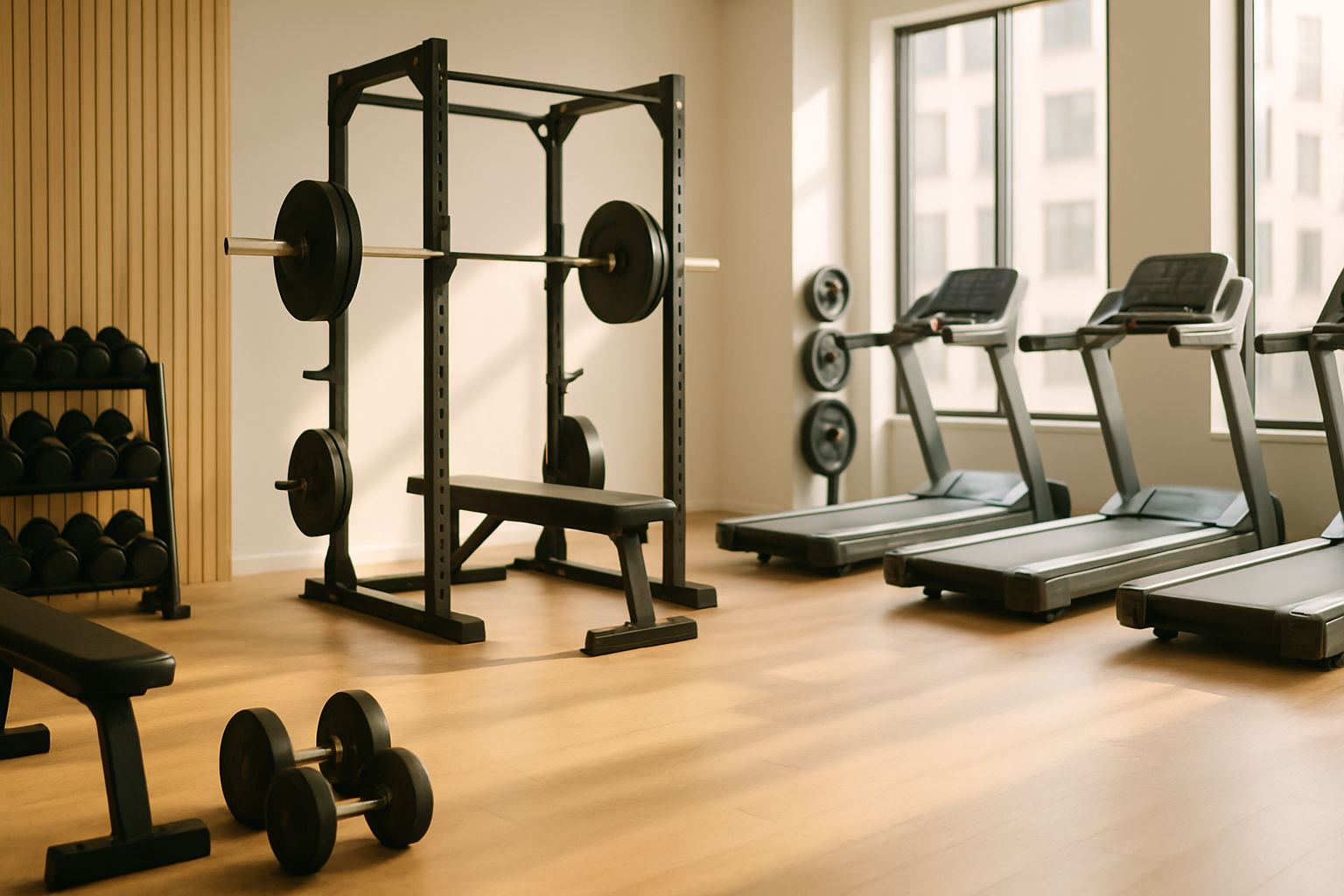
Slots are full, rent's due, and owners are building it anyway. Here's how to start a gym in 2026 — without the guesswork.
Tuesday morning, 7 a.m. Pick a city — Austin, Singapore, West London, doesn't matter. Walk into any functional fitness space and the scene is almost identical: every slot taken, the owner simultaneously managing a WhatsApp group and shooting an Instagram story, and somewhere on a spreadsheet (or just in their head) the monthly equipment payment sitting like a quiet anxiety. This is what the business looks like right now. And it's not slowing down.
Here's what drove it: home workouts got old. Fast. People tolerated the living-room kettlebell phase longer than anyone expected, but once that fatigue set in, they didn't just drift back to gyms — they came back hungry for coaching, for the group energy, for something that felt like it was designed for them. The rebound was sharper than most industry observers predicted, and it's created a genuine opening for new operators who know what they're doing.
The numbers, bluntly: startup costs run $8,000–$45,000, depending on how big you're going and what format you're building. Break-even hits somewhere between month 8 and month 18 for most first-timers — not month 3, whatever the optimistic projections say. And the path from idea to operating gym breaks down into four distinct phases: get your legal structure sorted, build out the physical space, design programmes that actually retain members, and fill your first 50 spots.
That last one is where most people stall. This playbook covers all four.
Phase 1: Register the Business and Handle Compliance
Most people starting a gym skip straight to equipment lists and logo colours. Then they open the doors, take money from clients, and realise three months later they've been operating without the right licences. The fines aren't the worst part — it's having to pause operations mid-momentum to fix something that should've taken four weeks at the start.
Do this first. Before you hire anyone, before you sign a lease, before you spend a single rupee on dumbbells.
The business structure question trips people up more than anything else. Sole proprietorship is the fastest to register — sometimes done in a day — but it offers you zero liability protection if a client gets injured and decides to sue. A Private Limited Company takes longer (think two to four weeks, depending on how quickly you get your documents in order) but separates your personal assets from the business. Most gym owners who've been around long enough will tell you: go Pvt. Ltd. from the start. It's painful to convert later.
Once you've got your business entity sorted, the compliance checklist looks roughly like this: GST registration if your annual turnover is going to cross the threshold, Shops and Establishments Act registration with your local municipal authority, a trade licence from the municipal corporation, and — this one gets overlooked constantly — public liability insurance. One client slips on a wet floor and you'll wish you hadn't skipped that last one.
Fire safety clearance matters too, especially if you're setting up in a commercial building with limited exits. Some states also require a specific licence for running a fitness or wellness centre; it varies, so check with your local authority rather than assuming you're covered.
Four weeks, done properly. That's the timeline if you're not waiting until the last minute to gather documents.
Business structure
- Sole proprietorship — you're up and running in a day, but there's zero liability protection. If a client sues, they're coming after your personal assets. Works fine if you're a one-person personal training operation pulling under $100K a year. Beyond that, reconsider.
- LLC (US) / Ltd (UK) / Pty Ltd (Australia) — the moment you hire staff, sign a lease, or bring on contractors, this is where you need to be. Your personal finances stay separate from the business's mess. Filing costs aren't brutal either: in the US it's $50–$500 depending on which state you're in; Companies House in the UK charges £50 flat.
- Partnership or S-Corp — co-founding with someone? Get a written partnership agreement done before you've seen a single rupee, dollar, or pound come through the door. Not when things get complicated. Not "eventually." Day one. People who skip this almost always regret it.
Tax and sales tax registration
Here's something most new gym owners find out the hard way: tax registration isn't one-size-fits-all, and getting it wrong early creates headaches that follow you for years.
If you're in the US, grab your EIN first — it's free through the IRS website and takes about ten minutes. Federal level, fitness services are largely exempt from sales tax. But your state is a different story entirely. New York taxes gym memberships. Texas doesn't. Same business, two states, two completely different obligations. Check yours before you assume.
UK founders can ignore VAT until turnover hits £90,000 — at which point registration isn't optional. Most fitness classes sit in the standard 20% bracket, so factor that into your pricing before you're suddenly absorbing a fifth of every membership fee.
The EU is messier. VAT rules aren't harmonised the way people assume — each member state does its own thing. Germany taxes fitness services. France does too. That said, certain therapeutic or wellness-adjacent services sometimes qualify for reduced rates, so if your offering straddles that line, it's worth getting a local accountant to look at it properly.
Canada: once you clear CAD $30,000 in annual revenue, HST/GST registration kicks in. That threshold arrives faster than most founders expect.
Trade license and premises permission
Get your business operation licence sorted first — most municipalities call it a "business registration" or "occupancy permit", and there's no getting around it. If you're converting retail or commercial space into a gym (a former clothing store, an old office unit, whatever it is), you'll also need a change-of-use permit on top of that. Budget 4–8 weeks for the process. Fees typically land somewhere between $500 and $2,000, though that gap is wide because it depends heavily on which city you're in — some local bodies are quick and cheap, others are neither.
Child-safety policy
— and this is the part people skip, which is exactly why it needs to be said plainly.
Running classes for under-18s? Youth bootcamp, kids' gymnastics, teen sports conditioning — doesn't matter which. You need a formal child-safeguarding policy. Full stop.
In the UK, Ofsted won't come knocking (gyms aren't schools, and they know it), but that doesn't mean you're off the hook. The NSPCC's safeguarding framework is what the industry actually uses as its benchmark, and if you're not following it, you're the odd one out — and not in a good way. In the US, the picture varies by state, but many require background checks (the DBS equivalent) for anyone who works with minors. Your first call should be to your state's Department of Education or child welfare agency, because the rules where you are might be tighter than you'd expect.
The "I'm not a school" logic won't hold up. Not legally, and definitely not in front of a judge.
If something goes wrong — even something you didn't cause, even something you couldn't have predicted — the first question anyone asks is whether you had a policy. Without one, your liability exposure isn't just significant. It's enormous, and it's entirely avoidable. Don't let this be the thing you get around to eventually.
Insurance
Here's a question most new gym owners ask way too late: what happens if a client blows out their knee doing a movement you programmed? Or a visitor slips on a wet floor near the entrance? Or a fire damages ₹40,000 worth of equipment you haven't finished paying off?
That's what insurance is for. And no, it's not optional.
The baseline you need is general liability — at minimum $1M to $2M in coverage. Your landlord will almost certainly require this before you sign the lease, so it's not even a choice you get to debate. On top of that, professional liability (also called errors & omissions) is what protects you specifically when a client injures themselves following your coaching or programming — and if you think that scenario sounds unlikely, ask around in any fitness business forum.
Property insurance is the one people underestimate until they're staring at a broken cable machine and a repair bill that hurts. Equipment replacement costs climb fast. Workers' compensation kicks in the moment you hire your first employee — required by law in most US states, so don't wait until your second or third hire to sort it out.
Budget somewhere between $1,500 and $4,000 per year for a bundled policy if you're running a small-to-mid-sized academy. That range moves depending on your location, square footage, and the number of staff you have. One thing worth doing: seek out insurers who specifically underwrite fitness businesses rather than just grabbing a generic commercial policy. Specialist providers understand the risk profile better, and their rates tend to reflect that.
Phase 2: Space, Equipment, and Insurance
Space sizing
The most common mistake? Signing a lease based on how the space feels during a walkthrough — then discovering three months in that you can't run a 10-person class without someone's elbow in someone else's face.
Here's what the numbers actually look like when you do it right.
Group fitness, yoga, pilates — you need 35 to 50 sq ft per person on the floor. Not per person registered. Per person moving. Strength and conditioning or CrossFit-style training pushes that up considerably: 60 to 80 sq ft per participant, because barbells, bumper plates, and burpees eat space in ways a yoga mat simply doesn't. Personal training studios are a different calculation altogether — a 400 to 600 sq ft room handles one or two clients at a time comfortably, and that's genuinely all you need for that format.
Run the numbers on a standard group class. Ten participants at the lower end of the group fitness range already eats 350 to 500 sq ft — and that's just the training floor. Add a reception desk (clients need somewhere to check in that isn't a hallway), a storage area for equipment that doesn't live on the floor, and at least one usable bathroom, and your minimum workable footprint lands somewhere between 1,000 and 1,200 sq ft total.
Anything smaller and you're not running a gym. You're running an inconvenience.
Flooring, mirrors, and sound
Flooring is not the place to cut corners. For weight training areas, you need rubber flooring — 8mm at minimum, 15mm if you're serious about protecting the subfloor (and your clients' joints). Installed, that runs $2–$5 per sq ft. Manageable.
Dance studios, Zumba rooms, high-impact aerobics spaces — those need hardwood or a sprung floor. Non-negotiable. A sprung floor absorbs impact in a way rubber simply can't, and anyone who's taught a 45-minute aerobics class on a concrete slab will tell you exactly why that matters. Budget $8–$15 per sq ft installed.
Mirrors: go full-height or don't bother. Half-mirrors frustrate clients trying to check their form, and form feedback is literally the point. Wall coverage will determine your spend — somewhere between $800 and $2,500 for most setups.
And the sound system — this one trips up a lot of first-time gym owners. A Bluetooth party speaker is not a sound system. It'll die mid-class, it won't fill the room, and your clients will absolutely notice. What you want is a commercial-grade ceiling speaker setup with Bluetooth connectivity. Expect to spend $600–$2,000 depending on room size. It's not glamorous, but neither is restarting a workout because your speaker cut out again.
Equipment list and costs
Here's something nobody tells you when you're pricing out a gym build: the spreadsheet looks terrifying right up until you realise half that equipment can be bought used, for half the price, from a gym that closed six months ago. Keep that in mind as you read through this.
| Item | Budget Range |
|---|---|
| Cardio machines (treadmills, bikes) × 4–6 | $4,000–$12,000 |
| Free weights (dumbbells, barbells, plates) | $1,500–$5,000 |
| Squat racks / power cages × 2 | $1,200–$4,000 |
| Resistance bands, mats, foam rollers | $400–$800 |
| Kettlebells (set) | $500–$1,200 |
| Reception desk + seating | $500–$1,500 |
| POS terminal + tablet | $200–$600 |
For a small group-fitness and PT hybrid studio — think 800 to 1,200 sq ft — you're looking at total capital expenditure somewhere between $12,000 and $35,000. That's the honest middle ground.
Going yoga-only or bodyweight-focused? Drop the cardio machines entirely and you can get the whole thing done for $8,000–$15,000. At the other end, a full-equipment gym with 15+ cardio units and serious lifting infrastructure will run you $40,000 to $100,000+ — sometimes well past that.
Buy secondhand wherever you can. Commercial-grade equipment from closing gyms or auction sites routinely sells at 30–50% below retail, and a lot of it has barely been touched. Check those listings before you go anywhere near a new equipment catalogue.
Phase 3: Curriculum and Pricing
What to teach first
Here's something most new gym owners get wrong from day one: they try to be everything to everyone. Strength, yoga, HIIT, boxing, mobility — all of it, right out of the gate. It sounds ambitious. It's actually a mess.
Pick one primary modality and commit to it. Strength and conditioning, functional fitness, yoga, personal training, boxing, gymnastics — whatever it is, own it completely before you even think about expanding. Specialisation does something counterintuitive: it makes your marketing dramatically simpler (we're talking 10x easier, not a small improvement) and it gives you the space to actually build expertise rather than perform it.
Running a functional fitness or group training model? Three tracks. That's your structure.
Beginners need more than just a programme — they need constant coaching cues and real-time movement correction, because without it they'll ingrain bad habits and plateau fast. Intermediate clients have moved past that; what they want now is programming that actually progresses, not the same routine recycled weekly. And your performance clients? They're tracking everything. Give them data. Give them results. They'll do the rest.
If you're building something more rooted in dance or movement arts, that's a different structural conversation entirely — batch design, curriculum sequencing, level progression all work differently in that format. The 10 Steps To Starting Your Own Dance Studio goes into exactly that, and it's worth reading before you map out your tracks.
Batch structure
How do you actually divide people into batches without it becoming chaos? This is the question most new gym owners fumble — they either lump everyone together or overcomplicate it into twelve different tiers nobody can track.
Here's what works in practice. Split by age first: under-14s, the 14–18 bracket, adults (18–40), and older adults (40+). These aren't arbitrary lines — a 52-year-old and a 24-year-old need different equipment weights, different rest intervals, and frankly, a different coaching vocabulary altogether. What motivates one group bores or alienates the other.
Then layer in skill level. Beginner, intermediate, advanced — keep these as separate batches. Mixed-level groups sound inclusive but they're a practical nightmare: your beginners feel lost, your advanced clients feel held back, and your coach is constantly splitting attention three ways.
Class size matters more than most people realise. For PT-style group coaching, cap it at 8–12 — beyond that, form corrections start slipping through the cracks. Cardio and conditioning sessions can comfortably handle 15–20. Specialty skill work (think Olympic lifting, gymnastics-based movements, sport-specific drills) needs the tightest cap: 6–8 maximum, no exceptions.
Frequency is simpler. Three sessions a week is the sweet spot for most adult clients — enough stimulus, enough recovery. Beginners do better at twice a week while they're building the habit. Performance-focused clients can handle four or five, but that's a small slice of your overall intake.
Pricing
Walk into a boutique gym in Manhattan or Mayfair, and you'll see rates that'd make a suburban studio owner choke on their coffee. Walk into a solid independent academy in Columbus or Leicester, and those same services cost roughly half. Location does a lot of heavy lifting when it comes to what you can actually charge.
Here's a rough sense of what quality independents are pulling in across different formats:
- Unlimited group classes — $80 to $200 per month
- Class packs (10 sessions) — $120 to $250
- 1:1 personal training — $50 to $150 per session
- Semi-private training (2–4 people) — $35 to $80 per person, per session
Those top-end figures aren't fantasy — they're what the market actually bears in San Francisco, New York, London, Sydney, Dubai. Premium postcodes support premium pricing, full stop.
Mid-size cities and suburban markets? You're landing somewhere in the middle of those bands. Not scraping the floor, but not charging Manhattan rates either. Know your market before you set a single number.
Free trial decision
The mistake most new gym owners make? Offering free trial classes and wondering why half those people vanish the moment a real invoice lands in their inbox. Free attracts the wrong crowd — people who are curious, sure, but not committed. You end up burning through instructor time and floor space for leads who were never going to stick around anyway.
What actually works is charging a small amount upfront. Not much — a paid intro session somewhere in the ₹1,200–₹2,000 range (or $15–$25 if you're pricing for Western markets) does something important: it filters people. Anyone willing to pay even a nominal fee to try your facility is signalling that they're at least somewhat serious. That's the person worth your attention.
The other option worth testing — and honestly, it converts surprisingly well — is a two-week unlimited pass priced at $29–$49. Still low enough to feel like a low-risk decision for the prospect. High enough that you're not attracting pure bargain-hunters. And once someone's been training with you for fourteen days straight, leaving feels harder than staying.
Free trials aren't dead, but they're a blunt instrument. Paid trials are smarter.
Phase 4: First 50 Students
Google Business Profile — first week
Before a single member walks through the door — get your Google Business Profile live and fully filled out. Not halfway. Every field. Hours, services, a real description that sounds like a human wrote it, and photos of your actual space (not whatever generic stock image Google suggests).
The photos matter more than most people expect. Prospective members want to see the floor, the equipment, the lighting. They want to know if it looks like somewhere they'd actually want to train. Give them that.
Then, in week one, ask your first ten clients for a Google review. Not in a mass email — individually, in person or over WhatsApp. Something like: "Hey, would you mind leaving us a quick Google review? It genuinely helps us out." Most people say yes when you ask directly.
Here's why this matters so much early on: a profile with 15+ reviews showing up in "gym near me" searches is, honestly, the most powerful free marketing you've got at this stage. Paid ads cost money. Word of mouth takes time. But a well-reviewed Google listing starts working for you almost immediately — and unlike a social post, it doesn't disappear after 24 hours.
WhatsApp Business
Set up WhatsApp Business the day you launch — not later, not "once things settle." Add your academy name, upload the logo, configure automated replies for the standard questions (timings, fees, trial sessions). Done. That's the setup.
Every single lead gets added to your broadcast list immediately. Not after you've confirmed their interest. Not once they've paid. Immediately. The moment someone asks about your academy, they're on the list.
From there, use it properly: weekly schedules, reminders before trial sessions, short updates on how a batch is progressing. Nothing elaborate — a few lines and maybe a short clip is enough. The consistency is what does the work, not the production quality.
Group chats for active batches are underrated. Members start talking to each other, sharing progress, showing up because they don't want to let the group down. That kind of informal accountability is genuinely hard to manufacture through any other channel — and here it just happens on its own.
School and workplace tie-ups
Most gym owners spend month one burning cash on Instagram ads. Don't. Instead, physically walk into three local schools and three nearby offices — yes, walk in, introduce yourself, ask for whoever handles staff wellness or sports programming. Old-fashioned? Maybe. Effective? Consistently.
The pitch for offices is a 6-week corporate wellness programme, run either on-site at their space or during lunch breaks (their preference, not yours — make it easy for them to say yes). For schools, you're targeting the sports teams: a youth conditioning programme that their coaches will actually thank you for. Neither of these is a hard sell if you show up prepared.
Here's why it matters beyond just "community building" or whatever: each contract typically brings in 10–15 students. Two or three signed deals and you've got real volume before a single paid ad has gone out.
Instagram Reels strategy
Wondering whether you actually need to post every single day? You do — at least for the first 60 days. One Reel, daily, no exceptions.
And it doesn't have to be elaborate. A phone, decent natural light, a clean wall behind you — that's the whole setup. What you're posting: form checks with your actual coaching cues, a 30-second workout demo, a client result at the four-week mark. Rotate through those three and you've got your content calendar sorted.
Here's what genuinely drives DMs (and this surprises most new gym owners): technique tips and before/after transformation clips, not the motivational quote graphics people spend hours designing. Nobody's sliding into your inbox because you posted "Be consistent. Results follow." They're messaging because they saw you fix someone's squat depth in twelve seconds of footage and thought, I need that.
Skip the professional production entirely. It doesn't help — and honestly, it can hurt. Overproduced content reads as an ad. Raw, direct, slightly imperfect reads as a real coach who knows what they're doing.
Festival-season acquisition
Picture this: it's the first week of January and your phone won't stop buzzing. That's not an accident — that's a pattern, and if you're not ready for it, you'll watch those leads evaporate while your competitors scoop them up.
There are really only three moments in the year when adults in the US are genuinely motivated to walk through a gym door for the first time. January, obviously — the New Year resolution wave is real and it's enormous. Then May, when suddenly everyone's doing the mental arithmetic about how many weeks stand between them and a beach holiday. And September, which most people forget about entirely, but it's gold: kids go back to school, adults reclaim their mornings, and a surprising number of them decide right then that this is the year they actually sort their fitness out.
Those three windows. That's where your intro offer lives.
Not year-round. Not as a permanent fixture on your website that people can join "whenever." That's the mistake — because an always-open door doesn't create any urgency to walk through it today. "20 spots for the January cohort" converts at a completely different rate than "sign up anytime." Scarcity isn't manipulation; it's just honest — your attention and your floor space genuinely are limited, and letting people know that gets them off the fence.
Run targeted offers during these windows, go quiet between them, and watch the difference in your sign-up velocity.
Class management from day one
Here's the mistake almost every new gym owner makes: they wait until things are chaotic before building any real system. By then, they've got 25 clients, three WhatsApp groups with overlapping screenshots, a spreadsheet that hasn't been updated in two weeks, and at least one payment dispute they're quietly avoiding. Don't be that person.
Past 20 clients, manual tracking stops being "manageable" and starts actively costing you — missed payments, double-booked slots, members who quietly stop showing up because nobody noticed. A proper platform (one built for fitness academies, not adapted from something else) pulls scheduling, billing, attendance, and client comms into one place. That's not a luxury. It's just how you stop the leaks.
Start simple. Use the free fee invoice generator for your early billing — it does the job when your roster is still small. Then as you grow, Lynk's class-management tools grow with you, so you're not rebuilding everything from scratch the moment things pick up.
Common Mistakes New Founders Make
Renting too much space before you have students. Here's a mistake that kills academies before they ever get going: signing a 3-year lease on 3,000 sq ft because you've convinced yourself you'll "grow into it." You won't — not fast enough. Months one through six will drain you. Start with 800–1,200 sq ft, prove your retention numbers actually hold, then talk about expanding.
Pricing by copying the competitor down the road. If your monthly expenses sit at $6,000 and you need 40 clients just to break even, that number has to drive your pricing — not whatever the gym two streets over is charging. Copy their rate and hope the math works out? It usually doesn't.
Hiring trainers too early. Bring on your first trainer when you are personally at capacity. Not before. Every month a trainer is on payroll without a full client roster is a month you're paying for margin you don't have.
No client management system. Tracking attendance in a notebook and chasing payments over WhatsApp feels manageable — until it isn't. Missed payments stack up. Scheduling conflicts multiply. No-shows go unaddressed. A basic system catches this stuff automatically; a notebook doesn't.
Spending everything on acquisition, nothing on retention. Most first-time operators pour 80% of their marketing energy into getting new clients and almost nothing into keeping the ones they already have. That's backwards. A client who stays 12 months is worth three times one who stays four. Monthly check-ins, progress reviews, the occasional community event — these matter more than another Instagram ad, and they cost a fraction of what you're spending to acquire someone new.
Buying all equipment new from a showroom. A founder dropping $25,000 on brand-new gear when $10,000 of quality secondhand equipment would've served the same 15 clients just as well? That's a cash crisis waiting to happen around month three. It's a very common one.
Skipping the legal structure conversation entirely. No LLC, no documentation, no co-founder agreement — fine, until it isn't. A dispute with a co-founder, a client injury claim, a question from the tax authorities: any one of these turns a recoverable situation into a personal liability problem that didn't need to be personal at all.
Regional Notes — US / UK / EU / India
United States
Get your NASM, ACE, ACSM, or NSCA cert sorted before anything else. No, it's not always a legal requirement — but try opening without one and see how far you get with landlords, insurers, and clients who do their homework.
Zoning is the thing that catches first-time gym owners completely off guard. That retail unit you've found? It may look perfect, but a space zoned for retail isn't automatically cleared for a gym. You'll likely need a permit change before you can legally operate — and depending on your municipality, that process can take weeks.
Liability insurance for personal trainers is widely available through specialist providers, so that part's not complicated. What does get complicated: membership contracts. If you're operating in California, New York, or Florida specifically, your client contracts must include explicit cancellation rights disclosures. Not optional. Not implied. Written out, clearly, in the contract itself — state law requires it.
United Kingdom
Here's where a lot of new gym owners get tripped up: there's no single governing body in the UK that hands you a licence and says "right, you're legal." What you actually need depends on what you're offering — and that distinction matters.
For personal training specifically, the Level 3 PT qualification (through a CIMSPA-recognised provider) isn't a legal requirement, but it's effectively non-negotiable in practice. No reputable employer will touch you without it, and more to the point, you won't get insured without it either. So call it what it is — a functional prerequisite.
The moment you take on your first employee, Employer's Liability insurance kicks in as a legal obligation. Not optional. Not something to sort out later. Day one, first hire — it has to be in place.
CQC registration is a different matter. Standard gyms don't need it — full stop. But if you start drifting into therapeutic or clinical wellness territory (think physio services, medically supervised weight management, anything that edges toward healthcare), you'll want to check whether NICE guidelines apply or whether your local council has attached specific conditions to your planning or operating permissions. That's the kind of thing that quietly catches people off guard six months into trading.
European Union
So you're setting up in the EU — have you figured out your VAT position yet? Because it's not uniform, and getting it wrong costs real money. France, for instance, applies a reduced 10% VAT rate to certain sports activities. Germany, on