How to Start a Cricket Academy: A 2026 Playbook
By Swathi N ·
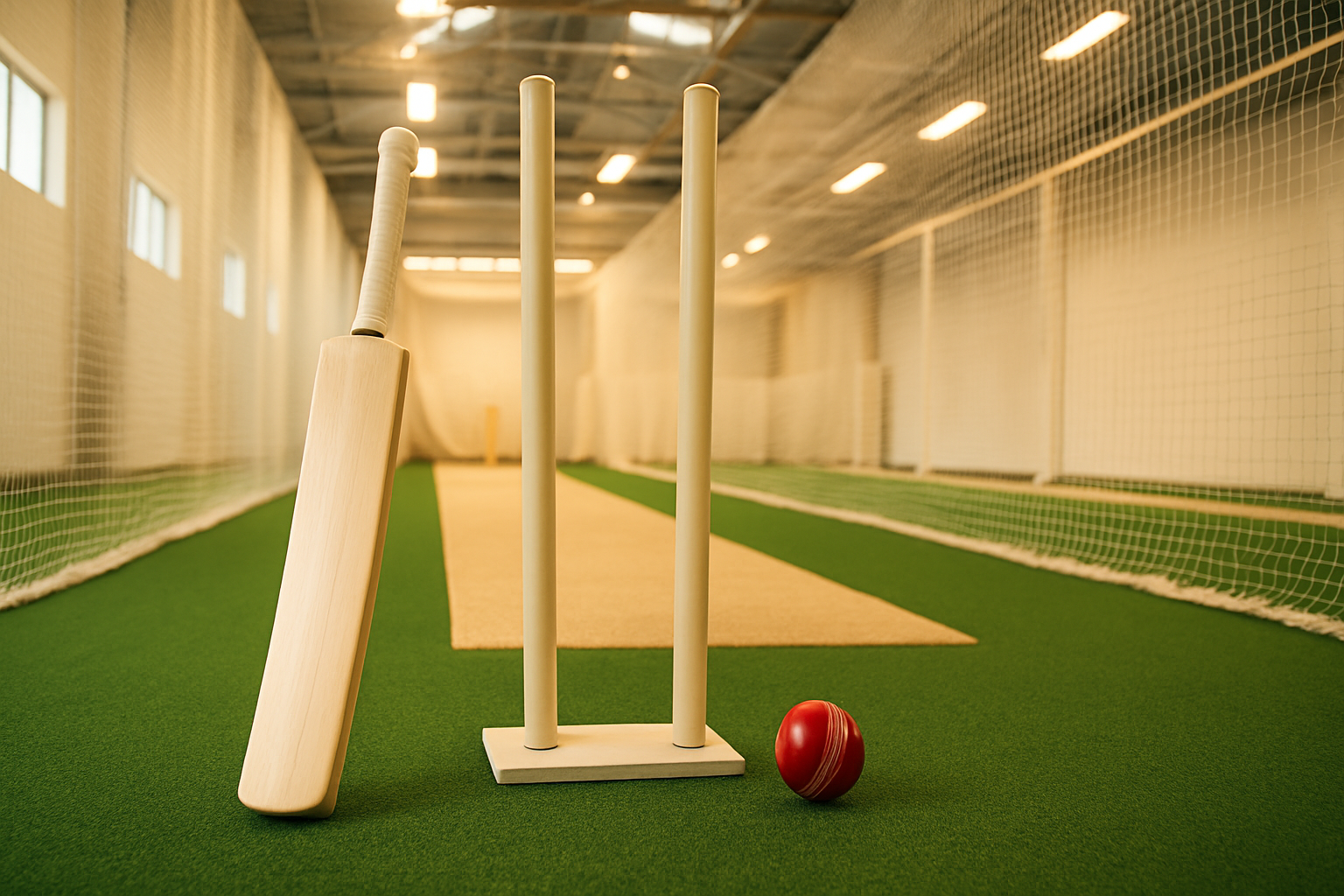
Starting a cricket academy in 2026? Here's what it actually costs, who your real competition is, and why structured coaching beats backyard nets every time.
Picture this: a parent drives forty minutes to drop their ten-year-old at a dusty patch of concrete behind a school, hands over cash to a retired club cricketer, and calls it "coaching." That's the informal end of the market. And it's enormous — which is exactly why structured cricket academies are genuinely one of the better businesses you can build right now.
Demand isn't local anymore. Chennai, Calgary, Cape Town — parents across all three are hunting for the same thing: proper, organised coaching for kids aged 7 and up. The backyard-nets-and-hope model has a brutal dropout rate. Structured academies don't, and parents have figured that out.
Budget-wise, a lean outdoor-net setup will run you somewhere between $4,000 and $12,000 (adjust for your market — the number shifts a lot depending on where you're operating). Indoor facilities cost considerably more. Don't let that scare you off starting outdoors.
Break-even? Most academies hit it somewhere between months 8 and 14. Batch fill rates are the variable that matters most — fill your batches fast and you're closer to 8; struggle with enrolment and 14 becomes realistic.
This playbook covers four phases in sequence: getting your legal setup sorted, locking in your space and equipment, building a curriculum and pricing it, and then actually finding your first 50 students. That last part is where most new academies either win or quietly fold.
Phase 1: Register the business and handle compliance
Here's the mistake that sinks more first-year academies than anything else: someone starts coaching, collects fees, figures they'll "sort the paperwork later" — and then a kid rolls an ankle and there's no insurance in place. One claim. That's all it takes. The business is gone before it ever really started.
So. Do the compliance first. All of it.
Business structure — pick one before you take a rupee, pound, or dollar
Sole proprietorship (called sole trader in the UK and Australia) is the dead-simple option — no filing complexity, you're up and running almost immediately. The catch is that you're personally liable for everything. Fine if you're a one-coach operation turning over under $100K a year, and honestly, most academies do start here.
Once you're bringing in real money or taking on staff, the liability protection of a formal entity matters a lot more. An LLC in the US, a Limited Company in the UK or Australia, or a Pvt Ltd in India — all of these put a legal wall between your business debts and your personal assets. They also look more credible to schools and sponsors, which matters when you're trying to sign facility agreements. Expect 2–4 weeks of processing time and anywhere from $100 to $800 in filing fees depending on where you're registering.
Two coaches co-founding together? That's a partnership — and you need a written agreement even if the other person is your closest friend. Especially if the other person is your closest friend. Verbal arrangements collapse. Put it in writing.
Tax and business registrations
- US: Get an EIN first — it's free at IRS.gov and takes about ten minutes. Register for state sales tax if you're selling merchandise. Whether coaching services themselves attract sales tax depends on your state, so check; it's not consistent.
- UK: Register as self-employed with HMRC, or incorporate at Companies House (around £50). VAT registration becomes mandatory at £90,000 turnover.
- Australia: ABN registration is free. GST registration kicks in once you hit AU$75,000 turnover.
- India: GST registration is required once turnover crosses ₹20 lakh (₹10 lakh for special category states). Coaching services fall under SAC 9992 and are GST-exempt below that threshold — but confirm against current CBIC notifications, because these do get updated.
Trade licence and premises permission
If you're coaching from a fixed venue — a leased ground, an indoor hall, anything with a physical address — most municipalities want a trade licence or business activity permit. Leasing from a council or school? You'll almost certainly need a subletting clause written into the lease, and sometimes a separate sports activity approval from the local authority on top of that. Ask before you sign the lease, not after.
Child-safeguarding — non-negotiable
Most cricket academies coach minors. If yours does, a written child-safeguarding policy isn't optional — it needs to exist before you open the gates on day one.
In the US, that means background checks for all coaches via the NSOPW database; many states legally require this for youth sports organisations, so verify your state's specific rules. In the UK, the ECB's Safeguarding Children policy is the framework to follow, and every staff member needs a current DBS check. In India, POCSO compliance is mandatory — documented safeguarding protocols, a designated complaint officer, and verified background checks for staff. This isn't box-ticking. It's the thing that protects both your students and your business.
Insurance
Two policies are non-negotiable from day one. Public liability — which covers injury to students and bystanders — and professional indemnity, which covers you if a coaching decision results in a negligence claim. For a small US academy, expect annual premiums in the $800–$2,000 range. UK equivalents through sport-specific brokers run roughly £400–£900. If you own equipment worth insuring, add contents cover. And if you're using a hired ground, read the venue's own liability policy carefully — some explicitly exclude third-party commercial activity, which means your sessions might not be covered under their umbrella at all.
Phase 2: Space, equipment, and setup costs
Space requirements
Here's the number that catches most people off guard: a single bowling lane needs roughly 90 ft × 12 ft — that's 1,080 sq ft, just for one lane. A two-net outdoor setup that actually functions (run-ups, a bit of breathing room, somewhere for the kid who's not batting to stand without getting hit) wants around 2,200–2,500 sq ft of usable ground. You'll also need storage, a small admin or waiting area, and — if parents are dropping off and sticking around — some kind of covered viewing strip. Not glamorous. But necessary.
Indoor is a different beast entirely. Two or three lanes with enough run-up for pace bowlers means you're shopping for 7,000–9,000 sq ft minimum. The costs jump sharply. But if you're in the UK, Canada, or the northern US, where outdoor cricket is viable for maybe four or five months a year, an indoor facility stops being a luxury and starts being the whole business model.
Surface and flooring
Outdoor artificial turf strips run $8–$18 per sq ft installed — so a two-lane turf setup lands you somewhere between $3,500 and $7,000 before you've bought a single bat. Natural turf looks better and plays better, but the groundskeeping costs will eat you alive in year one. Most early-stage academies skip it entirely.
Indoors, you're choosing between synthetic turf and polyurethane sports flooring. Polyurethane is easier on knees — genuinely matters if you're running junior programmes — and budget $12–$25 per sq ft for anything sports-grade. Don't cheap out on this one. Flooring failures mid-session are ugly.
Equipment costs
The table below gives you a working range. "Budget" here means functional, not falling apart — not the absolute cheapest thing on the internet.
| Item | Budget Option | Mid-Range |
|---|---|---|
| Batting nets (per lane) | $400–$600 | $900–$1,400 |
| Batting pads (set of 6) | $150 | $400 |
| Helmets (set of 6) | $250 | $700 |
| Bats (coaching set of 8) | $300 | $900 |
| Bowling machine | $1,200 | $3,500+ |
| Stumps and bails (×3 sets) | $120 | $300 |
| Balls (per dozen) | $60–$180 | $180–$400 |
| First aid kit + AED | $200 | $500 |
Capex total — what to realistically expect
A lean outdoor two-net setup with second-quality equipment: $4,000–$7,000. A properly kitted indoor facility — quality turf, a decent bowling machine, the works — runs $25,000–$55,000. Most first-time founders end up somewhere around $8,000–$15,000: renting an existing ground, installing their own net infrastructure, and buying one bowling machine. That's the realistic middle path, and honestly, it's enough to run a serious programme.
Phase 3: Curriculum and pricing
What to teach first
Here's something every new academy director learns the hard way: your first batch won't be homogeneous. Not even close. You'll get kids who've never gripped a bat alongside kids who've been playing club juniors for two seasons — and if you try to run specialist content for that mix, you'll frustrate both groups simultaneously.
Start with fundamentals. Always. Build your entry-level programme around these four areas:
- Grip, stance, and backlift
- Straight bat basics — forward defence, cover drive
- Bowling — basic seam position, run-up consistency
- Fielding — catching drills, ground fielding, throwing mechanics
Spin bowling, wicketkeeping, T20 power hitting — save all of that for a dedicated intermediate batch. Once you have one, great. Until then, don't go there.
Batch structure
The under-10s need 45-minute sessions (anything longer and you've lost them), a maximum of 10 students, twice a week. At that age, skew heavily toward fielding games over technical drill — they learn movement patterns better through play than instruction.
Under-14 batches can handle 60–75 minutes, up to 12 students, two to three times a week. The under-19 and senior batch is where you push to 90 minutes and 14 students maximum, three sessions a week — this is also where match simulation drills and video analysis start paying off, if your setup allows it.
Don't overlook the adult recreational batch. Weekend mornings, 75 minutes, mixed ability — and honestly? These students are often your highest-paying clients. They've got disposable income, genuine enthusiasm, and no parents to negotiate with.
What to charge
Monthly fees vary quite a bit depending on where you're operating. Rough ranges:
- US / Canada: $150–$300/month for twice-weekly sessions; $280–$480/month for three times a week.
- UK / AU: £120–£250/month; AUD $200–$400/month.
- India: ₹2,000–₹5,000/month — city tier and facility quality move that number significantly.
The free trial question
One free session — offer it. It converts. But the moment you extend it to two, you start attracting people who are shopping for free coaching, not an academy. Cap it at one, and — this part actually matters more than it sounds — call it an "assessment session," not a free class. That single word change filters out the casual enquiries and brings in families who've already decided they're serious.
Phase 4: First 50 students
Google Business Profile
Do this before you open. Not after — before. Add your location, operating hours, and photos of the nets (even mid-setup shots are fine). Then ask your first 10 families to leave a review. Academies sitting at 15+ reviews with a complete profile show up noticeably higher when parents search "cricket academy near me." It costs nothing and takes 45 minutes, tops.
WhatsApp Business
Create a dedicated WhatsApp Business account — academy name, proper profile photo, and a catalogue listing your batch options. Don't use your personal number for this. The reason it works: parents respond to WhatsApp in minutes, not days, and you can drop session clips straight into the chat. Set up a basic auto-reply for first contact so you're not glued to your phone every time a new inquiry comes in.
School tie-ups
Pick 3–5 local schools. Walk in. Offer a free 45-minute cricket session — either during PE class or as an after-school slot. Bring a few bats and a soft ball, and don't try to sell anything while you're there. Just run a good session. On the way out, hand interested kids a simple one-page flyer. School tie-ups don't produce overnight results — but once those relationships are warm, they feed a steady enrollment pipeline for years.
Instagram Reels
You don't need studio lighting or a videographer. A slow-motion clip of a clean cover drive, a caption like "Under-12 student, week 6 of training," and you're done. Post something like that twice a week. Parents share their kids' progress obsessively — that's your distribution. Skip the talking-head coaching tips in the early months; that content doesn't travel. Footage of real kids improving does.
Festival-season and peak acquisition windows
Two windows matter most. Just before the domestic season kicks off — September–October in the Northern Hemisphere, October–November in the Southern — and right after a major ICC tournament cycle, when cricket fever is still running hot. Run a "new batch starting" push during both. A sibling discount or early-bird rate for the first ten sign-ups creates real urgency without permanently eating into your pricing.
You need a proper system from student one. Tracking attendance, batch rosters, fee collection, and parent messages through spreadsheets sounds manageable — until it isn't. Most academies hit a wall somewhere around student 20. Lynk's class-management software handles batch management, automated reminders, and payment tracking from a single dashboard. Which means you're not sending fee-chase messages on WhatsApp at 11pm.
Common mistakes new founders make
Here's something most new founders figure out the hard way, usually around month three when the numbers stop making sense.
Underpricing to fill batches fast. Thirty kids at ₹60 a month feels like momentum. It's not. That's ₹1,800 before you've paid for the ground, the equipment, or your own time. Price from what things actually cost you — not from the dread of half-empty nets on day one.
Deferring the bowling machine. It always goes on the "phase two" list. The problem is, without one, your coaches are grinding through throwdowns — inconsistent, exhausting, and genuinely unsustainable over a full week of sessions. A decent machine isn't a luxury. Kids who see their batting actually improve stick around. Kids who plateau quietly stop renewing.
Then there's the coach agreement issue — and this one stings when it happens.
You bring on a part-time assistant. They're good. Students like them, parents trust them. Six months later they leave, and somehow fifteen families follow them to a new setup across town. A simple non-solicitation clause in a written agreement won't prevent every scenario, but it means there's a real conversation upfront and something on paper if things go sideways. Don't skip this.
Trying to do everything in the first three months. Red-ball coaching, T20 clinics, women's sessions, under-10 fun cricket — all running simultaneously before you've validated anything. Your setup gets stretched, your marketing gets muddled, and nothing runs as well as it should. Pick one or two batch types. Fill them properly. Then grow.
Trial sessions are another thing people get wrong. Running a trial that's identical to a regular session means nervous beginners walk in with no context and often don't come back. The trial needs its own design — welcoming, lower-stakes, and with a specific moment where the coach says: "here's what we'd actually work on with you over the next six weeks." That pivot — from generic to personal — is what converts first-timers into enrolled students.
Signing a three-year lease before you have the numbers. Forty committed, paying students. That's the floor. Below that, you shouldn't be locking into a long-term indoor facility deal. Start on hired grounds, prove your pricing works, prove people stay — then negotiate from a position where you actually have leverage.
Last one, and it gets underestimated constantly: certificates. "Completed beginner module." "Graduated to intermediate batch." Parents post these on WhatsApp family groups without being asked to — it's free marketing you didn't have to plan. A free certificate generator gets you clean, branded certificates without burning an afternoon in Canva. Same principle applies to fee receipts — a properly formatted invoice from a free fee invoice generator tells parents, from the very first payment, that this is a serious operation.
Regional notes — US / UK / EU / India
United States and Canada
Walk into any park in Edison, New Jersey on a Saturday morning and you'll find three things: a desi grocery run, someone's kid doing homework in the back seat, and a full cricket net session happening in whatever open space anyone could claim. That's the market. It's already there — it just needs structure.
The US growth story is almost entirely diaspora-driven. New Jersey, Texas, California, the Greater Toronto Area — these aren't emerging cricket communities, they're established ones that have been quietly hungry for proper coaching infrastructure. The demand isn't theoretical.
Before you open your doors, get your USA Cricket Level 1 accreditation sorted. USA Cricket is the national governing body, and their development pathway exists precisely for this. It's not just a box to tick — parents in these communities know their cricket, and walking in without credentials will cost you credibility faster than you'd think.
One practical headache: if you're operating in the northern states, five months of viable outdoor cricket is about all you're getting. Indoor facilities aren't a nice-to-have. They're the difference between a year-round academy and a seasonal hobby.
And then there's insurance. Liability cover in the US youth sports space is genuinely expensive — more so than most other markets you'd compare it against. Don't try to navigate this with a generic broker. Find someone who actually specialises in youth sports; the difference in what they'll catch (and what they'll save you) is significant.
United Kingdom
Here's the mistake most people make when launching in the UK: they try to build everything independently before bothering with the ECB. Wrong move. The England and Cricket Board has a structured community cricket programme already in place, and affiliating with your county cricket board from the start gets you things you'd otherwise spend years trying to source yourself — subsidised coaching courses, discounted facility hire, youth pathway competitions. That last one matters more than coaches often realise. Competitive context is what keeps young players coming back. It's your retention story, built in.
DBS checks aren't optional. Every coach working with under-18s needs one — full stop.
On facilities: don't panic if you can't afford a dedicated cricket centre upfront. Most UK academies begin in leisure centre sports halls, which is less glamorous than it sounds but genuinely functional. The smarter move is to check what council grant funding exists for community sports programmes in your area. A lot of it goes unclaimed simply because new operators don't know to apply. You can do this within your first year — and in many cases, within your first few months.
Australia
Australia makes this easier than most places. The two national frameworks — Cricket Australia's "Blast Cricket" and "Junior Cricket" — give new academies ready-made curriculum templates, so you're not building from scratch. Use them. They're well-structured and they're what state associations expect to see when you come knocking for affiliation.
Speaking of which: each state runs its own affiliation programme. Cricket Victoria, Cricket NSW, and their equivalents across the country all have formal pathways for new academies. Get in touch with your relevant state body early — not after you've already set everything up.
One non-negotiable: Working With Children checks for every coach on your roster. Every single one. No exceptions, no grey areas.
The other thing working in your favour is the climate. Most states give you outdoor facilities for the bulk of the year, which cuts your overhead significantly compared to running a similar operation in England or Canada, where you're essentially paying for indoor infrastructure half the year. That cost advantage is real, and it compounds quickly when you're trying to stay solvent in year one.
India
Here's something most people don't realise when they start planning: the BCCI — for all its power and money — doesn't actually run grassroots cricket academies. The NCA ecosystem sits at the top, but below that? Most academies operate completely independently, with no formal BCCI affiliation whatsoever. So don't wait for a stamp of approval that isn't coming.
What is worth pursuing is SAI — the Sports Authority of India — which has infrastructure support schemes running in select cities. It's not guaranteed money, but it's real, and plenty of academy founders leave it on the table simply because they didn't look.
Now, the numbers. If you're setting up an outdoor net facility with artificial turf in Mumbai or Bengaluru, budget somewhere between ₹4 lakh and ₹10 lakh for capex. Indoor? That jumps to ₹25–60 lakh, depending heavily on location and what you're building. Monthly fees in tier-1 cities typically land at ₹3,000–₹6,000. Tier-2 cities — Nagpur, Coimbatore, places like that — tend to run ₹1,500–₹3,500.
If Delhi or Bengaluru is where you're planting your flag, go in clear-eyed: you're walking into established academy clusters where competing on price alone will bleed you dry. The smarter play is to differentiate early — age-group specialisation, performance tracking technology, something that makes a parent feel the extra hundred rupees a month is obvious value rather than a negotiation.
And if you want a surprisingly useful reference for structuring the operational side of things, 10 Steps To Starting Your Own Dance Studio carries more transferable logic than the title suggests — the fundamentals of running a coaching programme don't change much across sports.
Related reading
If you're also thinking about a fitness or gym setup, read How to Start a Gym & Fitness Academy: A 2026 Playbook — the compliance headaches, insurance paperwork, and early student acquisition challenges overlap more than you'd expect. Worth having both open at once.
One more thing. Spreadsheets work fine for the first few weeks — then someone misses a payment, attendance records get messy, and parent messages pile up across three different apps. Try Lynk free and get batch scheduling, fee tracking, attendance, and parent communication sorted in one place before it becomes a problem.
Frequently Asked Questions
How much does it cost to start a cricket academy?
What's this actually going to cost you? That's probably the question sitting at the back of your head while you read all of this.
The honest answer: it depends on how far you want to go on day one. A lean outdoor setup — two net lanes, basic kit, no bowling machine — you're looking at roughly $4,000 to $7,000 in most markets. Manageable. Not cheap, but manageable.
Step up to a mid-range operation — bowling machine, artificial turf strips, decent protective gear — and that number jumps to somewhere between $10,000 and $18,000. That's where most serious academies actually start, because the bare-minimum setup tends to feel bare-minimum pretty quickly once you've got students on the ground.
Indoor facilities are a different conversation entirely. You're starting at $25,000, and it climbs fast depending on the city, the lease terms, and how much fit-out work the space needs.
For India specifically: a functional outdoor setup in a tier-1 city will typically run you ₹4 to ₹12 lakh. The variance is wide, and location is almost always the deciding factor — land in Mumbai or Delhi doesn't come cheap, even on licence.
Do I need a coaching qualification to open a cricket academy?
Picture this: a parent walks in, asks who's coaching their kid, and the answer is "well, nobody's formally qualified, but we know cricket." That conversation ends badly. Every time.
Here's the thing though — legally, most jurisdictions don't actually mandate a coaching certificate to run an academy. No law stops you from opening the doors. But practically? It unravels fast without one. Parents ask directly. Schools won't even discuss tie-ups unless your coaches hold recognised credentials. And your insurance premiums — which are already uncomfortable — drop noticeably once you've got certified staff on paper.
The qualifications themselves aren't the ordeal people imagine. ECB Level 1 if you're in the UK, Cricket Australia's Foundation of Cricket Coaching programme, USA Cricket's Level 1 — all of them are short-duration, accessible, and genuinely worth knocking out before you open rather than scrambling for them six months in when a school partnership falls through because of a paperwork gap.
Get them done early. It's one of those things that costs you almost nothing upfront and costs you considerably more if you skip it.
How many students do I need to break even?
The mistake most people make? They pick a price first — "$200 a month sounds reasonable" — and then reverse-engineer everything else. That's backwards, and it's how academies end up quietly bleeding money for the first two years.
Start with your fixed costs. Actual numbers, not guesses. Facility hire, insurance, admin software — add it all up. If that total lands around $2,500 a month (which is pretty common for a lean setup), and you're charging $200 per student, your break-even point is 13 students. Thirteen. That's not a huge number, but it only stays that low if your pricing was built on real cost data in the first place.
Sustainable profitability — where the academy is genuinely healthy, not just surviving — tends to kick in somewhere between 35 and 50 enrolled students. That's the range where you stop watching the numbers every week and start thinking about growth.
So build the model before you build the pricing. Not after.
Should I focus on juniors or adults?
Juniors first. That's the short answer, and it's not even close.
The 8–16 age group gives you something adults simply don't: stable, predictable enrollment. Parents are the ones making the call, and once they've committed to a three-month batch, they stay committed. They've paid, they've planned their schedule around it, and they're not dropping out because work got hectic. The word-of-mouth that comes through school networks is also faster than almost anything you can engineer — one parent tells two others at the school gate, and suddenly you've got a waitlist.
Adult recreational batches are a different animal entirely. The revenue potential is real — and once your infrastructure is sorted, they're absolutely worth running. But filling those batches early on is genuinely hard. Adults are busy, unpredictable, and far more likely to quietly disappear after the first month when life gets in the way. Churn is just higher. That's not a reason to avoid them forever, just a reason not to build your opening model around them.
Get the junior pipeline humming first. Adults can come in once you've got the space, the coaches, and the bandwidth to absorb the drop-off.
How do I compete with established academies in my area?
Here's something most new academy owners get wrong straight away: they look at the established place down the road, see their fee structure, and immediately think about undercutting it. Don't. That road ends badly — you'll just be cheaper and exhausted, and they'll still have the brand recognition.
What you can actually beat them on is communication. Parents who feel genuinely kept in the loop — regular updates, video clips of their kid's progress, a written report that uses their child's name and not generic coaching-speak — those parents don't leave. Not for a fancier facility, not for a slightly lower fee. That loop of trust is harder to replicate than a bowling machine or a turfed net.
Student tracking matters too. Video analysis, written progress reports, something that shows you're watching each kid as an individual. The big academies often can't do this at scale. You can.
And then there's specialisation — which is honestly the sharpest edge a new academy has. If you can say, clearly and credibly, "we focus on under-12 foundational development," you'll hold onto that specific group of parents far better than a generalist academy that's trying to serve everyone from age six to senior club cricket. The generalist might have better nets and a longer trophy cabinet. Doesn't matter. You own that niche, you win that segment.