How to Start a Badminton Academy: A 2026 Playbook
By Swathi N ·
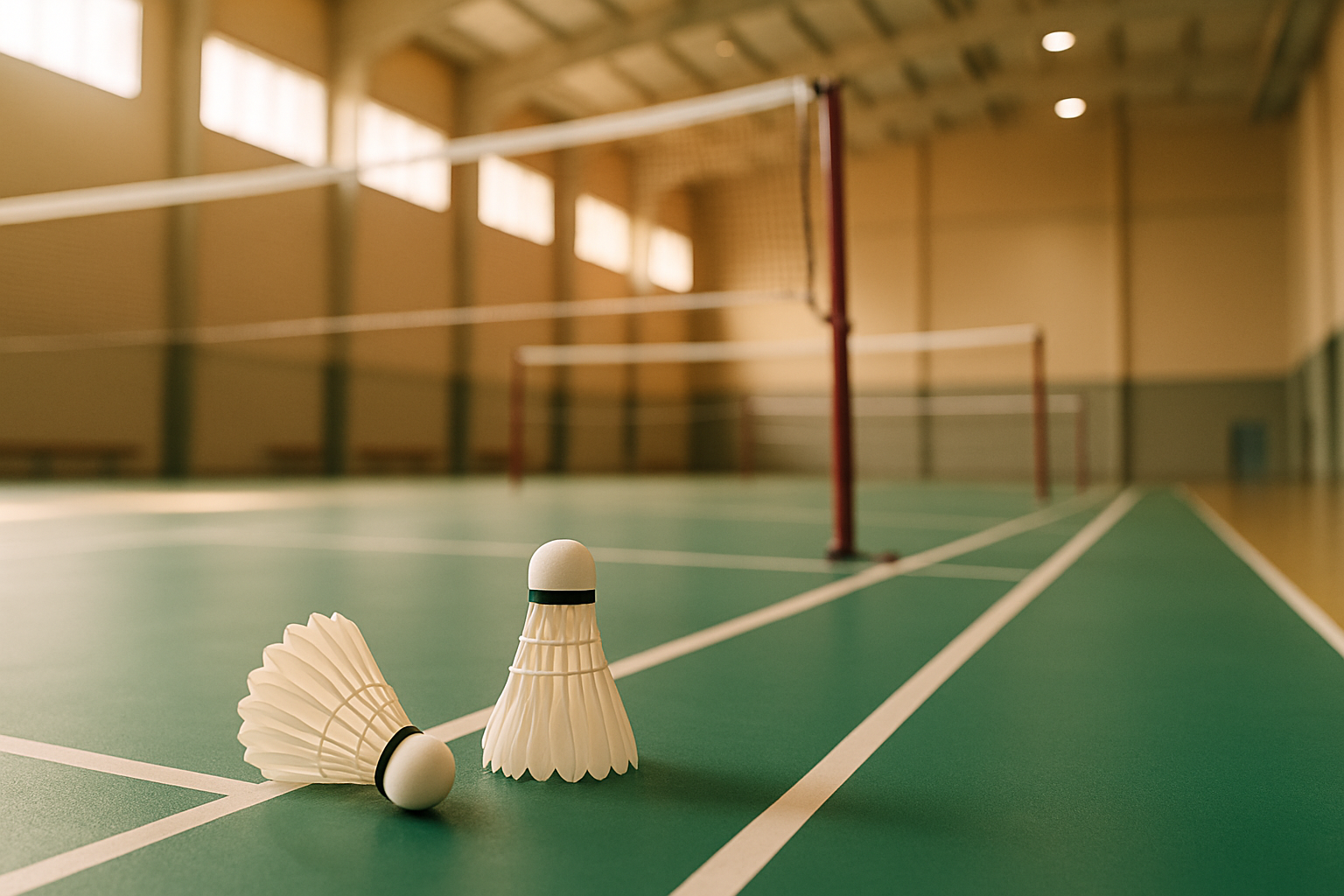
Starting a badminton academy in 2026? Here's what it'll actually cost, when you'll break even, and how to fill your batches fast.
Walk past any multi-sport facility in Hyderabad, Jakarta, or Kuala Lumpur on a Tuesday evening and you'll see the same thing: badminton courts packed, the waiting list longer than anyone expected, and parents — the ones who grew up playing casually in the 1990s — now spending real money to get their kids trained by someone who actually knows what they're doing.
That demand is your opening.
Getting a small-to-mid-scale academy off the ground will cost you somewhere between $8,000 and $22,000 (that's roughly ₹6.5–18 lakh, depending on where you're setting up). Break-even? Realistically, you're looking at month 10 to month 18 — and yes, that range is wide on purpose, because your lease terms and how fast you fill your batches will swing that number more than almost anything else.
This playbook covers four phases in order: get your registrations and compliance sorted, build out the physical space properly, put together a curriculum that actually develops players, and then bring in your first 50 students. In that sequence, for a reason.
Phase 1: Register the business and handle compliance
The most common mistake here? People book the venue, start fitting out the courts, and only then remember they haven't registered the business. By that point, you've got contractors invoicing an entity that doesn't legally exist yet — and that's a mess nobody needs. Registration takes 2–4 weeks. Court fit-out takes 6–10 weeks. Run them simultaneously, not sequentially. That's the whole trick.
Business structure
Pick the wrong business structure and you'll spend years untangling it. So let's be direct about what works where.
In the US, go with an LLC. Single location, one academy — it's the default for a reason. You get personal liability protection without the administrative weight of a C-Corp, and setup is dead simple in most states. UK founders should look at a Limited Company (Ltd) — same basic logic, but there's an added benefit: school partners and facility hirers take you more seriously when "Ltd" sits at the end of your name. It signals permanence.
India's a bit more layered. If you're running a single-court setup and your turnover is under ₹20 lakh, a Sole Proprietorship does the job fine. But if you've got any ambition to franchise down the line — and you should at least leave that door open — register a Private Limited Company through the MCA portal. It gives you cleaner investor optionality later, which a sole proprietorship simply can't offer. Elsewhere: Australia uses proprietary limited structures; most of the EU lands on a SARL or GmbH depending on the jurisdiction you're in.
One rule that applies everywhere, no matter which structure you choose: open a separate business bank account before you sign your lease. Not after. Before. Mixing personal and business funds is the single most common accounting disaster new academy founders walk themselves into — and it's entirely avoidable.
Tax and licensing
- US: The EIN is dead simple — IRS website, free, fifteen minutes, done. The part people miss? Sales tax. Most states exempt coaching services from it, but the moment you start selling rackets or shuttles, that exemption disappears. Check your state's rules before your first sale, not after.
- India: Once your turnover crosses ₹20 lakh, GST registration isn't optional. Sports coaching falls under SAC code 999331 and attracts 18% GST — and yes, that applies even if you're running Saturday morning beginner batches out of a community hall. If you're in a Tier-2 city and genuinely expect to stay under that threshold in Year 1, you can defer registration. But here's what most academy founders get wrong: they defer the paperwork and the systems. Don't. Set up proper invoicing now, even if you're not filing yet. It'll save you a brutal scramble later.
- UK/EU: VAT registration kicks in at £90,000 turnover (that's the 2025 threshold for the UK). If you're operating elsewhere in the EU, sports participation services often qualify for reduced or zero VAT — but "often" is doing a lot of heavy lifting in that sentence, because it varies by country. Look up your jurisdiction's specific rules. Don't assume what applies in Germany applies in the Netherlands.
Trade license and premises permission
Sort the trade license first — before the contractor quotes you, before the fit-out starts, before anything goes on order. Most municipalities won't let you run a sports facility without one, and it's entirely separate from your business registration (a detail that trips up a surprising number of first-time academy owners). In many Indian cities, there's a second requirement stacked on top: a No-Objection Certificate (NOC) from the local municipal corporation, triggered once your space crosses a certain floor-area threshold. Give yourself 4–6 weeks for this, plus a modest filing fee. The paperwork feels bureaucratic because it is — but none of it is complicated. What is complicated is trying to undo a half-finished fit-out because the permissions weren't in place when the drills started going in.
Child safety policy
Most academies coaching kids — and let's be honest, that's nearly all of them — don't realise how specific the compliance requirements are until they're already mid-setup. By then, a documented safeguarding policy isn't optional; it's the thing standing between you and a functioning programme.
In India, POCSO (Protection of Children from Sexual Offences Act) sets out exactly what's expected: background checks on every staff member who interacts with children, a visible internal complaints process (not buried in a handbook nobody reads), and a designated protection officer. These aren't suggestions. In the UK, both Ofsted and Sport England will want a written child protection policy before you can get anywhere near school partnership programmes — and "we're working on it" won't cut it. And in the US, SafeSport certification is fast becoming the baseline standard for coaches; if you're affiliated with USA Badminton, it's already mandatory.
Get the paperwork in place before you open. Not after your first intake. Before.
Insurance
So what happens if a student rolls an ankle on your court and decides to sue? That's not a hypothetical — it's a question you need to have answered before your first session, not after.
At minimum, you're looking at three types of cover. Public liability insurance handles injuries on your premises. Professional indemnity protects you if someone makes a coaching-related claim — a parent who argues your instruction caused their kid's shoulder injury, for instance. And contents and equipment insurance covers your shuttles, nets, rackets, and everything else you've spent months accumulating.
Cost-wise: US operators running a two-court facility should budget $800–$1,500 a year. In the UK, comparable coverage typically runs £600–£1,200 annually.
One more thing — and this catches a lot of first-time academy owners off guard — most commercial landlords won't hand over keys until you can show proof of liability coverage. Don't even think about signing a lease without it sorted. Get the insurance first, then negotiate the lease.
Phase 2: Space, equipment, and setup costs
Space sizing
The biggest mistake first-time academy owners make? Renting a space that fits a court, then realising too late it doesn't fit a usable court.
A singles court is 13.4m × 6.1m — that's the playing surface alone. You still need 1.5m of clearance on both sides and 2m at each end before anyone picks up a racket. Do the actual maths and you're at 650–700 sq ft per court, minimum. A lot of people sign leases without accounting for that buffer, then spend six months coaching in a space where players are perpetually fishing shuttles out of a wall.
One court can work when you're starting out solo. But you'll hit a ceiling — hard — somewhere around 30 to 35 students, at which point scheduling becomes a jigsaw puzzle you can't solve without turning away paying batches.
Two courts is the number. 1,400–1,500 sq ft of clear playing area lets you run beginner and intermediate batches simultaneously, which is the only way a badminton business actually grows rather than just ticks over. Stack on a reception area, storage for equipment, and changing facilities, and you've got an operation that doesn't embarrass you when parents walk in for the first time.
Flooring
Flooring will make or break your academy faster than almost anything else — and most founders underestimate it until someone's knees start complaining. Hardwood is the right call if you can afford it. Maple or beech specifically: they give you that clean shuttle bounce and they're genuinely forgiving on joints during daily training. Installed cost in North America runs $6–$10 per sq ft. In India, budget ₹800–₹1,200 per sq ft.
Can't stretch to hardwood? Rubberised sports flooring or interlocking PU court tiles are legitimate alternatives — $2–$4 per sq ft, noticeably easier on the budget.
What you should never do: pour a concrete slab and call it a court. Ceramic tile is just as bad. Both surfaces spike injury rates, and your students will feel the difference immediately, even if they can't articulate why. The floor is what every player touches on every single movement. Don't cheap out on it.
Equipment list and capex
Here's something most "start your own academy" guides skip over: the numbers. Not vague ranges you'll find buried in a forum thread — actual line items you can hand to a contractor or drop into a spreadsheet.
| Item | Estimated cost (USD) |
|---|---|
| Court flooring (2 courts, 1,400 sq ft) | $5,000–$12,000 |
| Net posts and nets (2 sets) | $300–$600 |
| LED court lighting (per court) | $800–$1,500 |
| Wall-mounted fans / HVAC | $1,200–$2,500 |
| Rackets (starter fleet, 20 units) | $600–$1,200 |
| Shuttles — 3-month supply | $400–$800 |
| Ball/feeder machine (optional, 1 unit) | $400–$900 |
| Reception desk, seating, signage | $500–$1,000 |
| First-aid kit, safety padding | $150–$300 |
Add all that up and you're looking at $9,350–$19,800 in capex — and that's before your lease deposit even enters the picture. Factor in 2–3 months' rent upfront (which most landlords will insist on), and the real all-in number lands somewhere between $12,000 and $25,000. Location does a lot of work here.
If you're setting up in India, the equivalent bracket is roughly ₹8–20 lakh — but that spread isn't random. A two-court space in Coimbatore or Indore will cost you dramatically less than the identical footprint in, say, Bengaluru's Koramangala, where commercial rent alone can quietly blow your budget before you've bought a single shuttle.
Phase 3: Curriculum and pricing
What to teach first
— and this is where most academies lose the plot before they've even started. Six to eight weeks. That's how long your beginner batch, juniors and adults alike, should spend on grip, footwork, and the three basic strokes: clear, drop, net shot. Not smash technique. Not competitive play. Not match simulation. Just those things, done properly, until a student can actually move to a shuttle without falling apart.
The smash can wait. It really can. What can't wait is fixing a bad grip or a flat-footed stance, because once those patterns bake in, you're spending the next six months trying to undo them instead of building on them.
Now — juniors and adult beginners should not be in the same batch. Full stop. This isn't about ego or grouping people by talent; it's about how differently these two groups actually learn. Kids aged 7–12 pick things up fastest when the drill feels like a game. They don't need to know why a split step works — they just need to do it ten times inside something fun. Adults are the opposite. They want the explanation first. They'll drill willingly once they understand the logic, but ask them to just repeat a movement without context and you'll lose them by week two. Different cues, different pacing, different everything. Run separate batches from day one.
Batch structure
How many students can you actually coach well on two courts? This question trips up most new academy owners, and the honest answer is: fewer than you'd think.
Here's a batch structure that works for a two-court, one-coach setup without stretching anyone too thin:
- Mini Badminton (ages 5–8): cap at 8 kids, 45-minute sessions
- Junior Beginner (ages 9–14): 10–12 students max, 60-minute sessions
- Junior Intermediate (ages 12–17): cap at 8 students, 75-minute sessions
- Adult Beginner / Social (18+): up to 12 students, 60-minute sessions
- Adult Competitive (18+): 6–8 students only, 90-minute sessions
Each batch runs 2–3 times a week. Twice weekly is the floor — anything less and you're basically just maintaining, not building. Three sessions is where students actually start noticing their own improvement, which matters enormously for retention.
Pricing
Walk into any badminton academy on a Saturday morning and you'll overhear at least one parent asking, "So how much does this cost?" What they're really asking is: is this worth it? Your pricing is the first answer they get — before they've watched a single session.
The numbers themselves depend heavily on where you are:
- US / Canada: $80–$180/month for 2x weekly group coaching
- UK: £60–£140/month
- Southeast Asia (Malaysia, Indonesia): $30–$80/month equivalent
- India: ₹1,500–₹4,500/month — wide range, because a Tier 1 city academy with air-conditioned courts charges very differently from a smaller town facility
Don't race to the bottom. Seriously. The cheapest academy in town isn't winning — it's just accumulating students who'll leave the moment someone undercuts them by ₹200 or $10. Those aren't loyal families; they're just price shopping.
Aim for the midpoint of what comparable local facilities charge. Not premium (unless your facility genuinely is), but not bargain-bin either. Parents — especially those enrolling kids in a coached sport — read low pricing as a signal. And the signal isn't "great value." It's "something's off here."
The students you want are ones who are paying for coaching quality, not just court time. Pricing mid-market attracts exactly that.
Free trial
The biggest mistake new academies make? Offering a free week. It feels generous, but what it actually does is teach people to expect discounts before they've even committed to anything — and once that expectation is set, it's very hard to walk back.
One trial class. That's it.
A single session is genuinely enough for a parent or student to know whether this is the right fit. You don't need to give away five days of coaching to prove your worth — if your programme is good, one hour will do the talking. A free week, on the other hand, quietly signals that your time isn't all that valuable.
The mechanics matter too. Capture their contact details before they step onto the court (not after, when half of them have already slipped out the door). Follow up within 24 hours — not three days later when the enthusiasm has cooled. And have your enrolment process sorted before the trial even happens, because nothing kills momentum like a parent who's ready to sign up and you're fumbling around looking for a form.
Phase 4: First 50 students
Google Business Profile
Seriously — do this before you unlock the doors on day one. Not after your first batch of students. Not once you've "settled in." Before.
Upload photos of the courts (good lighting, no clutter), write a description that actually says "badminton coaching" and "badminton academy" alongside your city or neighbourhood, and then chase down your first 5–10 reviews. Friends, family, whoever showed up for your trial sessions — just ask them. Most people will leave a review if you make it easy for them.
Here's why it's worth the thirty minutes: a fully filled-out Google Business Profile, with real photos and a handful of reviews, is often enough to land you in the local map pack. That's the little box of three businesses that shows up above the regular search results. You're not paying for ads. You're just showing up — for free — every time someone in your area types "badminton academy near me."
That's a hard thing to beat, especially when you're just starting out and every rupee counts.
WhatsApp Business
Set up a WhatsApp Business account before you open your doors — not after you've already got fifty parents texting your personal number. And the moment anyone enquires, anyone books a trial, anyone even asks for your schedule: they go into the broadcast list. That's the rule. No exceptions.
One message a week. That's your ceiling. Batch everything — tournament results, holiday closures, schedule changes — into that single send. Don't fire off three separate messages because three separate things happened. Nobody wants that, and they will mute you.
Here's why this channel is worth protecting: WhatsApp broadcasts routinely pull 40–60% open rates. Email sits somewhere around 18–22% on a good day. That gap is enormous, and most academy owners burn through it within the first month by over-messaging.
Treat it like a privilege, not a firehose.
School tie-ups
Three kilometres. That's your hunting ground — every school within that radius is a potential pipeline, and most academies ignore them completely.
Walk into 3–5 of those schools and ask for a free 45-minute demo slot during PE or after school. Don't go in with a pitch deck. Go in with extra rackets, a bag of shuttles, and the sole intention of making kids laugh and sweat for 45 minutes. That's it. No enrolment forms, no fee structure talk, none of that.
Before you leave, hand a one-page flyer to whoever's in the room — teacher, parent, doesn't matter. Put your WhatsApp QR code on it. Big. Scannable. Nothing else needs to be complicated.
Here's the thing most new academies don't realise: this one move, done consistently across 3–5 schools, will fill a beginner batch faster than any paid ad you can run on Instagram or Google. Paid ads require trust. A kid who just smashed a shuttle in front of their classmates already has it.
Instagram Reels strategy
Are you already dreading the idea of making videos? Most academy owners are. Here's the thing though — Instagram Reels don't require a production budget, a ring light, or a cameraman. Your phone propped on a tripod is genuinely all you need.
Two Reels a week. That's the whole strategy. One showing a drill mid-session — the messier and more real, the better — and one showing a student's progress over time (get their permission first, obviously). Consistency beats polish every single time. The algorithm doesn't care that your background isn't perfectly lit; it cares that you posted last Tuesday and the Tuesday before that.
Location tags. Use them. Hashtags tied to your specific city, not generic ones like #badminton. You're not trying to go viral with a clip that hits Jakarta and Manchester. You're trying to show up when a parent in your neighbourhood types "badminton coaching near me" into their search bar.
A massive following isn't the goal here. Local visibility is.
Festival-season acquisition
Walk into any badminton hall the week after Diwali and you'll see it — a queue of parents, kids in tow, asking about batch timings. It happens every year, almost to the day. South and Southeast Asian academies see the same enrollment surge around Chinese New Year and summer school holidays. In the US and UK, the pattern's slightly different: September brings the back-to-school crowd, and January delivers the resolution-setters who've decided this is the year they finally pick up a sport.
Start your prep 3–4 weeks before whichever window applies to you. That's your planning lead time — not the week before, not the day of.
And here's where most new academies trip up: they reach straight for a discount. Don't. The moment you cut your fees to fill a batch, you've told the market what your coaching is actually worth to you. It takes months to walk that back. Instead, offer a bonus — a free racket, an extra training session, early access to the weekend batch. Same price, more value. Your pricing stays intact, your new students feel like they got a deal, and you're not stuck explaining a "special rate" to existing members who paid full price.
Protect the number. The fee is the fee.
One more thing on systems
Here's the mistake most new academy owners make: they try to run everything through WhatsApp threads, a shared Google Sheet, and a notebook they've already lost twice. It works for about six weeks. Then a parent asks about last month's payment, three trial bookings clash on the same slot, and you're spending Sunday night untangling it all instead of, you know, coaching.
From day one — the moment you have paying students — you need a single platform that handles scheduling, fee collection, and parent communication together. Not eventually. Not once you've "scaled." Day one.
Lynk does exactly that, and a couple of its free tools are genuinely useful even at the early stage: the certificate generator (handy when your first batch completes a programme and parents absolutely want something to put on the fridge) and the fee invoice generator, which takes maybe thirty seconds of admin per student instead of the fifteen minutes it takes to format something in Word and then realise you've misspelled the parent's name.
If you want a reference point from a similar setup process, the article on 10 Steps To Starting Your Own Dance Studio covers registration and community-building in ways that map surprisingly well onto a badminton academy context — worth a read before you finalise your onboarding flow.
Common mistakes new founders make
1. Signing a lease before you have proof of demand. Three-year lease. Two courts. Zero students yet. That's not ambition — that's a very expensive gamble. Hire a community court, run a few pop-up sessions, and get at least 20 solid pre-registrations before you even look at a lease agreement. Validate first. Commit second.
2. Underpricing. The logic feels sound: low fees fill batches fast. But the cohort you attract at ₹500/month is not the cohort you want, and try raising fees on founding students six months later — see how that goes. Set market-rate pricing from day one. It's genuinely easier to hold a price than to justify hiking one.
3. Hiring a second coach too early. Month two, and founders are already posting job listings for a full-time assistant coach. Don't. You don't need one until you're running six or more batches a week and actively turning students away. Until then, a part-time coach on a per-session rate is more than enough — and far less financial pressure in a period where cash flow is already tight.
4. Forgetting that parents are the real customers. In junior programmes, the kid doesn't pay the fees. The parent does. And if a parent can't tell you what their child has been working on for the past month, they will leave — even when the actual coaching is good. A short WhatsApp update once a month, just outlining what each batch is focused on, does more for retention than most founders expect.
5. No waiting list process. Your popular batches will fill up. When they do, and someone enquires anyway, what happens to that lead? If the answer is "we tell them we're full and move on" — you're leaking future enrolments constantly. Every full batch needs a waiting list, whether that's a WhatsApp group or a simple form. Those names feed your next enrolment window.
6. Never writing down the curriculum. Coaching from instinct is fine at ten students. Completely falls apart at fifty, especially once a second coach is involved. They won't coach the way you do — not without written session plans to anchor them. Build the documentation early, even if it's rough and incomplete. You can refine it. You can't retrofit it retroactively across a franchise.
7. Treating shuttles as a one-time purchase. Shuttles are consumables — full stop. A busy two-court setup burns through four to eight tubes per week. Add string replacement and grip tape on top of that. None of this belongs in your capex column. It's a monthly operating cost, and if it's not in your budget from the start, it will quietly wreck your margins.
Regional notes — US / UK / EU / India
United States
Start with USA Badminton's website and get your club affiliated — it's not mandatory, but if any of your students are going to compete beyond casual local tournaments, you'll want that connection already in place. They run the whole national structure: club affiliation, coach certification from Level 1 up to Level 3, and the junior development pathways that serious young players eventually funnel into.
The certification ladder matters more than it sounds. Level 1 is accessible enough for newer coaches, but Level 3 is what parents of competitive kids actually look for when they're choosing an academy.
Now — before you sign anything on a space, pull up the local zoning code for that address. Zoning laws for sports facilities aren't uniform across the US; what's permitted in one city might need a conditional use permit (or flat-out won't be allowed) two towns over. You're looking for assembly use or commercial recreation classification. This is the kind of thing that stalls openings for months if you find out after the lease is signed.
United Kingdom
Badminton England runs the UKCC coaching pathway — that's your main credentialing route — alongside the "Badminton in Schools" initiative, which handles school partnership programmes. Both are worth knowing inside out before you open your doors.
Here's something a lot of new academies get wrong: they set themselves up as rivals to local clubs. Don't. The UK's club badminton culture runs deep, and those clubs have existing members, existing loyalty, existing suspicion of anything that feels like poaching. Position yourself as the place players go to get better before (or while) playing for their club, and you'll find doors open considerably faster. Complementary, not competitive — it's a small distinction that makes an enormous practical difference to early enrolment numbers.
And the premises side of things. If you're converting a space — a warehouse, a leisure unit, anything that wasn't already a sports facility — you'll likely need to check whether a change-of-use planning application applies. Class E and Class F2 are the relevant commercial use categories under UK planning rules. It's not always required, but assuming it isn't and getting it wrong mid-build is a genuinely painful situation. Worth a call to the local planning authority early.
European Union
Are you setting up in the EU? Then the first thing you need to accept is that "Europe" isn't one rulebook — it's twenty-seven of them, and they don't agree on much.
Take Germany and the Netherlands. Both countries run on the Sportverein / sportvereniging model — membership-based sports clubs that are deeply embedded in how people think about organised sport. A for-profit academy won't get you laughed out of the room, especially in a city, but expect more friction than you'd face elsewhere. The infrastructure assumes community clubs, not commercial academies.
France is a different story. FFBad (the French badminton federation) has its act together when it comes to coach licensing, and if you're planning to charge for instruction, you need to know exactly where your qualifications stand before you take a single payment.
Which brings up the question worth asking in every EU country you're operating in: does the national federation require affiliated coaches to hold a recognised qualification? Not "does it help" — does it require it? Because in some countries, coaching without that credential isn't just a reputational problem. It's a legal one.
Find your country's federation website. Find the coach licensing page. Read it properly before you open for business.
India
Walk into any badminton academy registration office in a Tier-2 city and you'll probably find someone waiting — has been waiting, actually — for a Khelo India grant response that's six months overdue. That's not a knock on the scheme. The Sports Authority of India (SAI) infrastructure grants are real money, and for academies in Tier-2 and Tier-3 cities that hit the space and equipment benchmarks, they're genuinely worth chasing. Just go in with your eyes open: the process is competitive, it's slow, and "applied" doesn't mean "approved."
On the tax side, coaching fees attract 18% GST under SAC 999331. No ambiguity there — if you're charging for coaching, that's where you sit. And if your programme works with minors (which most do), POCSO compliance isn't optional. It's not a box-ticking formality either; it shapes how you hire, how you document, how your premises are set up.
For incorporation, skip the long route. The Spices+ portal on the MCA website is the fastest way to get a Private Limited company registered — and that structure gives you the cleanest foundation for grant applications, sponsorships, and anything else you'll want to do later.
Frequently Asked Questions
How much does it cost to start a badminton academy?
Let's put a number on it. A two-court setup in a mid-market US or UK city will cost you somewhere between $12,000 and $25,000 — all in, meaning lease deposit, flooring, equipment, and your first three months of operating costs already factored in. That's not a lowball estimate and it's not a worst-case one either. It's just what the thing costs.
In India, the numbers look very differ