How to Start a Archery Academy: A 2026 Playbook
By Swathi N ·
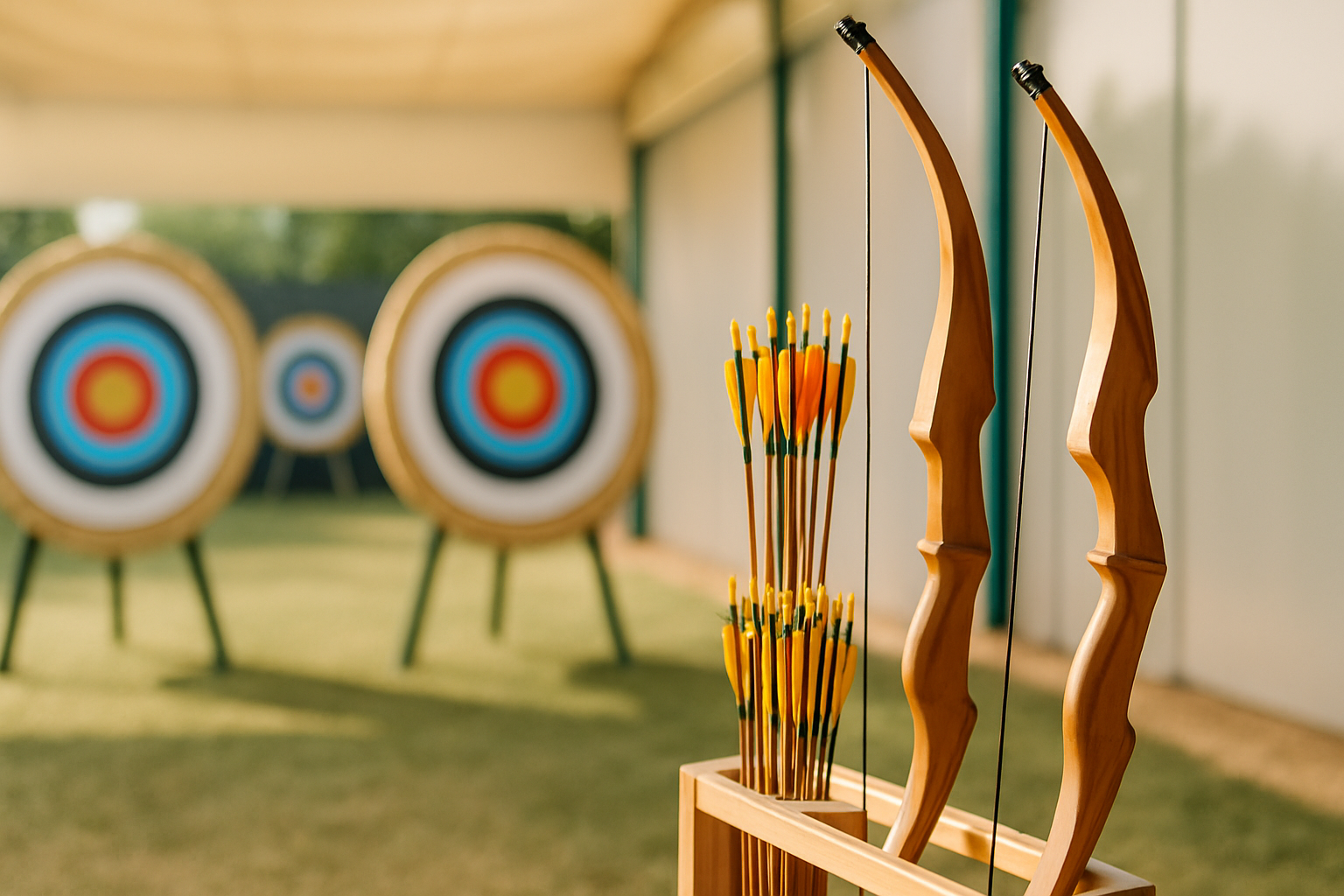
Thinking of launching an archery academy in 2026? Here's how to turn rising demand and Olympic-era buzz into a real, profitable coaching business.
Picture this: a twelve-year-old walks into your facility, picks up a bow for the first time, and by the end of the session she's hitting the target consistently enough that her mum is already asking about the next class. That moment — that specific moment — is why archery academies are quietly becoming one of the better business bets in recreational sport right now.
Here's what's driving it. Olympic broadcast coverage has made archery look genuinely cool to a generation that grew up watching it. The fantasy-archer aesthetic is everywhere on social media. And parents? They're desperate for structured, screen-free activities that actually hold their kids' attention. Demand for qualified coaching has outrun supply in most markets, and that gap isn't closing on its own.
2026 is a reasonable window to move.
Before we get into the detail, the short version on money: startup costs typically land between $8,000 and $22,000 (or your regional equivalent), and the range depends almost entirely on one decision — whether you're leasing an existing range or building from scratch. Most academies hit break-even somewhere in the 12-to-18-month window. Not fast, but not brutal either, especially if you price correctly from day one.
What follows is a four-phase playbook. Phase one covers registration and compliance — the unglamorous stuff you can't skip. Phase two is range setup and equipment. Phase three is curriculum design and pricing (this is where most new academies make expensive mistakes). Phase four is student acquisition — specifically, how to get your first 50 paying students through the door.
Phase 1: Register the Business and Handle Compliance
Most people launching an archery academy get this backwards — they book a venue, order equipment, line up students, and then scramble to sort the legal bits. By that point, they've already shaken hands on a lease and made promises they can't legally keep yet. Don't do that.
Sort the paperwork first. Full stop.
Archery isn't like starting a yoga class or a pottery studio. You're operating with projectiles that can seriously injure people, and insurers know it. Landlords know it too. Before anyone will sign a venue agreement or issue you a liability policy, they'll want to see that your business actually exists on paper — registered, structured, documented. Show up without that and you're not getting a lease, you're getting shown the door.
The business registration itself is dead simple compared to what comes next, but it has to happen first. Everything else — insurance, venue contracts, coaching certifications, parent consent frameworks — stacks on top of that legal foundation. Pull it out and the whole thing collapses.
Business Structure
Sole proprietorship is fast. Dead simple to register, zero real paperwork overhead, and if you're operating solo with modest income it'll do the job. But — and this is the part people gloss over — your personal assets are fully exposed. Every piece of equipment you own, your savings, your car. All of it.
Once you're running a range with multiple coaches and equipment worth tens of thousands, that exposure stops being theoretical. An LLC (if you're in the US), an LLP or Ltd (UK and Australia), or a Pvt Ltd (India) puts a legal wall between the business and your personal finances. That wall costs money to build — but not much.
US LLC registration runs anywhere from $50 to $500 depending on which state you're filing in. UK Ltd registration is around £50 online. Either way, budget 1–4 weeks for the process to clear. Not a massive hurdle, and genuinely worth it the moment someone else is coaching under your name.
Tax Registration
Here's something a surprising number of new academy owners skip until their accountant yells at them: tax registration. Sort it on day one, not month three.
US founders — get your EIN first thing. It's free, takes about ten minutes on IRS.gov, and you'll need it for nearly everything else. On the merchandise side, sales tax obligations depend on your state, so go directly to your state revenue department rather than guessing.
UK: VAT registration kicks in once your turnover is on track to breach £90,000. Under that threshold, registering voluntarily is an option — worth discussing with your accountant, but not mandatory.
If you're setting up anywhere in the EU, don't assume the rules are uniform across borders. Teaching in Germany versus France means different thresholds, different paperwork. Check local requirements for whichever member state you're operating in.
India is where this gets genuinely complicated. GST registration becomes compulsory once your turnover clears ₹20 lakh — or ₹10 lakh if you're in a special category state. Sports coaching services sit at 18% GST, but there's a carve-out if your academy qualifies as an educational institution. Don't assume you qualify. The distinction matters enormously, and the criteria aren't obvious. Talk to a CA before you structure anything.
Trade License and Premises Permission
Before you sign anything — lease, coaching contract, liability waiver — go to your local municipal office and ask what a sports coaching facility actually needs to operate legally. That's the move. Don't guess, don't assume your neighbour's gym setup applies to you.
What you'll find varies enormously. A city in Texas processes this differently than one in Ontario or Maharashtra, and even within the same country, two neighbouring municipalities can have completely different requirements. Budget 2–6 weeks just for this step. Some offices are fast. Many aren't.
The trade or business licence is the baseline — most municipalities require one before you can run any kind of sports coaching facility. But that's not the whole picture, especially if you're coaching minors.
Working with kids triggers an additional layer of requirements in most jurisdictions. Background checks for coaches — non-negotiable in most places. In the UK, that's a DBS check. In the US, it depends on the state, but a large number of youth sports organisations now mandate NCSI clearances or something equivalent. Don't skip this step thinking it's optional. It isn't, and the liability if something goes wrong without proper clearance is severe.
The broader point: none of this is worth figuring out after you've already committed to a space. Confirm requirements first, then sign the lease.
Insurance
And this is where a lot of new academy owners get caught out — they assume a standard general liability policy covers everything. It doesn't. Archery is a ranged-weapon sport, and insurers treat it differently.
At minimum, you're looking at four things:
- General liability — most venues won't let you operate without at least $1M per occurrence
- Participant accident and medical coverage for students (separate from your own liability)
- Equipment insurance — bows, arrows, targets, the lot. Especially critical if you're lending gear to beginners, which you almost certainly will be
- If you're in the US, check what USA Archery membership actually bundles before you go buying separate policies. There's often overlap worth knowing about.
Don't just grab the cheapest policy that mentions "sports liability" in the description. Get something specific to archery, or at the very least, confirm in writing that your insurer knows exactly what you're running.
Phase 2: Space, Equipment, and Setup
Space Requirements
Picture this: you've found what looks like a perfect space — decent square footage, reasonable rent, good parking. Then you pace out the range and realise it's about four metres short. Happens more often than you'd think, and it's a brutal way to lose a deposit.
Indoor recurve competition starts at 18 metres (roughly 60 feet). That's just the shooting distance. Stack a proper shooting line on one end, equipment storage somewhere sensible, and a safety buffer behind the targets — suddenly you're not looking at 18 metres anymore. You're looking at 20–22 metres of usable length, minimum.
Width is the other thing founders miscalculate. Each lane needs 1.5 to 2 metres of clearance. Run ten lanes? That's 15–20 metres across. Ceiling height: 3 metres is the bare floor (no pun intended), but 4-plus is what you actually want once taller archers start shooting in competition stance.
Here's what that translates to in real terms:
- A 6-lane beginner range — the kind you'd open with — needs roughly 2,500 to 3,500 sq ft
- Scale up to 10 lanes and you're hunting for 4,000 to 5,500 sq ft
Outdoor ranges are tempting, and for good reason — your lease costs drop significantly. But weather dependency is a genuine operational headache, and the safety berm requirements are a different conversation entirely. Sort that out with your national archery federation before you break ground. Don't assume.
Flooring and Safety
The biggest mistake new academy owners make? Skimping on the backstop and assuming the target itself will do the job. It won't. An arrow that misses or punches clean through a worn target doesn't politely stop — it keeps going, and whatever's behind it pays the price.
Here's what actually works. Foam or rubber backstop blocks combined with a safety net behind your targets — that's the non-negotiable baseline. Not a nice-to-have. Not something you phase in later. Day one infrastructure. Budget somewhere between $800 and $2,500 for a basic setup depending on range width and how many target lanes you're running.
On the shooting side, your flooring options are dead simple: concrete or sealed timber both do the job fine. Neither is dramatically better than the other for most setups — pick what fits your space and your budget.
Side walls are where people get complacent. Bare hard walls create ricochet angles you really don't want to discover during a junior session. Acoustic panels or heavy curtains break that up considerably, and they pull double duty absorbing some of the noise too (a range with twenty bows going simultaneously is louder than most people anticipate). It's a small line item that prevents a genuinely ugly incident.
Equipment List and Costs
Here's the honest number: outfitting a 6–10 lane indoor range from scratch will run you somewhere between $8,000 and $22,000. That gap isn't vague hand-waving — it reflects a real fork in the road. The low end assumes you're moving into a leased space that already has usable walls and decent lighting. The upper end is what happens when you're building backstops, doing lease improvements, and kitting out a full 10-bow beginner fleet with consumables included.
Below is what you're actually spending that money on.
- Recurve beginner bows (set) — $80–$200 each. Buy 6–10 to start. This is your day-one fleet, and it'll take more abuse than anything else you own.
- Compound bows (intermediate) — $400–$900 each. Don't rush these. Phase 2 or Phase 3 is soon enough.
- Arrows (per dozen) — $25–$80. Get both youth and adult sizes — don't assume one fits all.
- Target faces (paper, bulk) — $0.50–$2 each. Consumable. Budget for it monthly, not once.
- Foam target butts — $60–$180 each. One per lane, minimum. Non-negotiable.
- Finger tabs and arm guards (per set) — $10–$30. Order 10–15 sets for loaner use. Students will forget theirs constantly.
- Bow stand / rack — $80–$200. Safe storage isn't optional once you have a fleet sitting around.
- Range dividers / lane ropes — $200–$600 for a full setup.
- Coaching aids (clicker, sight alignment tools) — $50–$300. Optional in the early months — add them once you know what your coaches actually use.
The target faces and arrows are the two line items that'll quietly bleed your budget if you're not tracking them. Everything else is a one-time purchase. Those two aren't.
Phase 3: Curriculum and Pricing
What to Teach First
Recurve first. Full stop.
It's the Olympic discipline, it's what World Archery, USA Archery, and Archery Australia have built their entire coaching certification pathways around, and — frankly — it's the format that's most forgiving for absolute beginners. Compound and traditional/barebow are great, but save them for when you've got a stable cohort of 20-plus students. Build the base first.
Your foundational sessions need to cover six things: stance and posture, grip, draw and anchor, aiming, release, and follow-through. That's it. A beginner can work through all of it in 8–10 sessions if you don't rush them — and you shouldn't.
After that, the progression writes itself. Form refinement, then distance work, then competitive formats once they're ready. You don't need to engineer the pathway too carefully at the start; just get the fundamentals solid and the rest follows.
Batch Structure
Kids — we're talking the 6–12 age group — cap out at 6 to 8 per lane, and you're looking at 45 to 60 minutes per session. Not because they can't physically handle more, but because their attention evaporates. That's your real constraint.
Teens are a bit more manageable. Eight to ten per lane, sessions running 60 to 75 minutes. They'll push back if you underestimate them, so don't.
Adults are a different beast entirely — and honestly, the most time-intensive group to coach well. Same 8 to 10 per lane, but sessions stretch to 90 minutes because they want the technical breakdown. The why, the biomechanics, the adjustments. If you try to rush through it, you'll lose them. Build that explanation time into your delivery from day one, not as an afterthought.
Then there's the competitive track. Smaller batches — 4 to 6 students — three sessions a week, 90 minutes each. More coaching contact, more intensity, more investment from the student. These are also your highest-revenue students per head, which matters when you're working out whether the programme is viable.
Pricing
What should you actually charge? It's the question every new academy owner agonises over, and honestly, there's no clean answer — regional rates vary so wildly that quoting a single figure would just be misleading. Use the regional notes below as your real anchor. But here's a working framework to start from.
- Trial session (1x): Free, or somewhere in the $10–$20 range. Free trials convert better at the beginner end — but brace yourself for more tyre-kickers. Paid trials filter harder.
- Beginner course (8–10 sessions): $120–$250, packaged as an intro programme. Don't sell these as drop-ins.
- Monthly membership (2x/week): $80–$180/month
- Competitive coaching (3x/week + video analysis): $200–$350/month
One thing that catches new academy owners off guard: equipment rental. Loaner fees — usually $5–$15 per session — look small on paper, but in those early months before your students invest in their own gear, that revenue line adds up faster than you'd expect. Don't leave it off your rate card.
Free Trial Decision
Picture this: twelve people show up for your free intro session. Eight of them love it. Three say they'll "think about it." One asks if you do gift vouchers. Now the question is — was that session worth running for free?
That 50% number is the real line in the sand. If more than half your trial attendees are converting to paid enrolments, a free first class is doing its job. But if you're consistently below that — people showing up, enjoying themselves, then disappearing — a nominal fee of $15 to $20 changes the room. Not because it covers costs (it barely does), but because it filters out the casually curious from people who've actually decided they want to try archery.
Track this from week one. Seriously. A spreadsheet feels fine until you're juggling three beginner batches, a waitlist, trial bookings for next weekend, and a recurring payment that failed for someone in Batch 2 — all at once. That's exactly when class management software stops feeling like an optional expense. Lynk handles scheduling, payments, and student progress in one place, which sounds like a nice-to-have until it's 3 AM the night before a packed Saturday and you're trying to remember who's paid and who hasn't.
And if you're thinking bigger — ten or more lanes, multiple coaches on rotation — the operational patterns around staff scheduling and membership tiers covered in How to Start a Gym & Fitness Academy: A 2026 Playbook are surprisingly applicable. Different sport, same headaches.
Phase 4: First 50 Students
Most new academies make the same mistake: they open the doors and wait. Post on Instagram, maybe run one Facebook ad, then wonder why the phone isn't ringing. That's not a marketing problem — it's a positioning problem. Nobody knows what you are yet.
Here's what actually works. Fifty students is your target — that's the number where a 6-lane range stops bleeding money and starts covering costs in most markets. And 90 days is a realistic window to get there, if you're willing to be relentless about the first few weeks.
Go physical before you go digital. Schools, sports clubs, corporate offices within a 10-kilometre radius — walk in, talk to someone, leave something behind. Not a flyer. An offer. "Free introductory session for your group" converts better than anything you'll run on social media in month one.
The first ten students are the hardest. After that, word-of-mouth kicks in faster than most people expect — especially if your introductory programme is genuinely good and not just a safety briefing followed by awkward silence. Build the first session around a moment. A memory. Something they'll mention to someone else that evening.
Referrals, done right, can carry you from 20 to 50 almost by themselves. Offer existing students something meaningful — a free coaching session, a month's discount — for every person they bring in who signs up. Keep it simple. Make it worth their while.
Ninety days. Fifty students. It's tight, but it's doable.
Google Business Profile
Don't wait until opening day to sort this out. Get your Google Business Profile live before the first student walks in — and fill it with photos that actually show something: the range, the equipment, a coach mid-instruction. The text description matters far less than most people think. What moves the needle is reviews.
Your first 10 students — friends, family, whoever you pulled in for a soft launch — should be leaving honest reviews within a week of their session. Eight to twelve genuine reviews will rank your profile noticeably higher than a blank slate. Ask them directly. Don't hint at it in a newsletter. Just ask.
WhatsApp Business (or iMessage/SMS Broadcast in US/UK)
Here's something most new academy owners overlook: a WhatsApp Business broadcast list costs nothing and takes about ten minutes to set up — and it will quietly become one of your most useful tools. Set one up specifically for trial-session leads. Send a dead-simple confirmation message the day before ("Your spot's confirmed for Saturday 10am — wear comfortable clothes, closed shoes, we'll handle the rest") and watch your no-show rate drop. Not dramatically, but noticeably. Enough to matter.
Keep the chat channel open after that first message. Parents — especially parents of younger kids — will almost always choose a quick WhatsApp message over a phone call. They'll ask about parking, about what to bring, about whether their child needs any prior experience. Let them. That back-and-forth costs you nothing and builds trust before they've even walked through the door.
(US and UK academies: iMessage broadcast or SMS works just as well if WhatsApp isn't your crowd's default. Same principle, different app.)
School and Club Tie-ups
Start with schools. One decent partnership — a single school signing on — can drop 15 to 25 students into your intake at once. That's not a trickle; that's a cohort.
When you approach a PE coordinator or sports director, go in with something concrete. A 6-session introductory programme, timing that doesn't wreck their transport logistics, and a student safety briefing they can actually hand to worried parents. Don't walk in selling the sport. Nobody signs a liability waiver because archery is cool. They sign because you've shown up with certified coaching credentials, a written curriculum, and insurance documentation they can file away without a second thought.
Get that right, and the pitch practically closes itself.
Once the school channel is working — and only once it's working — start looking sideways. Scouting clubs, youth groups (Scouts, 4-H if you're in the US, whatever the local equivalent is), corporate team-building coordinators. These are worth pursuing, but they're secondary. Don't spread yourself thin before the foundation's solid.
Instagram Reels Strategy
Here's something most new academy owners figure out too late: you don't need a massive following to fill your first cohort. You need three seconds of a slow-motion arrow release.
Seriously. That footage — the fingers opening, the string snapping forward, the arrow vanishing — stops people mid-scroll even if they've never touched a bow in their life. It's just visually satisfying in a way that's hard to explain and pointless to overthink. Post it. Do it again the next day.
First month target: 3–4 Reels per week. The mix that tends to work is slow-mo release clips, a "first session vs. week 8" progression video (these get shared constantly, especially by parents), and behind-the-scenes footage of the range getting set up. That last one's underrated — people are weirdly fascinated by a well-organised space before anyone's in it.
Captions? Don't spiral. A location tag and one punchy hook line is genuinely all you need at this stage. You're not writing ad copy. You're just making it easy for the algorithm to serve your content to people within driving distance who'd actually show up.
If you want to see how this plays out across other activity-based businesses, the 10 Steps To Starting Your Own Dance Studio guide has a social acquisition section that maps almost directly onto what works for archery — worth a read before you commit to a content calendar.
Festival and Seasonal Acquisition
When exactly should you be pouring money into ads and pushing enrollment hard? If you've been running an academy for even one season, you already know the answer — but it's worth being deliberate about it. Back-to-school (August–September in the US and UK, June in India) and the January "new year, new sport" window are your two genuine conversion peaks. Not "pretty good" periods. Actual peaks, where people who've been vaguely curious about archery finally do something about it.
The move that works here: a "Beginner Intensive." Four sessions across two weeks, capped hard at 10 students, gear included. That's it. Dead simple on paper, but the structure does something clever — the scarcity (10 spots, no exceptions) and the defined endpoint (two weeks, not an open-ended commitment) both lower the mental barrier for people who aren't sure they'll stick with it. They're not signing up for archery. They're signing up for a two-week try.
Run this during those windows and only those windows. Don't dilute it by offering it year-round.
Common Mistakes New Founders Make
Picture this: a founder signs a lease on a beautiful open space — high ceilings, good light, plenty of room. Then they actually measure it. Forty-two metres wall to wall. Archery needs a minimum of eighteen to twenty just for indoor beginner distances, which sounds fine until you account for the safety buffer behind the target and the shooting line itself. They're short. Sometimes by five metres, sometimes by eight. And they've already signed.
This is the single most common early mistake, and it happens because founders are comparing the space to what they know — yoga studios, martial arts halls, dance floors. Those disciplines don't have a hard minimum distance baked into their physics. Archery does. Measure before you sign. Not after. Not "roughly." Actually measure.
The second blunder — and it's an expensive one — is stocking the loaner fleet with compound bows. Compounds look impressive. They feel modern. But they're harder to size correctly (especially for younger students), they introduce a tangle of mechanical variables that confuse beginners, and they cost significantly more per unit. Start with recurve. Add compound later, only when specific students ask for it and are genuinely ready.
On insurance: there is no "I'll sort it after the first session." None. One incident — one — before your liability cover is active and you may not have a business to insure anymore. The policy needs to be live before a single student walks onto the range.
Pricing is where founders quietly lose money without realising it. Some undercharge because they're nervous about competing with established clubs. Others set a number that feels reasonable to them personally but sits completely outside what local families actually spend on youth sports. The fix is boring but it works: spend two weeks contacting five or six sports academies in your city — swimming lessons, gymnastics, football coaching — and map out what they charge. Build your rate card from actual data, not instinct.
Here's one that bites founders around week three of running group sessions: no written curriculum. "I'll teach what feels right" works fine for private one-on-one coaching. It falls apart fast when you're facing eight beginners of mixed ages, mixed attention spans, and wildly different coordination levels. A written eight-session beginner programme — even a rough draft — gives you consistency, gives your students a sense of progress, and (critically) means you can hand a session to an assistant coach without everything unravelling.
Arrows. Budget for them. For a beginner group of eight students shooting twice a week, you're looking at ₹3,000–₹6,500 a month in replacements — they bend, they break, they vanish into target foam never to return. Individually it's a small number. Across a year it's not, and founders who forget to account for it end up confused about why their unit economics don't add up.
Last one: open without a waitlist system and you'll lose students you didn't even know you had. The first four to six weeks tend to be busier than expected — curiosity is high, word spreads. Someone tries to book, finds the batch is full, doesn't see a way to register their interest, and just... leaves. They don't come back. Capture every name from week one. A simple Google Form is enough. The waitlist is your pipeline.
Regional Notes — US / UK / EU / India
United States
Get at least one USA Archery–certified coach on staff before you open. Not after. Before. It makes a real difference when you're filling out insurance paperwork or walking into a school to pitch a partnership programme — both situations where "we have a certified Level 1 or Level 2 coach on site" carries actual weight.
Range design in suburban US markets is where a lot of new academies get this wrong. They go all-outdoor and then spend half the year fighting weather, or they go all-indoor and hit a ceiling the moment students want to shoot 3D targets at variable distances. The hybrid approach — a covered indoor range for year-round beginner classes, with outdoor 3D range access once students are ready — handles both problems without doubling your build cost.
Pricing in mid-size cities lands somewhere between $90 and $160 per month for a monthly membership. Not cheap, but not elite-gym pricing either. That range gives you room to position based on what your facility actually offers.
United Kingdom
Here's something worth knowing before you set up in the UK: Archery GB runs the show, and if you're working with young people, their ClubMark accreditation isn't optional in any practical sense. Schools won't touch you without it. Grants bodies won't either. Get it early.
The structure here is also fundamentally different from what you'd find in Asia or the US. British clubs run on membership models — annual or monthly dues, not drop-in commercial fees. It's a cultural thing, and fighting it rarely ends well for new operators.
DBS checks for every coach working with under-18s. Mandatory. No exceptions, no workarounds.
On pricing: London members are typically paying somewhere in the £80–£140 range monthly (roughly $100–$180). Step outside the capital and it comes down sharply — more like £50–£90, or $60–$110 in equivalent terms. The regional gap is real, so whatever your location, benchmark against local clubs rather than assuming London rates travel.
European Union
First thing to do: contact your national federation before you buy anything — insurance, equipment, nothing. Why? Because in a lot of EU countries, group liability cover comes bundled with federation membership, and paying for a separate policy on top of that is just money thrown away.
The federation structure under World Archer varies country to country, which means certification requirements and insurance setups don't follow a single neat rulebook. Germany's a good example of why this matters. Bogensport has deep roots there — a dense, active club network that's largely subsidised. You're not just competing with other commercial academies; you're competing with infrastructure that doesn't need to turn a profit. That changes what you can charge, and by how much.
France runs differently. The Fédération Française de Tir à l'Arc operates a genuinely strong national programme, so the framework already exists — you're building within a defined system rather than from scratch.
The short version: know your national federation's offer before assuming you need to source everything independently.
India
— and this is the part most people setting up in India underestimate — the awareness is already there. You don't have to sell archery from scratch. A decade of consistent international medalists coming out of the national programme has done that work, especially at the junior level where parents are actively looking for options beyond cricket and swimming.
SAI has district-level infrastructure, yes. But it's patchy. States vary wildly, and in most Tier-1 cities the urban middle-class demand far outstrips what government facilities can absorb. That's the gap private academies are walking into.
The money side: setting up a basic indoor range in a city like Pune, Hyderabad, or D