How to Grow a Coaching Business: Scaling Challenges, Breakdowns, and Smarter Growth Systems
By Swathi N ·
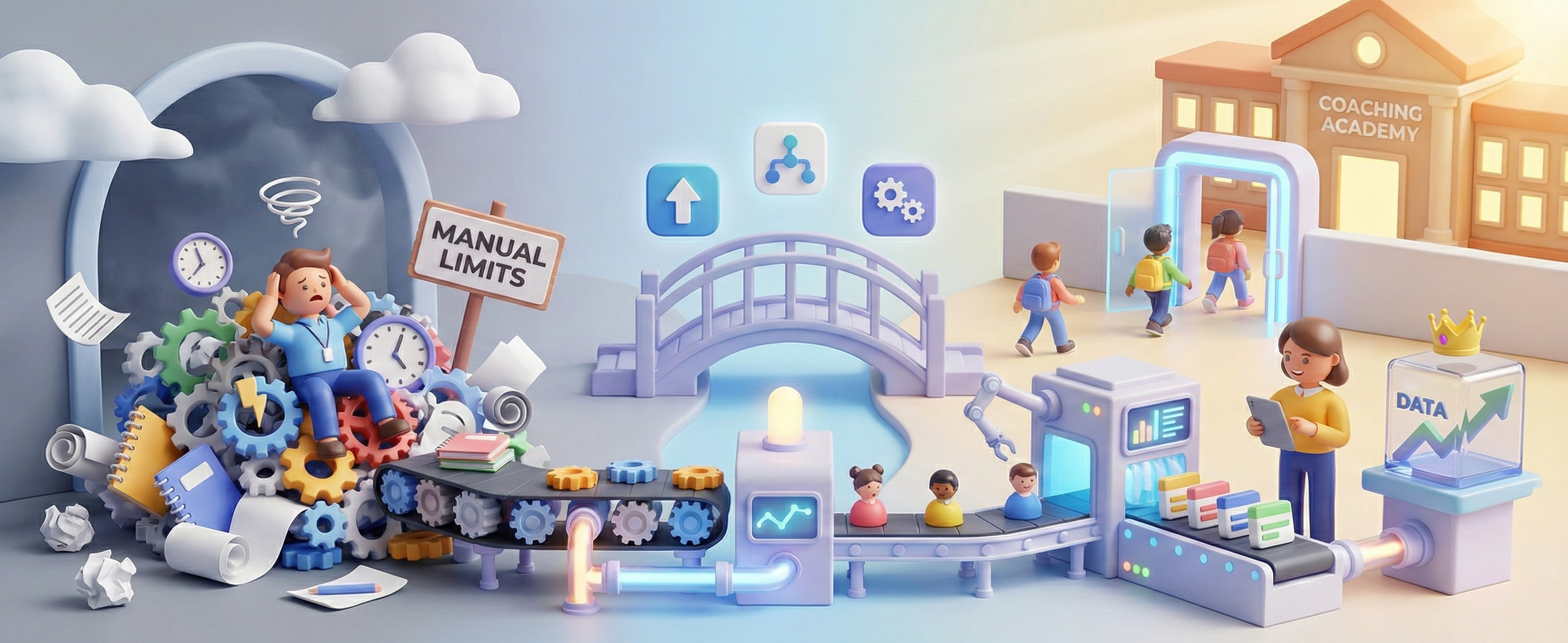
Every coach or academy eventually reaches a point where they want more — more students, more batches, more programs, more impact. Growth is a natural goal for anyone running a coaching business. But scaling isn’t just about increasing enrollments. It’s about building systems that can handle expansion without creating chaos. Many coaches actively search for answers to how to grow coaching business operations, yet they often discover that growth is not limited by demand — it’s limited by structure. This article explains what growth really means, why scaling is difficult, common challenges, and what sustainable expansion requires.
Every coach or academy eventually reaches a point where they want more — more students, more batches, more programs, more impact. Growth is a natural goal for anyone running a coaching business. But scaling isn’t just about increasing enrollments. It’s about building systems that can handle expansion without creating chaos. Many coaches actively search for answers to how to grow coaching business operations, yet they often discover that growth is not limited by demand — it’s limited by structure. This article explains what growth really means, why scaling is difficult, common challenges, and what sustainable expansion requires.
What Growth Really Means in Coaching
Growth isn’t just adding students. True growth happens when your systems can support expansion without breaking.
For coaches and academies, growth can mean:
- expanding batches
- increasing enrollments
- improving retention
- launching new programs
- hiring trainers
- managing multiple schedules
To truly grow your academy, you need both demand and infrastructure.
Why Scaling a Coaching Business Is Hard
Coaching businesses are service-driven. Every new student increases:
- coordination
- scheduling
- communication
- tracking
- administrative work
Unlike product businesses, coaching growth depends on people, time, and availability. Without proper systems or business growth tools, expansion often increases stress instead of success.
Common Growth Challenges Coaches Face
1. Lead Management Becomes Difficult
As interest grows, so do inquiries. Coaches start receiving leads from:
- referrals
- social media
- ads
- events
Without structured lead management, many potential students are lost simply because follow-ups don’t happen on time or inquiries get buried in chats.
2. Time Limits Growth
Individual coaches eventually hit a ceiling. There are only so many hours available for teaching. Trying to scale without systems leads to:
- burnout
- scheduling conflicts
- reduced teaching quality
Growth shouldn’t depend only on personal capacity.
3. Student Data Becomes Hard to Track
As enrollments increase, managing records manually becomes complicated:
- tracking batches
- monitoring attendance
- managing renewals
- updating schedules
Without centralized data, scaling creates confusion.
4. Marketing Without Structure Doesn’t Convert
Many coaches promote classes through posts or messages but lack organized marketing systems.
Structured outreach methods like:
- email marketing for gyms
- SMS marketing for gyms
show how other training industries automate communication and follow-ups. Coaching businesses that adopt similar structured outreach see better conversion and retention.
5. Maintaining Quality While Expanding
Growth should never reduce teaching quality. But without systems, scaling can lead to:
- inconsistent sessions
- missed communication
- weak follow-ups
- lack of progress tracking
When operations struggle, quality drops.
How Coaches Usually Try to Grow
Most coaches attempt scaling by:
- adding more batches
- extending working hours
- offering discounts
- increasing promotions
These tactics can increase student numbers temporarily, but they don’t create sustainable growth if backend systems remain manual.
The Hidden Truth About Scaling
Many coaches think they need more students to grow.
In reality, they need better systems first.
Growth is not about doing more work — it’s about creating systems that allow more work to happen without increasing effort proportionally.
What Sustainable Growth Requires
To scale successfully, coaching businesses need:
- centralized student records
- structured scheduling
- automated communication
- organized operations
- reliable insights
These foundations act as true business growth tools because they enable expansion without increasing chaos.
The Shift Toward Scalable Coaching Platforms
More coaches and academies are moving away from scattered tools toward platforms built specifically for coaching businesses.
Solutions like Lynk help manage inquiries, students, sessions, and operations from a single place.
By organizing workflows and reducing manual effort, such systems make it easier for coaches to expand programs while maintaining quality and control.
Instead of growth creating stress, structured systems make scaling smoother and more predictable.
Signs Your Coaching Business Is Ready to Grow
You may be ready to scale if:
- demand exceeds available slots
- referrals are increasing
- batches fill quickly
- retention is strong
- inquiries are frequent
However, expansion should happen only when your systems can support it.
Final Thoughts
Growth is exciting — but it also exposes weaknesses in your processes. Many coaching businesses don’t struggle because they lack students. They struggle because they lack systems.
Manual methods may work in early stages, but they eventually slow expansion. Sustainable scaling requires structure, visibility, automation, and organization.
When the right systems are in place, growth stops feeling overwhelming and starts feeling strategic.