Equipment Checklist for a New Swimming Studio (2026)
By Swathi N ·
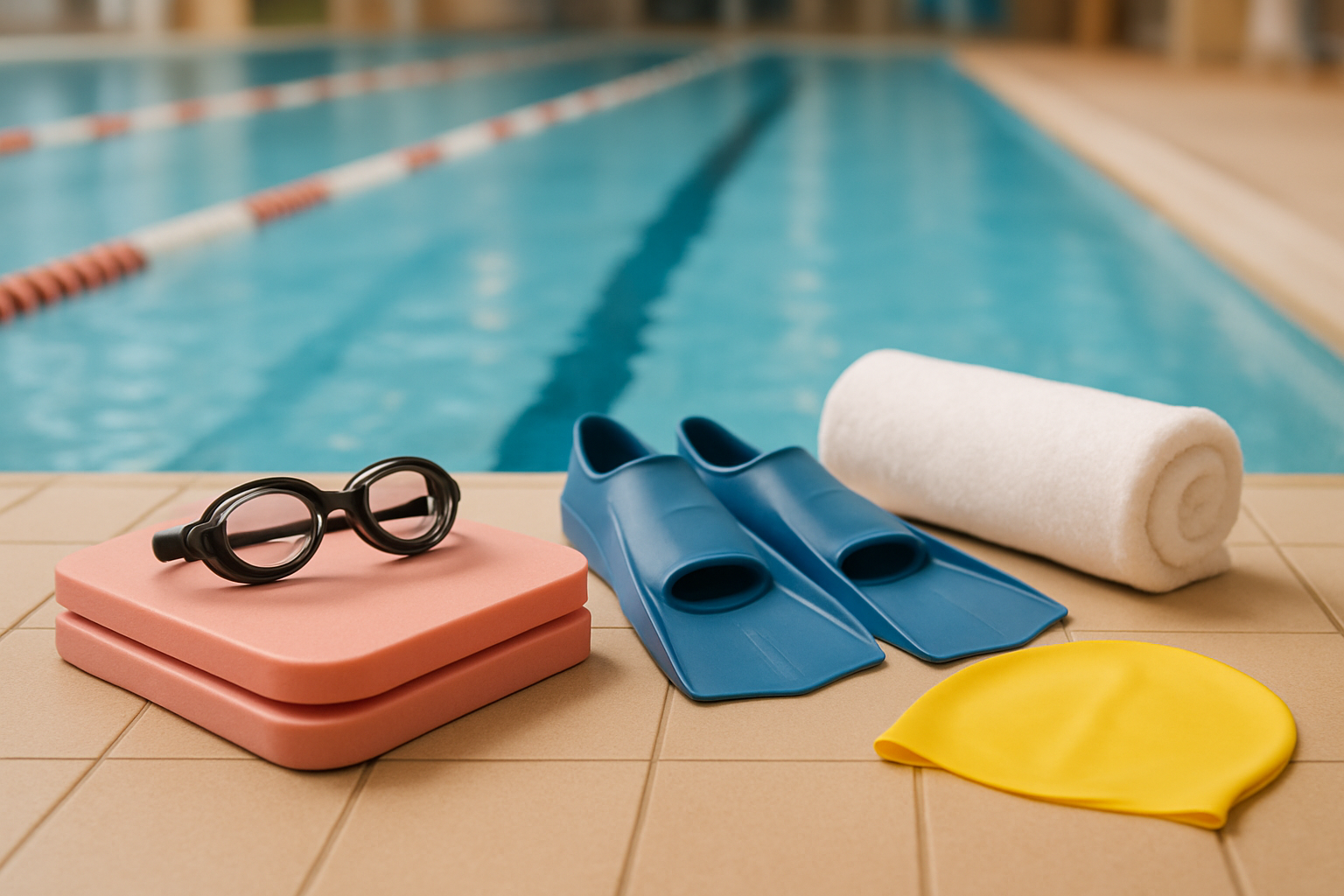
Opening a swim studio in 2026? Here's what gear you'll actually need — from pool kit to safety must-haves — before your first class hits the water.
Picture this: you've signed the lease, the pool's been inspected, and you're standing at the edge looking at 25 metres of water — and suddenly you're realising you haven't ordered a single piece of equipment yet. It happens more than you'd think, especially with how fast new studios are opening right now. Aquatic fitness centres and learn-to-swim academies have been multiplying across Bengaluru's Whitefield, Mumbai's Powai, and mid-size cities like Coimbatore and Indore — the market's sharper, more competitive, and far more gear-dependent than it was even five years back.
The numbers: total startup equipment spend in 2026 typically lands somewhere between $4,000–$12,000 (₹3.3–10 lakh). Pool type matters. So does your class format. A learn-to-swim academy for kids needs different kit than a lap-swim-focused adult fitness centre, and that gap shows up immediately in your budget.
Broadly, the spend splits across three areas — in-water training aids, poolside safety and instruction gear, and admin/tech infrastructure. And the three categories that consistently eat the biggest chunk? Lane and water equipment, safety essentials, and coaching tools. Get those wrong (or get them late), and you'll feel it from day one.
The 10 Essentials
1. Lane Dividers (Lane Lines)
Lane lines aren't optional — they're the first thing any serious swim programme needs to get right.
Without them, group classes deteriorate into wave chaos within minutes. Swimmers drift, circles collapse, and the whole session turns into damage control. But it's not just about function. The moment parents walk in and see a cleanly divided, properly marked pool, the studio reads as professional. That impression matters, especially early on.
Cost range: $200–$600 per lane (₹16,000–50,000 per lane)
Competitor Swim and Malmsten are both solid choices — their mid-tier polyethylene disc lane lines handle chlorinated water without degrading, and as of May 2026, both are readily available through most major supplier listings. If you're setting up a six-lane pool, don't underorder. Budget for at least four full sets minimum.
2. Kickboards
Here's something a lot of new studio owners underestimate: kickboards aren't just training aids. They're confidence props. A nervous beginner who can't yet float on their own will white-knuckle that thing like a life raft — and that's fine, because it works. It keeps them in the water long enough for technique to develop.
From a coaching standpoint, they're just as valuable. Isolate the legs, remove the arm movement, and suddenly you can actually see what a swimmer's kick is doing. No guesswork.
Budget ₹650–1,700 per board ($8–$20), and don't scrimp on quantity — 20 to 30 minimum if you're running group sessions. Speedo and TYR are the reliable mid-range options here. The cheap foam imports look identical in photos, but they waterlog by month three and warp not long after that. False economy.
3. Pull Buoys
Stock 15–20 of these — you'll burn through them faster than you expect once intermediate classes are running. Speedo's team pull buoy and Arena's version are both reliable picks (supplier listings as of May 2026), and it's worth grabbing a mix of sizes so adult and youth swimmers aren't fighting over the same handful.
Cost: $10–$22 each | ₹850–1,850 each
Here's what they actually do: a pull buoy sits between the thighs and floats the hips up, which effectively takes the legs out of the equation entirely. No kicking, no sinking lower body — just arms and breathing. That isolation is exactly why these show up in almost every intermediate session. The kickboard handles leg drills; the pull buoy handles everything above the waist. They're a pair, and you need both.
4. Swim Fins (Training Fins)
Short-blade fins are one of those pieces of kit that coaches underestimate until they actually use them consistently — and then they won't run a beginners' session without them. The ankle flexibility work alone is worth it, but the real payoff is what happens to a beginner's body position the first time they slip a pair on. Suddenly they're horizontal. Suddenly the kick is doing something. It's a confidence moment that's genuinely hard to manufacture any other way.
They're not expensive either. You're looking at $18–$45 per pair (₹1,500–3,700), and you'll want 15–20 pairs to cover a full group session without scrambling for kit.
For brand choices, Finis Zoomers and Speedo Biofuse are the reliable mid-tier options — widely used, easy to source, and durable enough to survive the kind of handling a busy pool deck dishes out. Stock sizes from child 28 through adult 46 and you'll cover almost every swimmer who walks through your door.
5. Pace Clock / Interval Timer
How are your coaches supposed to run intervals without a pace clock? Watching a phone while standing at the poolside edge — that's the workaround most studios default to, and it's a mess. The moment your classes move past pure beginner level, a proper poolside clock stops being a nice-to-have and becomes something you simply can't operate without.
Colorado Time Systems and Daktronics are the two names worth trusting if you want something built for a pool environment. Smaller studio on a tighter budget? A large-format waterproof digital timer does the job — you'll find decent options on both Amazon US and Amazon India — and it'll land comfortably at the lower end of the price range.
What you're looking at spending: $120–$350 (₹10,000–29,000), depending on how serious the hardware is.
6. Kickboard and Float Storage Rack
Walk into any poorly organised swim studio at the end of a busy morning session and you'll see it: kickboards stacked in a soggy heap on the deck, pull buoys wedged under a bench, foam floats slowly going grey at the edges. It looks chaotic. More importantly, wet foam left like that — no air circulation, no drainage — grows mould fast, warps out of shape, and becomes a genuine slip hazard for the next class walking in barefoot.
A decent storage rack fixes all of this at once. Wall-mounted options keep the deck completely clear; freestanding racks work better if your pool layout doesn't allow for wall anchoring. Either way, you're looking at $80–$250 (roughly ₹6,500–21,000) — not a big spend for something that extends your equipment life by years.
For material, don't compromise here. Pool environments are brutal on mild steel — chlorine vapour and constant moisture will rust an uncoated rack within a season. Stainless steel or powder-coated aluminium is what you want. In the US, Kiefer stocks racks built specifically for aquatic facilities (as of May 2026 supplier listings). In India, the smarter move is usually a custom-fabricated SS rack from a local metalworker in Bengaluru or Chennai — you'll spend less than on an import, get something sized to your actual wall space, and it'll hold up just as well.
7. Poolside First Aid Kit (Aquatic-Specific)
The most common mistake new studio owners make? Buying a standard first-aid kit from the nearest pharmacy and calling it done. That won't cut it — and in most states and municipal jurisdictions, it'll also put your licence at risk.
Aquatic first aid is its own category entirely. You need a CPR mask, a rescue breathing shield, waterproof dressings (regular ones disintegrate poolside, fast), and — depending on your local regulations — an emergency oxygen unit. This isn't the kind of kit you improvise.
Cost range: $60–$200 | ₹5,000–16,500
Lifeguard Systems and PhysioRoom both make purpose-built aquatic kits that actually cover what an aquatic environment demands. But here's the thing: don't just order one and assume you're compliant. Call your local municipal authority first. Some cities have specific mandates on exactly what has to be in the kit — and "close enough" doesn't hold up when an inspector shows up.
8. Rescue Equipment (Reaching Pole + Ring Buoy)
Let's be blunt: if your facility has water, this equipment is not optional. Full stop.
A reaching pole (the shepherd's crook style) and a ring buoy with a throw line — that's your minimum. Both need to be visible and reachable at all times, not tucked in a storage room because they clash with your interior colour scheme. Many Indian municipal bodies now check specifically for this during licence renewals, so the consequences of skipping it go well beyond safety.
Cost: ₹4,200–12,500 for the set ($50–$150)
Decathlon stocks decent options in India and across the EU, and Amazon works fine too. But here's the thing — don't get suckered into buying something that looks like rescue equipment. Decorative poles exist, somehow, and they're useless when it counts. Whatever you buy, the pole should be fibreglass or aluminium and actually rated for rescue use. Check that before you check out.
9. Waterproof Coaching Board (Whiteboard or Tablet Mount)
Here's one piece of kit that coaches quietly love but studios routinely forget to budget for — a poolside coaching board. Not glamorous. Genuinely essential.
When you're trying to correct a swimmer's catch angle or map out a set of intervals, shouting across a noisy pool isn't coaching. It's guessing and hoping. A waterproof board mounted on a poolside easel gives coaches somewhere to draw, diagram, and post the session plan so swimmers can actually see what's expected of them.
The cheap version — a laminated A2 whiteboard slipped into a waterproof sleeve — costs almost nothing and works fine. We're talking ₹2,500–10,000 ($30–$120) depending on size and finish. That's it.
If your studio's past the scrappy-startup phase, dedicated poolside boards from Finis or Colorado Time Systems look the part and hold up better to daily splash and humidity. But honestly? For most new studios, the laminated sleeve gets the job done until you're ready to spend more.
10. Anti-Slip Pool Deck Matting
Cover the deck first — before you buy lane ropes, before you sort the timers, before almost anything else. Starting blocks, ladder exits, and the stretch between the pool edge and the changing room door: those are your three highest-risk zones, and interlocking anti-slip matting is what keeps a wet footfall from becoming an insurance claim (or worse).
Most commercial aquatic studios find that matting these areas also satisfies the bulk of standard safety inspection requirements right out of the box. It's not glamorous. It won't make your brochure. But try running a studio without it and see how your insurer responds.
Cost range: $150–$600 depending on deck area | ₹12,500–50,000
For commercial-grade interlocking aquatic matting, Greatmats and Durable (Germany) are both solid options — well-stocked through supplier catalogues as of May 2026. If you're setting up in India, Decathlon carries suitable products, and industrial rubber suppliers in Pune and Delhi typically stock comparable alternatives at competitive rates.
> Related reading: Planning to outfit other fitness spaces too? See the Equipment Checklist for a New Gym & Fitness Studio (2026) for a comparable breakdown across gym categories.
Recommended Add-Ons
Resistance bands — the aquatic-rated kind, silicone or latex so they don't break down in chlorinated water — are one of those things you'll be glad you bought before the first session. Use them for dryland warm-ups, shoulder activation, anything you want to do before students hit the water. They cost next to nothing: $5–$15 per band.
Underwater cameras are a different story. You simply cannot assess underwater technique from the pool deck. A GoPro or something equivalent, mounted at lane level, gives you footage coaches used to pay thousands for — and the budget version runs $150–$400. Worth every rupee.
Starting blocks aren't a day-one purchase. But if competitive training or school programmes are part of your plan — even eventually — you'll want to budget for them. A set of 4–6 units lands somewhere between $600 and $2,000 depending on brand and whether you need removable mounts for a shared facility.
Swim paddles. Three or four sizes, 10–15 pairs across the range. They're how you progress upper-body strength work without changing the whole session plan — and at $8–$20 a pair, stocking up isn't painful.
Here's the one people underestimate: a proper scheduling and attendance system. Once you're managing 30-plus students across multiple class times, a spreadsheet becomes a genuine liability — missed payments, double bookings, attendance gaps nobody caught. A coaching management platform handles registrations, payments, and attendance in one place. If you're not sure what's out there, Best Coaching Management Software For Academies (2026) runs through the current options across price tiers.
And pool noodles. Unglamorous, yes. But for beginner flotation, water aerobics, and any group activity with younger kids, they're indispensable — and at $3–$8 each, just buy 20 and be done with it.
Optional Gear by Studio Style
Competitive / Stroke Development Studio
Picture your fastest junior swimmer — good technique, decent times, but hitting a wall they can't explain. Nine times out of ten, it's rhythm. That's exactly where tempo trainers earn their place. These small waterproof metronomes clip onto a swim cap and run you about $25–$40 each, and once your swimmers have used them for a few weeks, you'll wonder how you ever coached without them.
Video analysis software that handles underwater footage is non-negotiable at this level. You can't coach what you can't see, and above-water observations only get you so far — the real problems (dropped elbows, early hand exit, that barely-visible hip rotation issue) live underwater.
For strength work, resistance chutes are the go-to. Dead simple to attach, brutal when used correctly, and they slot into any main set without a complicated equipment overhaul.
One thing coaches often delay longer than they should: upgrading the starting blocks. If your studio is doing any competitive preparation at all, blocks with backstroke ledges aren't a luxury — they're just accurate training.
Learn-to-Swim (LTS) / Kids' Academy
The biggest mistake new studio owners make with LTS equipment? Buying adult gear in smaller sizes and calling it a day. It doesn't work — and the kids know it immediately.
What actually works: swim noodles, and lots of them. Buy in bulk. You'll burn through them faster than you expect, and running short mid-class is a mess. Pair those with float belts for the water-confidence stages — the ones where a child is still deciding whether they trust the pool at all. That transition period is fragile, and the right buoyancy support makes a real difference to how quickly they move through it.
For skill-building, colourful dive rings and water toys aren't just fun (though they are, genuinely, fun) — they're how you get a six-year-old to practise breath control and underwater vision without them realising they're doing drills. If your pool has a variable depth section, shallow water wading mats are non-negotiable. Slippery pool floors and small children are a bad combination.
One more thing people underestimate: a visual progress chart system — even just a printed board on the wall — does something surprisingly powerful. Kids want to see their name move up the chart. Parents want proof their child is progressing. Both of those things keep enrolments sticky.
Aquatic Fitness / Water Aerobics Studio
Resistance equipment isn't a nice-to-have here — it's the whole point. Stock up on aqua dumbbells in both foam and water-resistance models, aqua gloves, and (if you're running deep-water aerobics) aqua step platforms. That last one trips up a lot of new studio owners who think they can add it later. You can't, really — not without disrupting a class that's already found its rhythm.
The music situation deserves a blunt word. A waterproof Bluetooth speaker system rated specifically for high-humidity environments isn't optional — adult clients will quietly stop renewing if the vibe isn't there. Aqua fitness without a proper sound setup just feels like a chore. Don't cheap out on this one.
Hydrotherapy / Rehabilitation Studio
Here's something first-time studio owners consistently underestimate: the rehab and hydrotherapy setup isn't just a "premium add-on" — it's practically a different business altogether. You're not shopping from the same list.
Pool lifts or assisted entry systems are non-negotiable the moment you take on mobility-limited clients. Not optional. Not something you retrofit later when it's inconvenient and twice as expensive. And if your pool depth actually allows for it, underwater treadmill units open up a whole category of low-impact rehabilitation work that clients simply can't get anywhere else. Therapy floats also belong here — and no, standard kickboards don't count. The buoyancy profiles are completely different.
Then there's the compliance side, which catches a lot of new operators off guard. Physiotherapy guidelines, medical referral protocols — these aren't soft administrative suggestions. They're part of your infrastructure cost, full stop, and they need to be factored in before you finalise your budget, not after.
Where to Buy by Region
US
- Amazon US — still the easiest starting point for the basics: kickboards, pull buoys, fins, training aids, and entry-level rescue gear. Not glamorous, but it gets the job done fast.
- Kiefer (kiefer.com) — this is where you go once you're past the basics. Specialist aquatic supplier, so they actually stock the stuff most retailers don't bother with: lane lines, pace clocks, storage racks. Worth bookmarking early.
- Swim Outlet — competitive pricing across Speedo, TYR, and Finis, which makes it genuinely useful when you're buying coaching aids in bulk. The savings add up quickly if you're kitting out more than one lane.
UK
- Amazon UK — still the easiest starting point for general training aids and safety kit; not specialist, but fast and usually cheap enough for bulk orders
- Sweatband — worth bookmarking if you're after training accessories or fins; they stock Speedo and Zone3 fairly reliably, which saves hunting across multiple sites
- SwimShop.co.uk — the one you actually want for lane equipment and coaching aids; it's UK-based and genuinely specialist, so the range goes considerably deeper than a general retailer
EU
- Decathlon — walk into almost any Decathlon in Germany, France, Spain, or Italy and you'll find a solid spread of swim training gear, from basic kickboards to mid-level fins and paddles, all priced for studios that aren't flush with cash yet. The online store covers the same range if there isn't a branch nearby.
- Amazon DE — not glamorous, but genuinely useful for the unglamorous stuff: lane ropes, pace timers, deck matting. Fast delivery, easy returns. Worth bookmarking early.
- Malmsten (Sweden) — if you need proper lane lines or professional pool hardware, this is the one. They're a direct supplier, they ship across the EU, and the quality holds up in ways that cheaper alternatives often don't.
India
The mistake most new studio owners make? They spend weeks trying to source everything from one place — and then wonder why half their order is delayed or overpriced.
Here's how it actually works in India.
Decathlon is your first stop for the everyday stuff — kickboards, fins, pull buoys, basic safety gear. They've got stores in Bengaluru, Mumbai, Hyderabad, Pune, Chennai, and Delhi NCR, so you're rarely more than a drive away. Prices are reasonable, stock is reliable, and you don't need to negotiate with anyone.
Amazon India handles the smaller items well enough — pace timers, coaching boards, miscellaneous accessories. But don't order lane equipment without checking the seller ratings first. That's where people get burned.
Lane lines and pace clocks are a different story entirely. You won't find decent ones sitting on a shelf. For this, you're looking at aquatic equipment importers in Mumbai (the Yellow Pages listings under "swimming pool equipment" is still surprisingly useful here), or — and this is worth knowing — UAE-based distributors who regularly ship to India and will send quotes if you reach out directly.
Custom fabrication is where the real savings are. SS storage racks and deck matting sourced from local fabricators in Bengaluru, Pune, or Delhi typically come in 30–40% cheaper than imported equivalents. Same function, fraction of the cost. It's one of those India-specific advantages that people overlook until someone tells them.
Mistakes New Studios Make
1. Consumer gear in a commercial pool That ₹250 kickboard from a general sports shop? It won't survive a single chlorinated season. Commercial training aids cost two to three times as much upfront — and last five to eight years. Run the numbers over three years and the choice makes itself. Buy for the actual use case, not the sticker price.
2. Treating safety gear as a last-minute checkbox Here's something that happens constantly: rescue poles, ring buoys, and first aid kits get panic-ordered two days before the municipal inspector shows up. They should've been installed before student one touched the water. Studios that treat safety equipment as optional have paid for that decision — sometimes with operational delays, sometimes with liability exposure that's a lot harder to shake off.
3. Ordering fewer training aids than you actually need Twelve students in a class means twelve kickboards in the water at the same time. Not eight. Studios that order "just enough to start" end up with coaches improvising mid-session, kids sitting out, and classes running over. The fix is dead simple: calculate per-student quantities first, then add a 20% buffer for damage and loss. Do it before you place the order, not after you've run your third session short.
4. Wrong lane lines for your pool type Disc lane lines built for competitive 50m pools don't behave the same way in a 15m or 20m teaching pool. Tensioning systems, anchor points, disc spacing — all of it needs to match your specific pool dimensions. Ordering off a generic spec sheet without talking to an aquatic supplier is, consistently, the reason studios end up eating expensive returns.
5. Ignoring digital admin until it becomes a crisis Coaching equipment gets prioritised. Admin infrastructure doesn't. Then month three rolls around and invoices are going out on WhatsApp, attendance is scrawled in a notebook, and someone's designing certificates in PowerPoint at midnight. A free fee invoice generator and a free certificate generator cost nothing to set up. There's genuinely no good reason your first cohort should complete without these already in place.
Frequently Asked Questions
How much does it cost to equip a new swimming studio from scratch?
Budget $4,000–$8,000 (₹3.3–6.6 lakh) if you're equipping a small to mid-size teaching pool — four to six lanes, 20–25 metres. That covers your lane equipment, training aids, safety gear, and deck infrastructure. The essentials. Nothing fancy.
Push that up to $8,000–$12,000 (₹6.6–10 lakh) once you're kitting out a competitive training facility or running aquatic fitness classes alongside regular lessons. Starting blocks, video analysis tools, resistance equipment — those add up faster than most people expect, and they're not optional if you're running a serious programme.
One thing worth being clear about: none of these figures touch pool construction, filtration, or chemical systems. That's a completely separate budget conversation.
What's the minimum equipment needed to run a beginner learn-to-swim class legally?
Let's be clear about what "legal minimum" actually means here, because it's not the same across the board. Most municipal licensing frameworks will want to see lane separation or clearly marked safe zones, a poolside first aid kit, a reaching pole, a ring buoy, and anti-slip matting on the deck. Non-negotiable, all of it. And you need at least one qualified lifeguard present — not on a break, not "available nearby," actually present.
For the session itself? Flotation aids for every student in the water. Kickboards or float belts, your choice, but one per head. That's the floor.
Thing is, the floor shifts depending on where you're operating. Delhi's aquatic facility rules aren't Maharashtra's, and Karnataka and Tamil Nadu each have their own specifics layered on top of whatever the central framework says. If you're running a studio in the US, the gap between, say, a California county and a Texas municipality can be just as wide. Don't assume the list above covers you — pull the actual regulations for your city or state and check line by line.
How often does swim training equipment need to be replaced?
How long is all this gear actually going to last? It's a fair question — and one most studio owners don't ask until they're already replacing something.
Your foam aids (kickboards, pull buoys, noodles) will typically give you three to five years. Rinse them after every session, keep them off the pool deck, and get them out of direct sun — do that consistently and you'll likely squeeze more out of them. Fins are more durable: five to eight years if you're storing them properly. Lane lines, if nobody's driving equipment over the discs, are a seven to ten year investment. That's genuinely long-term kit.
The stuff that dies fast? Cheap resistance bands — six to twelve months in chlorinated water, sometimes less. Foam that's left wet warps within two seasons. And those plastic clips on lane line anchors? Just replace them every year as a precaution. They're inexpensive, and the moment one fails mid-session you'll wish you'd swapped it out sooner.
Tools for your studio
Manage student invoices with the free fee invoice generator and issue completion certificates via the free certificate generator — both free, no setup required.
Ready to run your swimming studio properly?
Start your free trial of Lynk — scheduling, payments, attendance, and student progress tracking in one place.