Equipment Checklist for a New Gym & Fitness Studio (2026)
By Swathi N ·
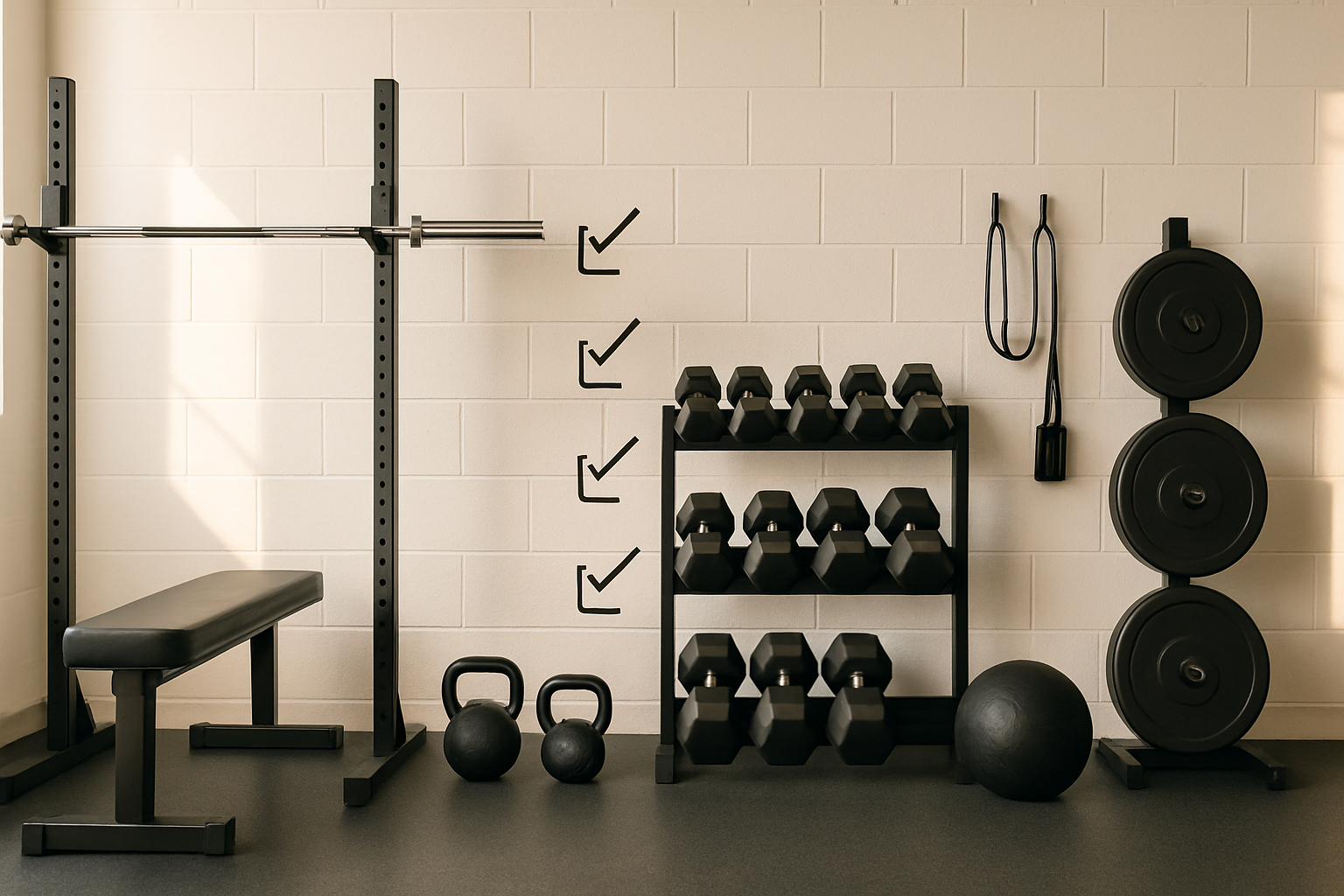
Equipment Checklist for a New Gym & Fitness Studio (2026). Everything you need to know — explained clearly and practically.
Picture this: someone finds your gym on Instagram, spends four minutes scrolling your reels, checks Google reviews, and only then decides whether to walk through your door. That's 2026. The market's moved — hybrid memberships are standard now, half your equipment will sync to an app, and your prospective members have already comparison-shopped three competitors before they've laced up their shoes.
So what does it actually cost to set up a space worth walking into?
Somewhere between $4,000 and $12,000 — or roughly ₹3.3 to 10 lakh if you're working in Indian rupees — depending on how large your studio is and what format you're running. That's a wide range, and it should be, because a boutique yoga studio and a functional strength facility don't share much beyond the front door. What they do share is the same three-bucket spend: flooring and structural basics, training equipment, and the tech and admin infrastructure that holds everything together once members actually show up.
Get any one of those buckets wrong and you'll feel it — either on opening day or six months later when you're retrofitting something you should've planned for upfront.
The 10 Essentials
1. Rubber Flooring / Interlocking Mats
Get the flooring wrong and everything else suffers. Not metaphorically — literally. Bad flooring means joint stress for your clients, cracked weight plates, and if someone goes down badly, a liability conversation you really don't want to have.
Rubber tiles fix all three. They absorb impact, kill the echo of dropped dumbbells, and hold up through years of barefoot sprints, loaded barbells, and whatever else you throw at them. This isn't a glamorous purchase — but it's the one piece of infrastructure that touches every single session you'll ever run in that space.
Cost range: $500–$1,800 USD | ₹40,000–₹1,50,000
For mid-tier options that actually hold up: Rubber King (US) and Decathlon's Pro Rubber Tile range (India/EU) are both worth shortlisting — reliable suppliers, reasonable pricing as of May 2026. If you're working with a smaller footprint, 8mm interlocking tiles at around $2–$3 per sq ft are dead simple to install and do the job well.
2. Adjustable Dumbbells Set (5–50 lb / 2–25 kg)
Here's something most new gym owners learn too late: you don't need a full dumbbell rack on day one. A decent adjustable set pulls weight across strength work, rehab exercises, functional training, and group classes — and takes up a fraction of the floor space.
The 5–50 lb (2–25 kg) range covers the vast majority of what beginners and intermediate clients actually need. You're not leaving much on the table by skipping the fixed rack early on.
Cost: $300–$900 USD | ₹25,000–₹75,000
For brand choices: PowerBlock Sport if you're setting up in the US or UK, Kore Fitness adjustable sets if you're in India. Both sit comfortably in the mid-tier price bracket — and more relevantly, both hold up under the kind of daily hammering a commercial gym puts them through.
3. Barbell + Weight Plates (Standard Set)
Start with one 20 kg Olympic bar and 100–150 kg of mixed plates. That's it. That single setup covers a wider range of programming than most new studio owners expect — squats, deadlifts, presses, cleans, you name it.
If you're running any kind of strength or functional fitness format, this isn't optional kit. It's the foundation everything else gets built around.
Cost: $300–$700 USD | ₹25,000–₹60,000
For entry-to-mid-tier commercial use, CAP Barbell (US) and Kobo Sports (India) are the sensible picks. Neither is Rogue. But for a studio that's just getting started, they're more than adequate — and you won't be wincing every time a new member drops a loaded bar.
4. Resistance Bands (Full Spectrum Set)
And honestly, if you're building out your equipment list and you're tempted to skip bands or buy just one or two — don't. A full-spectrum set covers more ground than most single pieces of kit that cost ten times as much. Warm-ups, mobility, assisted pull-ups, rehab progressions, travel-format classes when you're running a pop-up session somewhere without a rack in sight. Every single member will reach for them, regardless of fitness level.
The cost-per-use on these is practically embarrassing. We're talking $40–$120 USD (roughly ₹3,000–₹10,000) for a full set — and that set will outlast half your other equipment if you're not abusing them.
For rehab-oriented studios, TheraBand is the go-to. General fitness formats? Gymreapers holds up well, or just grab a quality multi-pack from Amazon — there are solid options available as of May 2026 supplier listings. The brand matters less than getting the full resistance range. Light, medium, heavy, extra-heavy. Don't just buy the middle two and call it done.
5. Pull-Up / Multi-Function Rig
How much can one piece of equipment actually do? More than most people expect, honestly — especially when floor space is tight and your budget has limits.
A wall-mounted or freestanding rig covers pull-ups, dips, band anchors, and hanging core work. That's four distinct exercise categories off a single steel frame. Nothing else in that price range comes close for sheer programmability-per-square-foot.
You're looking at $250–$800 USD (₹20,000–₹65,000) depending on how heavy-duty you go. The Valor Fitness BD-62 is the go-to pick for US-based studios. In India and across the EU, Decathlon's wall-mounted chin-up station does the job at the lower end of that range without feeling flimsy.
Budget studios — and there's no shame in this — often start with a bare-bones wall mount and bolt on attachments as the revenue comes in. It's a perfectly sensible way to scale.
6. Cardio Equipment (Minimum 2 Units)
Walk into almost any new gym on opening day and you'll see the same thing: people heading straight for the treadmills before they've even looked at anything else. Doesn't matter if you've built the place around powerlifting or functional training — cardio equipment is what a big chunk of your members will expect to find, and if it's not there, they'll notice.
You don't need a row of ten machines. Two units is the honest minimum. A pair of treadmills works, or mix it up with one treadmill and a rowing machine — that combo covers more movement patterns without doubling your spend.
Cost range: $600–$2,500 USD | ₹50,000–₹2,00,000
For treadmills, the NordicTrack EXP 7i sits in a solid mid-range bracket and holds up well in commercial settings (US and UK markets especially). Decathlon's Domyos TC range is worth a look too if you're sourcing locally — decent build quality for the price point, based on supplier listings as of May 2026. On the rowing side, don't overthink it: the Concept2 RowErg is what you'll find in serious training facilities everywhere, and its commercial pricing is actually reasonable given how long these machines last.
7. Kettlebells (Set of 4–6 Varied Weights)
The most common mistake new gym owners make with kettlebells? Buying two or three identical weights and calling it done. You end up with equipment that works for maybe 30% of your members — the rest are either swinging something dangerously light or grinding through weights that are genuinely too heavy to move well.
What actually works is a spread. A set covering 8 kg, 12 kg, 16 kg, 20 kg, and 24 kg — that five-weight range handles the overwhelming majority of formats (HIIT, functional training, group classes) and body types without leaving anyone stranded. Cast iron over vinyl-coated if you can help it; the finish holds up and the flat base means they don't roll off the rack mid-class.
Budget for this sits somewhere between $150–$450 USD (₹12,000–₹38,000) depending on where you're sourcing. In the US, Rep Fitness sets come up repeatedly in equipment forums as a solid mid-range pick. For India, Kore Fitness cast-iron sets are consistently recommended — good build quality, nothing fancy, and they don't cost a fortune. Fitness equipment forums tend to flag both as reliable without the premium markup you get from bigger brand names.
8. Yoga / Stretching Mats (8–12 Units)
Floor work happens in every studio, yoga-focused or not. Cool-downs, stretching between sets, mobility work — your members will be on the ground whether you planned for it or not. So skimping here is a mistake.
Cheap mats pill within months and slide at the worst possible moment. Go with 6mm TPE or natural rubber — both grip properly and hold up to daily use. You'll want 8–12 units to cover a standard class without scrambling.
Cost: $120–$350 USD (roughly ₹10,000–₹28,000 depending on where you source them).
For premium, Liforme (UK) is hard to beat — alignment markers, serious grip, genuinely durable. On a tighter budget, Decathlon's Domyos 6mm mats are the sensible call. Both are available across India and most EU markets, so sourcing isn't an issue either way.
9. Sound System (Wireless, Bluetooth, Room-Grade)
Here's something most first-time studio owners get wrong: they buy a Bluetooth portable speaker, plop it in the corner, and wonder why group classes feel flat. Silence — or worse, tinny audio that can't fill the room — kills motivation faster than anything happening on the workout floor.
You need actual room-grade speakers. Not a fancy Bluetooth device. A wall-mounted or stand-mounted self-powered system that was built to push sound across 800–1,000 square feet without distorting at volume.
The JBL EON610 is the go-to recommendation for studios in that size range — self-powered, mid-tier, and solid enough that you won't be replacing it in eighteen months. (Supplier listings as of May 2026, so verify pricing before you order.)
Budget: $200–$600 USD | ₹16,000–₹50,000
Spend here. Seriously. Bad audio is one of those things members notice immediately and never mention to your face — they just quietly decide not to renew.
10. Gym Management Software + Display Screen
Get a tablet or monitor on your front desk — or even just wall-mounted near the entrance — and pair it with a decent management platform. Bookings, invoices, attendance: one place, not three spreadsheets and a WhatsApp thread.
Cost range: $100–$400 USD (hardware) + $30–$80/month for software | ₹8,000–₹32,000 hardware + ₹2,500–₹6,500/month
Here's why this isn't optional: studios that handle scheduling and payments manually are burning 10–15 hours a week on admin. Every week. That's time that doesn't come back, and it's the kind of invisible drain that quietly kills margins in the first year before the owner even notices it happening.
Before you commit to any platform, the Best Coaching Management Software For Academies (2026) breakdown is worth reading — it gets into pricing models, actual feature gaps, and which tools make sense for a single-location studio versus someone managing multiple sites.
Recommended Add-Ons
Foam rollers — members will ask for these before you even think to buy them. Pick up 6–8 units, budget ₹800–₹1,200 each, and don't overthink it. They last years if people aren't leaving them in direct sunlight or using them as step stools.
Medicine balls are one of those purchases that quietly earns its keep. Three to five varied weights covers most conditioning circuits, partner drills, and sport-specific work without cluttering the floor. Mid-tier sets on Amazon or Decathlon run $80–$200 USD — you don't need to go premium here.
One anchor point. Hundreds of exercises. That's the TRX suspension trainer pitch, and it mostly holds up. It's genuinely useful for small-group classes and one-on-one PT sessions, and as of May 2026, a two-pack with anchor hardware sits around $100–$180 USD across most supplier listings.
Get mirrors. Seriously — members need to watch their form, and the visual effect of a well-mirrored studio makes a 600 sq ft space feel like it breathes. Coverage area drives cost ($150–$500 is the realistic range), but if the budget's tight, safety-backed acrylic does the job without the shatter risk.
A first aid kit is table stakes. An AED is a different conversation — ₹50,000 to ₹1,20,000 is a real number, and yes, it stings. But most city-level fitness bylaws already mandate a basic first aid station, and if you're running HIIT or any high-intensity format, the AED isn't optional. It's the kind of thing you hope you never use.
Last thing, and it sounds too simple: a whiteboard. A $30 whiteboard. Members want to see the WOD before class starts — it manages expectations, cuts mid-session questions in half, and weirdly affects the energy in the room. A digital display works too if you want to look polished, but the whiteboard works just fine.
Optional Gear by Studio Style
Strength and Functional Fitness Focus
Picture your 6 a.m. class: someone's loading a barbell in the power cage, two people are mid-set on battle ropes (arms already burning at the 30-second mark), and a third is working box jumps on the plyo set. That's the energy a strength and functional fitness corner actually creates — and it doesn't require a massive footprint to pull off.
The shopping list is short. A 3-piece plyo box set, battle ropes at 15 metres minimum (anything shorter and the load just isn't there), and a power cage if your floor plan can absorb it. Budget somewhere between $600 and $1,200 USD for the whole upgrade — where you land in that range depends mostly on cage quality.
HIIT and Group Conditioning
Here's what most new gym owners get wrong: they spend thousands on racks and plates, then hand their HIIT class a single stopwatch and six cones. That's it. And then they wonder why group conditioning feels like an afterthought.
The fix is embarrassingly cheap. Agility ladders, a proper cone set, and a timer display — one that's actually visible from every corner of the room, not just the front row — will run you somewhere between $100 and $250 USD. That's the whole thing.
That timer display matters more than you'd think. When participants can see the clock themselves, the energy in the room shifts. You stop being a human countdown and start being a coach.
Yoga and Mind-Body
Bolsters, blocks, straps, eye pillows — if you're running Iyengar or restorative classes, these aren't optional. Don't launch your first session without them.
Hot yoga is a different beast entirely. You're not just buying equipment; you're modifying infrastructure. A proper heating system (HVAC work, typically ₹80,000–₹2,50,000) plus humidity controls — that's a contractor conversation, not a last-minute procurement. Sort this out before you sign the lease, not after.
Martial Arts or Boxing Integration
Here's the thing about adding boxing or martial arts to your studio — the floor padding situation changes completely. You're not just throwing a heavy bag in the corner and calling it a day. At minimum, you need one freestanding heavy bag ($150–$350 USD), loaner gloves, focus mitts, and a properly padded wall corner. That last one's easy to overlook until someone's wrist meets bare drywall at speed.
Where to Buy by Region
US
- Amazon US — honestly, for bands, mats, and smaller accessories, it's hard to beat. Fastest delivery, widest range of SKUs, and you're not locked into bulk orders.
- REI — don't overlook this one, especially for yoga and functional gear. Their seasonal sales are legitimate discounts, not the fake "50% off" theatre you see elsewhere.
- Rogue Fitness — premium barbells, rigs, the works. If the budget's there, yes. But for a first studio? Not a requirement. Build up to it.
UK
- Amazon UK — still the easiest option for smaller kit, accessories, and anything you need fast without a minimum order faff
- Sweatband.com — genuinely worth a call if you're buying in volume; they carry solid UK-specific stock on cardio machines and dumbbells, and studio discount enquiries are something they actually entertain (unlike some suppliers who just ignore you)
EU
- Amazon DE — if you're sourcing across Central Europe, this is usually your fastest option; neighbouring markets get decent shipping times and the catalogue is genuinely hard to beat for breadth
- Decathlon (in-store and online) — honestly, for a new studio on a budget, Decathlon does a lot of heavy lifting; the quality sits comfortably in the mid-range, and the big win is being able to walk into a store and actually handle the equipment before you commit
India
The biggest mistake new gym owners in India make? Ordering everything online without touching it first. You end up with rubber flooring that smells like a tyre fire for six months, or a rack that wobbles under anything heavier than bodyweight.
Start with Decathlon. They've got large-format stores in Bengaluru, Mumbai, Delhi, Hyderabad, and Pune — and the whole point of going in person is that you can actually walk on the mats, press down on the flooring, and figure out what's worth the money before you've committed to a bulk order.
Amazon India is fine for accessories (bands, jump ropes, small kit — that sort of thing). But for anything structural or heavy, the quality variance is brutal and returns on large equipment are a headache you don't need at setup stage. Read the return policy before you click buy. Seriously.
For commercial-grade barbells and racks, you'll want to contact specialists directly. Three names that keep coming up in Indian gym owner forums: Fitness World in Mumbai, Viva Fitness in Delhi, and SK Fitness in Bengaluru. None of them are premium-tier, but they're solid mid-range options — and all three are worth getting quotes from before you make any decisions.
Mistakes New Studios Make
1. Buying consumer-grade equipment for commercial use
That treadmill you found on sale? It'll hold up fine in a spare bedroom. Put it under daily commercial load and you're looking at a breakdown inside six months — and a warranty that explicitly won't cover you because it was never rated for this. Buy commercial-grade on the things that actually take a beating: cardio machines, barbells, anything that gets touched fifty times a day.
2. Over-investing in cardio, under-investing in flooring
New owners love buying the machines that look impressive in a brochure. Then they lay thin foam tiles and call it done. Here's the thing — flooring touches every single session, every member, every class, every day. It's not a background detail. It's the thing everyone is literally standing on. Prioritise it before you prioritise anything with a screen attached.
3. Ignoring tech infrastructure until launch week
Payment processing and scheduling software always take longer to set up than you expect. Always. Leaving it until the week before you open is how you lose your earliest members — the ones who showed up excited and left frustrated because the booking system didn't work. Sort the workflow before day one. If you need a stopgap while you're still finalising a full platform, a free fee invoice generator can handle early billing without any fuss.
4. Copying a large gym's equipment list
A 500 sq ft studio does not need twelve treadmills. Or a full plate-loaded circuit. Buy for the actual cohort you're starting with — not the imagined version of your gym three years from now. You can always add equipment later. You cannot un-spend money you've already burned.
5. Skipping the acoustic and lighting audit
Hard floors, bare walls, concrete ceilings — they all bounce sound around in ways that make group classes feel genuinely chaotic. Members won't always say "the acoustics are bad." They'll just say "the vibe is off" and stop renewing. Acoustic panels cost $50–$200 USD at setup. Retrofitting them after you've already started losing members costs a lot more — in money, and in reputation.
Frequently Asked Questions
How much does it cost to fully equip a new gym or fitness studio?
Budget between $4,000 and $8,000 USD (₹3.3–6.5 lakh) for a 600–800 sq ft space if you're kitting it out with the basics: flooring, free weights, a rig, one or two cardio machines, and management software. That gets you functional. Not fancy — functional.
Going specialist costs more. Hot yoga needs heated flooring infrastructure and ventilation systems you simply can't skip. Boxing studios need ring setups, bag mounts, the works. Factor in an extra $2,000–$5,000 for any format with serious infrastructure requirements.
One caveat worth being clear about: these are indicative ranges pulled from supplier listings as of May 2026. What you'll actually pay depends heavily on your city, your suppliers, and frankly how well you negotiate. A Mumbai landlord's fit-out expectations look very different from a Tier-2 city setup — same square footage, wildly different costs.
What equipment should I buy first if my budget is limited?
Tight budget? Start with flooring, a dumbbell set, resistance bands, and a pull-up rig. That's it. Those four things give you more programming flexibility per rupee than almost anything else you could buy — you can run strength sessions, HIIT, mobility work, and recovery formats without needing a single additional piece of kit.
The cardio machines can wait. So can the specialty gear. Get a stable membership base first, then reinvest. Buying a row of treadmills before you know whether fifty people are actually showing up every week is how gyms bleed cash before they even get started.
Do I need different equipment for group classes vs. personal training?
Here's a question most new studio owners wrestle with longer than they should: do group classes and personal training actually need different equipment, or is that just a convenient excuse to spend more?
Honest answer — the core stuff overlaps almost entirely. Dumbbells, resistance bands, mats, a rig. You'd buy all of that regardless. The real difference isn't what you need, it's how many. Group classes mean you're outfitting eight to twelve people simultaneously, so you'll need eight to twelve mats, multiple pairs of dumbbells across weight ranges, and (this one gets overlooked) a sound system loud enough to actually fill the room. Personal training, on the other hand, runs perfectly well in a smaller, more deliberately chosen setup. One client, one coach, a tighter kit.
Quantity, not category. That's the whole distinction.
Related reading: If your space is movement-focused rather than strictly fitness-oriented, the Equipment Checklist for a New Dance Studio (2026) is worth a look — it gets into flooring, mirrors, sound, and gear choices specific to dance formats.
> Still running your studio on spreadsheets? > Lynk brings scheduling, payments, member records, and certificates into one place — no juggling tabs. You can also generate client certificates on the spot with the free certificate generator, handy for intro programmes, fitness challenges, and milestone recognition. > > Try Lynk free — no credit card needed.