Equipment Checklist for a New Football Studio (2026)
By Swathi N ·
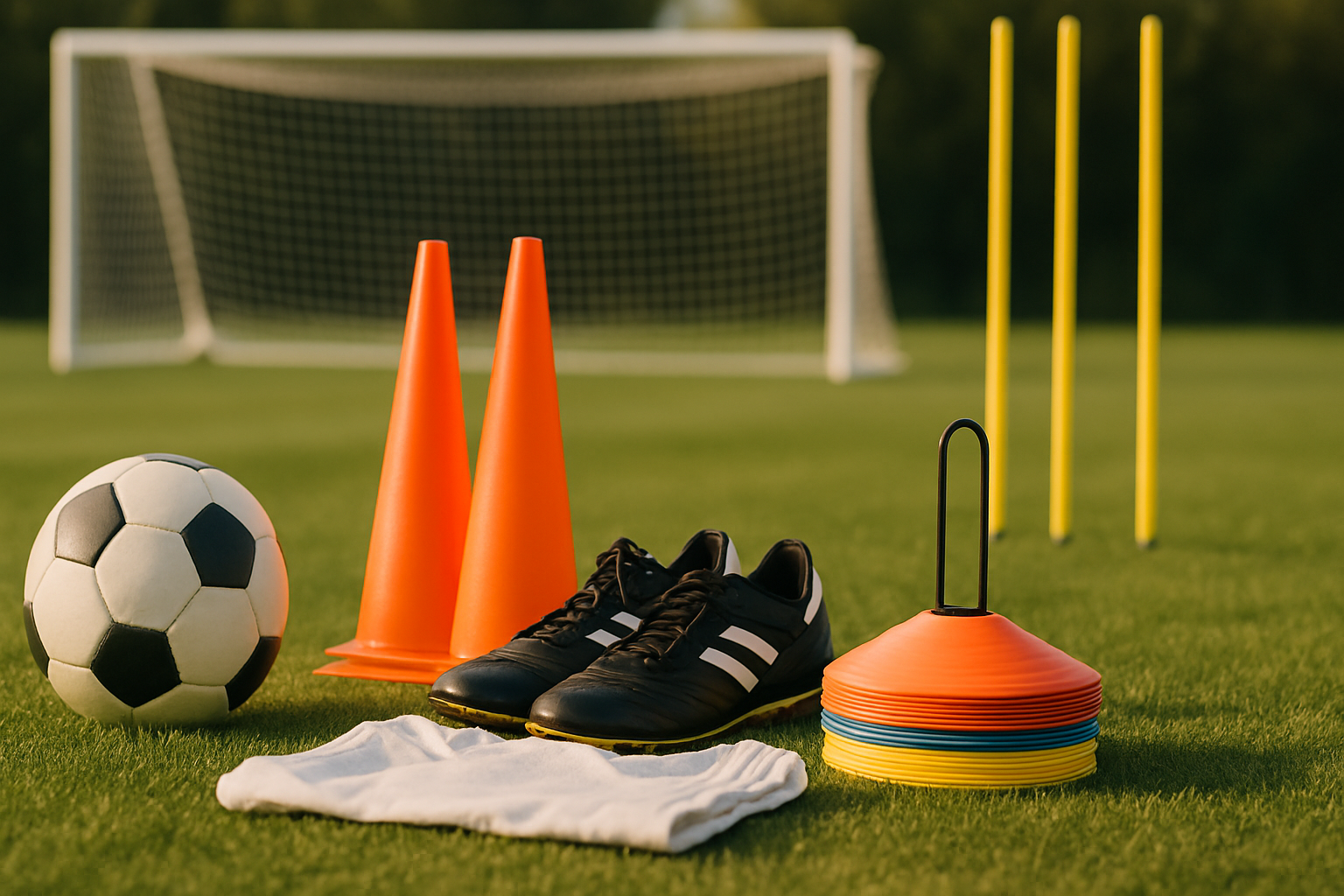
Setting up a football studio in 2026? Avoid costly mistakes with this 3-bucket budget plan — from turf to tech, covering ₹3.3L to ₹10L realistically.
Picture this: you've signed the lease, the walls are painted, and then someone asks what equipment you actually need. That moment — equal parts exciting and overwhelming — is where most new football studio owners make their first expensive mistake. They either buy everything at once without a plan, or they hold back too long and open half-ready.
Here's how to avoid both traps. Break your budget into three clear buckets: playing surface and structural gear, training and skills equipment, and tech/video tools. Do it right, and your total spend for a functional studio in 2026 lands somewhere between $4,000 and $12,000 — that's roughly ₹3.3 lakh to ₹10 lakh, depending on how big you're going and which city you're setting up in.
Spending smarter, not bigger. That's the whole game here.
The 10 Essentials
1. Artificial Turf (Synthetic Grass Surface)
Turf isn't optional. It's the first thing a parent notices when they walk in, and the first thing a player feels the moment they're on it — and both of those impressions stick.
A proper 3G or 4G surface does three things at once: it gives you consistent ball roll (critical for any technical drill), it takes the edge off hard concrete underneath and cuts down on impact injuries, and — bluntly — it tells everyone in the room that this is a real programme. Concrete or bare flooring? That's an afterthought. Turf? That's a commitment.
For indoor studios where square footage is tight, interlocking turf tiles with an 8–12mm pile are worth considering. They're modular, they install without major groundwork, and they hold up.
What you'll spend: Expect $800–$3,500 USD (₹65,000–₹2.9 lakh) for a studio-sized or 5-a-side install — base layer included. That range is wide because site prep costs vary enormously.
On brands: FieldTurf Lite series and CCGrass PU tiles are both solid mid-range options with FIFA-recommended fibre specs. Pricing is based on supplier listings as of May 2026, so get updated quotes before you commit.
2. Size 4 and Size 5 Training Footballs (Set of 10–15)
Here's something most new studio owners get wrong on day one: they buy six balls, thinking that'll be enough. It isn't. Not even close.
For a small-group session to flow — no dead time, no kids standing around waiting — you need 10 to 15 balls in rotation. The mix matters too. Size 4 for your under-13 players, size 5 for everyone 14 and above. Start with that split and you're covered across the age range from your very first batch of students.
A set of 12 match-grade balls will run you somewhere between $120 and $350 (roughly ₹10,000 to ₹29,000), depending on what you go with. For most studios starting out in India, Nivia Storm or Cosco Premier are the practical choice — both are widely available, hold inflation reliably, and the panels don't start peeling after a few weeks of hard use. Not glamorous, but that's the point. As of May 2026 supplier listings, both brands are still the go-to at this price point.
Don't overthink the brand. Just make sure you actually have enough of them.
3. Portable Mini Goals (Set of 4–6)
Buy a set of four to six portable mini goals before you open your doors. Seriously, do this early — you'll reach for them in almost every session. Sizes between 3×2 ft and 6×4 ft work well for indoor studios; anything bigger and you're constantly shuffling around your own space.
The reason they're non-negotiable: small-sided games aren't a warm-up activity or a way to kill the last ten minutes of class. They're the backbone of how modern youth football is actually coached. And if your goals are fixed or bulky, you lose the ability to reconfigure on the fly — which kills the whole point.
Pop-up or aluminium-frame designs pack flat, which matters when you've got limited storage. Two brands worth looking at: Quickplay Sport and Slazenger — both are sized to industry-standard indoor specs and don't take up your entire storeroom when folded down.
Cost: $90–$280 (roughly ₹7,500–₹23,000) for a set, depending on frame material and size.
4. Agility Ladder (Set of 4)
Four ladders. That's the number that actually lets you run parallel lines with a group of 8–12 players without half the squad standing around waiting their turn.
Footwork and first-touch work lives and dies on the agility ladder — it's genuinely the backbone of that kind of training, not some optional add-on. And the thing most new studios get wrong? Buying one or two and wondering why drill sessions turn into queues.
Budget somewhere between $35–$90 (₹2,800–₹7,500) for a decent set. On the brand side, Kwik Goal Speed Ladder and Nivia Agility Ladder are both solid — the rungs stay locked under pressure and don't twist mid-drill, which sounds like a minor detail until you've watched a player catch a rung and break their rhythm on every single rep.
5. Disc Cones and Marker Poles (Set of 50 cones + 20 poles)
How many times have you watched a coach spend ten minutes setting up a drill with whatever's lying around — water bottles, bibs, someone's bag — because they didn't have enough cones? Don't be that studio.
Fifty disc cones and twenty marker poles sounds like a lot until your first session, when you're simultaneously marking out a dribbling grid, a shooting lane, and a penalty arc and you're still three cones short. These are the one piece of kit you genuinely cannot over-buy.
Go for flat-base HDPE cones in bright orange or yellow — they don't crack in the cold, they don't flip in the wind, and players actually see them. Champion Sports and Vinex both do solid bulk packs. The durability-to-price ratio on either brand holds up well, which matters when you're buying fifty at a time.
Cost: $40–$80 (roughly ₹3,300–₹6,600)
Every single session. That's how often you'll use these.
6. Rebounders / Passing Walls (2–4 units)
Picture a studio session with twelve players and one coach. Without rebounders, half the group is standing around waiting for a turn. With four of them along the wall, suddenly everyone's working — one-touch passing, first-touch control, volleys on repeat — and you've doubled the meaningful contact each player gets in an hour.
That's what makes rebounders non-negotiable for indoor coaching. They're not a nice-to-have. Solo training, pairs work, technical drills that would otherwise need a second person — a good rebounder handles all of it without complaining.
Budget somewhere between $80 and $300 per unit (roughly ₹6,600 to ₹25,000), and pick up 2–4 of them depending on your typical class size. The cheaper end gets the job done for lighter use; if your studio runs sessions back-to-back six days a week, spend closer to the top of that range.
For brands: Samba rebounder nets and the Kwik Goal Extreme Duty Rebounder are both worth the money — specifically because the tension holds through heavy daily use rather than going slack after a few months, which is the thing that kills cheaper alternatives. Both were available through supplier listings as of May 2026.
7. Mannequins / Slalom Poles (Set of 6)
Here's a mistake coaches make constantly: they set up a dribbling or crossing drill and then burn two or three real players just to stand there as obstacles. Static defenders. Human cones. It's a waste of bodies — and it's completely avoidable.
Mannequins handle that job. They replicate body shape well enough for dribbling lanes and crossing scenarios, and slalom poles fill in for quick-feet circuits where you just need something to weave around. Six of each will cover most drill configurations without eating up your whole floor plan.
Budget roughly $60–$180 (₹5,000–₹15,000) for a decent set. For mannequins specifically, look at the Samba Pro or Sportout's folding range — both sit at life-scale torso height, have stable bases that don't tip mid-drill, and are built to industry-standard specs. The folding ones are worth it if storage is tight.
They earn their floor space faster than almost anything else on this list.
8. Training Bibs / Vests (30 units, 3 colours)
Thirty bibs, three colours, ten of each. That's it. That's the whole section.
Okay, not quite — but the logic really is that simple. You can't run a small-sided game without some way to tell teams apart, and bibs are the cheapest, most obvious fix. Two simultaneous games means you need two full sets running at once, which is exactly why 30 units (split across three distinct colours) is the number to hit. Go below that and you're constantly reshuffling mid-session, which kills momentum faster than anything else.
They're also just cheap. USD $30–$70, or roughly ₹2,500–₹5,800 on the Indian market. There's no reason to be stingy here.
For brands: Nivia training bibs work well, and so do the generic polyester mesh options from Decathlon — both hold their colour through repeated washing without fading into that washed-out pink-that-used-to-be-red situation. (Supplier listings as of May 2026 confirm both are still readily available.) Honestly, as long as the mesh breathes and the colour stays visible after 40 washes, you're fine.
Don't let this be the thing you run out of.
9. Video Analysis Tablet or Camera Mount Setup
Here's something most new studio owners don't realise until their third or fourth session: verbal feedback alone doesn't stick. A player hears "your touch is too heavy," nods, and does exactly the same thing thirty seconds later. Show them a clip? Completely different story. Even a basic fixed-angle camera on a tripod changes the dynamic — coaches can review sessions, pull clips to share with players, and slowly build a library that actually documents progress over time.
And no, this isn't just an elite-level thing anymore. App-led coaching with video is expected at grassroots level now. Parents expect it. Players expect it. If you're not set up for it, you'll feel the gap.
Cost range: $120–$400 (camera + mount + basic app subscription) — or roughly ₹10,000–₹33,000 if you're sourcing locally in India.
For the setup itself, a mid-range action cam paired with a sturdy tripod is what most studios are actually running as of May 2026. The DJI Osmo Action or GoPro Hero 12 both do the job well. What you don't need — and genuinely shouldn't buy — are those specialised "sports analysis cameras" that come in at three times the price. Unless you're working with elite squads, that extra spend buys you almost nothing practical.
One more thing worth flagging: if you're also trying to juggle bookings, session plans, and player records alongside your video workflow, it gets messy fast. Best Coaching Management Software For Academies (2026) is worth a read — it breaks down what the software landscape actually looks like for small academies right now.
10. First Aid Kit + AED (Automated External Defibrillator)
Get a certified first aid kit on the wall before your first session. Full stop. Municipal registration for sports facilities almost always requires one — but even if yours doesn't, you need it anyway.
The AED question is where studio owners tend to hesitate. They look at the price and decide to revisit it later. Don't. One cardiac event in a facility without a defibrillator — whether it's a coach, a parent watching from the sideline, or a 40-year-old player who didn't know his heart had other plans — and "later" becomes a conversation no one wants to have. AEDs aren't a premium add-on anymore. They're baseline.
For the defibrillator itself, the Philips HeartStart FRx is the one most coaches actually feel comfortable using under pressure. It's built to talk you through the process, which matters enormously when adrenaline is through the roof and nobody in the room is a paramedic. Pair it with any St John Ambulance-certified first aid kit for your consumables — the certification means the contents meet a recognised standard, not just whatever the supplier decided to stuff in the bag.
Budget: $200–$600 / ₹16,500–₹50,000 for a solid kit plus an entry-level AED. Not cheap. Also not optional.
Recommended Add-ons
A speed radar gun is one of those things you don't realise you need until you have one. Suddenly sprint drills have stakes — players are chasing a number, not just running hard. Pick one up for somewhere between $40 and $120 (₹3,300–₹10,000) and watch the competition in the room shift immediately.
Kick targets and goal inserts are worth it if you're running finishing work. They mark out the corners and crossbar zones on your existing goals — dead simple, and the visual cue alone improves accuracy in ways that verbal instruction doesn't. Around $25–$80 per goal pair.
Agility hurdles — the 6-to-10-inch kind — do something your flat ladder can't: they force the body to lift. Add a set of hurdles to your warm-up circuit and you've got a completely different movement demand without buying new equipment. Budget $45–$120 for a decent set.
Here's one coaches consistently overlook: a visible countdown timer. Not your phone. Not shouting "30 seconds!" across the studio. An actual battery-powered coaching timer mounted where everyone can see it — drills run tighter, players self-regulate, you spend less time being the clock. They're $20–$60. Genuinely one of the best-value purchases on this list.
Get a ball bag or rolling cart. Moving 15 balls across a studio floor by hand is exactly as tedious as it sounds, and it eats into session time in the most unnecessary way possible. A proper cart runs $15–$50.
And a magnetic tactical board — the kind with the pitch diagram printed on — costs under $40 and means you can draw a formation mid-session rather than waving your hands around hoping players follow. If you've ever tried to explain a defensive shape verbally to a group of twelve-year-olds, you already know why this matters.
Optional Gear by Studio Style
Small-Sided / Futsal Focus
Picture your first futsal session: someone shows up in moulded studs, the ball's ricocheting like a pinball, and nobody can string three passes together. That's what happens when the surface and equipment aren't matched to the game. So get the basics right from day one.
Rebounders are non-negotiable. Low-pile turf tiles too — they're what keeps the ball honest on the floor rather than skipping unpredictably. And the balls themselves matter more than most coaches expect: size 3–4 futsal balls, not standard footballs. The reduced bounce is the whole point. It forces players to actually control the ball rather than just reacting to a bounce.
Shoes are a different matter. You're not stocking a sports shop — futsal-specific footwear is the player's responsibility, not yours. That said, if you're onboarding beginners (and you will be), keep a handful of pairs in common sizes available to loan. Some people genuinely don't own the right shoes yet, and turning them away on day one over footwear is the kind of thing that kills early retention.
Elite Academy / Performance Track
The mistake most academy-track studios make? They blow the budget on a second ball rebounder and skip the data layer entirely. Then they wonder why their players plateau.
Here's what actually moves the needle at this level: GPS vest trackers, heart-rate monitoring straps, and a proper video analysis software licence. That combination will add $800–$2,000 to your tech spend — and yes, that stings. But if you're genuinely feeding players into competitive leagues, it's not optional equipment. It's the whole point.
The GPS and heart-rate kit tells you what the eye misses. The video software tells you why.
Youth Development / Kids' Classes
Size 3 foam-core balls. That's your starting point for under-8s — not the standard gear you'd order for adults, and definitely not anything firm enough to sting a seven-year-old in the face mid-drill.
You'll want more cones than you think. Double whatever number felt reasonable when you first wrote the order. Kids tear through cone-based activities at a pace that would exhaust most adults, and having enough to run two or three setups simultaneously (without scrambling to reset between groups) makes a real difference to how smoothly sessions flow.
Goal heights come down too. Lower crossbars aren't just safer — they actually change how children experience success in those early sessions, which matters more than any tactical drill you could run.
Here's where a lot of new studio owners get the budget wrong: they allocate serious money to video analysis equipment for kids' classes. Don't. That spend belongs elsewhere at this level. Put it into colourful, visually engaging equipment instead — bright bibs, multicoloured cones, novelty target goals. Children respond to things that look fun before a word of instruction has been spoken.
Adult Recreational / Social Football
Here's something most studio owners don't expect: a decent Bluetooth speaker does more for adult rec group retention than half the drills you'll run. We're talking $80–$200 for a sound system, and the goodwill it buys you is genuinely out of proportion to the cost. Adults showing up after a long workday need to feel like they're somewhere fun — music does that faster than anything else in your budget.
The gear list itself? Much simpler than you'd think. Fewer mannequins (rec players aren't working set-piece shape at that level), but load up on bibs and balls. You want enough of both that nothing stalls — no one standing around waiting for a bib to free up, no chasing a single ball across the car park between drills.
Where to Buy by Region
US
- Amazon US — honestly, your first stop for the basics. Cones, bibs, agility ladders, rebounders — it's all there, ships fast, and the selection is deep enough that you won't need to go hunting elsewhere for standard kit.
- REI — don't overlook this one for first aid supplies and all-weather gear. If your sessions run outdoors (or in a space that isn't exactly climate-controlled), REI's outdoor-focused inventory is genuinely useful.
- Rogue Fitness — worth a look if you're pushing into performance training territory. Hurdles, sleds, conditioning gear — Rogue's quality is hard to argue with, and the price reflects that, so budget accordingly.
UK
- Amazon UK — you already know this one. Fastest delivery, widest stock, dead simple returns if something arrives damaged.
- Sweatband.com — genuinely worth bookmarking if you're kitting out a full studio. Goals, rebounders, training accessories — and they run bundle deals that can save you a reasonable chunk when you're buying multiple items at once.
EU
- Amazon DE — if you're ordering small kit and need it to reach anywhere from the Netherlands to Romania, this is your default. Central European logistics are solid enough that most of the continent gets covered without fuss.
- Decathlon (walk into almost any branch across France, Germany, Spain, or Italy and you'll find what you need) — cones, bibs, balls, basic goals. The value here is genuinely hard to beat, and the quality for entry-level studio kit is perfectly respectable.
India
The biggest mistake new studio owners make? Ordering everything online without ever touching the gear first. Bats, cones, bibs — they all look identical in product photos. They're not.
If you're anywhere near a Decathlon, go in person. The HSR Layout store in Bengaluru, Navi Mumbai, Noida, and Gachibowli in Hyderabad are the ones worth the trip. Their Kipsta football range is genuinely solid for the price — not "budget solid," but actually good. You can hold the ball, feel the cone quality, check the bib sizing. That's worth more than any review section on a product page.
For bulk orders — especially if you're running a studio outside a metro — Amazon India is the practical answer. Nivia, Cosco, and Vinex all sell direct through the platform, and shipping to tier-2 cities is usually reliable enough for cones and bibs (the stuff you need in quantity but don't need to touch before buying).
Here's what most people miss though: the specialist shops. Chanakya Sports in Delhi, Sports Station in Mumbai, and the cluster of shops around Chennai's Anna Salai carry equipment that simply doesn't make it onto any major e-commerce platform. Walk in, tell them what you're setting up, and negotiate. Bulk rates are almost always on the table — but only if you ask.
Mistakes New Studios Make
1. Laying turf without checking the subfloor first
Uneven concrete. Damp patches. Either one will wreck your turf inside eighteen months — bubbling, lifting, edges that peel back after the first few sessions. A proper floor assessment costs a fraction of what a re-lay does. Do it before you spend a rupee on synthetic grass.
2. Not buying enough balls
Six or eight balls for sixteen players. You'd be surprised how many new studios open this way, then wonder why sessions feel chaotic. Half your time goes into chasing balls into corners. The rule is simple: one per player minimum, and if you can stretch to more, do it.
3. Buying the fancy tech too early
A ₹2,00,000+ tactical camera rig is a serious commitment when you're running two sessions a week with eight kids. The revenue isn't there yet — and honestly, the need probably isn't either. Start with a decent camera and a tripod. Upgrade when the numbers actually justify it, not before.
4. Treating storage as an afterthought
Fifty cones. Fifteen balls. Six goals. Four ladders. Where does all of it go at the end of a session? Studios that don't answer that question before they open end up with gear piled in corners, trip hazards across the floor, and equipment that quietly gets damaged because no one had a system for putting it away. Storage isn't glamorous. It matters anyway.
5. Forgetting that consumables are a recurring cost
Ball bladders wear out. Cone replacements add up. Bib elastic snaps. First aid kits need restocking (and if yours doesn't, you're probably not checking it often enough). Each item feels minor on its own — but across a year, it's real money. Build a ₹8,000–₹15,000 annual buffer into your Year 1 plan. Coaches who skip this end up buying things in a hurry, paying retail markups, and wondering where the margin went.
Tools Worth Bookmarking
Quick admin note before you get too deep into setup — two tools that'll save you an embarrassing amount of time: the free fee invoice generator and the free certificate generator, both on Lynk. No setup, no faff. One handles parent invoicing, the other spits out session completion certificates. Bookmark them now, thank yourself later.
> Run your football studio on Lynk — session scheduling, player tracking, and payments in one place. > Start your free trial of Lynk
Related reading: Equipment Checklist for a New Gym & Fitness Studio (2026)
Frequently Asked Questions
How much does it cost to set up a basic football studio?
Turf is where the money goes. That's the honest answer. Everything else — goals, balls, cones, rebounders, a few safety essentials — you can piece together reasonably, but the surface will make or break your budget before you've bought a single cone.
For a small-sided setup (think five-a-side dimensions, turf tiles or a proper laid surface, basic gear included), you're looking at somewhere between $4,000 and $8,000 — roughly ₹3.3 to ₹6.6 lakh. That gets you functional. Not flashy, but functional.
Push toward a full-size pitch or start adding video analysis equipment, and the number climbs. $10,000 to $12,000 is a realistic ceiling for a high-spec facility, though that ceiling rises quickly if you're not careful about where you spend first.
The short version: start with the surface decision, because it'll determine what's left in the budget for everything else.
Do I need FIFA-certified equipment for a grassroots studio?
Here's what most people setting up a studio ask at some point: do I actually need FIFA-certified gear, or is that just marketing?
Short answer — no, you don't. FIFA certification is really about match-standard footballs used in competitive play. For a training environment, solid mid-tier brands like Nivia, Kwik Goal, or Cosco will hold up just fine without any certification badge on the packaging. The build quality is there. The specs are consistent enough for daily training use.
That said, there's one exception worth noting. If you're hosting league matches or trials at your studio — actual competitive play, not just sessions — then yes, having at least one FIFA Quality or FIFA Quality Pro ball in your kit makes sense. But for everyday coaching? Don't pay the premium unless you need to.
What's the minimum space needed for an indoor football studio?
Picture four kids trying to dribble through a cone corridor while two others take turns on a rebounder — that's roughly what 400–600 sq ft actually looks like in use. Tight, but workable. That range is the sweet spot for a small-sided or skills studio: enough floor to run 4v4 futsal-style games, set up drill corridors, and still have a rebounder station going without everyone tripping over each other.
Drop below 300 sq ft and you're constantly making compromises — you can't run multiple activities at the same time, and the space starts feeling less like a studio and more like a corridor with goals at each end.
Most urban studios operating in Bengaluru, Pune, and Mumbai tend to sit in the 500–900 sq ft range for their core indoor coaching programmes. Not huge. But if the layout's sensible, it's more than enough to run a proper session.