Equipment Checklist for a New Dance Studio (2026)
By Swathi N ·
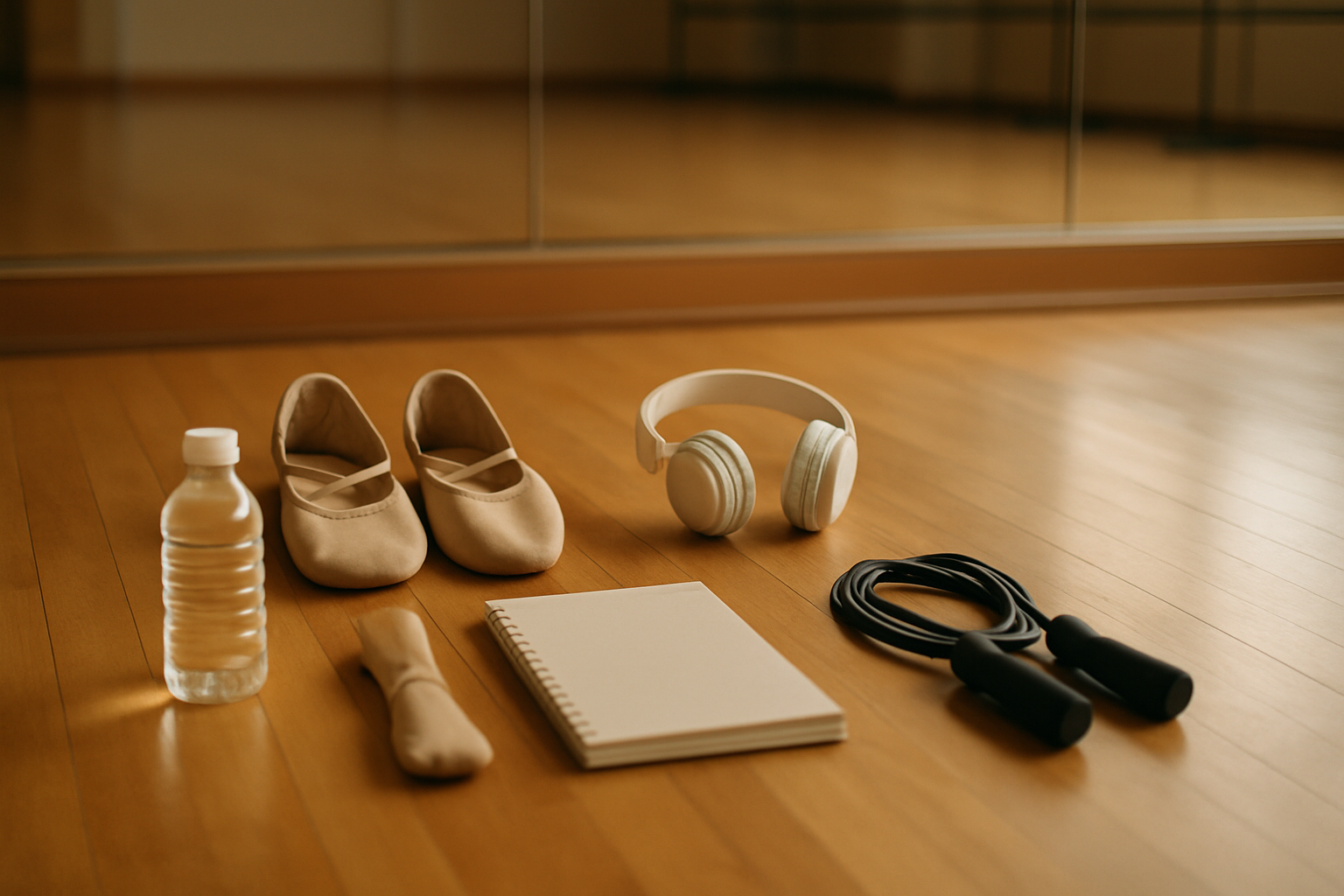
Before Monday's first class, make sure your floor, mirrors & sound system aren't still in a Chennai warehouse. Here's what your studio actually needs.
Picture this: you've signed the lease, painted the walls, told every parent in the neighbourhood that classes start Monday — and then you realise the floor bounces wrong, the speaker cuts out mid-song, and the mirrors you ordered are still sitting in a warehouse in Chennai. It happens more than studio owners like to admit.
Starting a dance studio in 2026 isn't the low-barrier venture it once seemed. Parent-led academies in Bengaluru's Jayanagar, Bollywood-fusion studios tucked into Andheri's lane buildings, contemporary schools spreading across Hyderabad and Pune — everyone's competing for the same pool of students, and the ones who keep those students are almost always the ones who got the infrastructure right from day one.
Get the equipment wrong and you're not just uncomfortable — you're re-buying things six months in, which costs more and quietly signals to parents that you didn't quite know what you were doing. Get it right, and it just… disappears into the background. Classes run, students improve, and you're not fielding complaints about sound quality or slippery floors.
The total outlay you're looking at: roughly $2,500–$5,500, or about ₹2–4.5 lakh, spread across three categories. The floor and acoustics come first (and honestly, they're where most people underspend). Then the audio and lighting setup. Then mirrors and barres. That's it — three buckets, and every decision in this guide falls into one of them.
The 10 Essentials
1. Sprung or Marley Dance Floor
The floor isn't a line item you negotiate down. It's the one thing that determines whether your students walk out healthy or limp out injured — and whether you're staring at a liability claim six months in.
Concrete and tile are the problem. They look fine, they're cheap to install, and they will wreck knees and shins faster than almost anything else in a studio environment. A proper sprung floor — foam or wooden subfloor layer underneath — absorbs the impact that would otherwise travel straight up into joints. No subfloor budget? A Marley vinyl roll-out isn't a perfect substitute, but it's a legitimate option for studios starting lean.
Budget somewhere between $800 and $2,500 (₹65,000–₹2,00,000) for this. That range moves depending on room size and whether you're going full sprung construction or just laying a Marley overlay.
On the Marley side, Rosco is the name you'll keep hearing — it's the industry standard, and for good reason. As of May 2026 supplier listings, a full Rosco Marley roll covering a 400 sq ft studio costs roughly $600–$900. For sprung subfloor kits, Harlequin sits in the mid-tier range and shows up consistently in mid-sized studio builds.
Don't cut corners here. Everything else in this list is replaceable. The floor isn't.
2. Wall-to-Wall Mirrors
Here's something no one tells you when you're setting up your first studio: mirrors aren't just vanity. They're the cheapest correction tool you'll ever buy. Students can watch themselves in real time, catch a dropped elbow or a misaligned hip, and fix it without you having to say a word. That feedback loop — immediate, constant, wordless — is genuinely hard to replicate any other way.
There's a secondary benefit too, especially if you're working with a tight footprint. A fully mirrored wall in a 600 sq ft room makes the space read almost double its actual size. Not a small thing when you're trying to keep twelve students from feeling like they're rehearsing in a cupboard.
Budget-wise, a standard 8-foot × 12-foot mirrored wall (installed) typically lands between $300 and $900 — or roughly ₹25,000 to ₹75,000 depending on where you are. And here's where Indian studios actually have an advantage: there's no brand that dominates this category globally, so you're not chasing an import. Most studios just go straight to a local glass fabricator, get panels cut to spec, and have a glazier fit them. In Bengaluru and Chennai, that usually works out to somewhere between ₹600 and ₹900 per sq ft, all in.
Honestly? That's the move. Local, custom-cut, fitted properly. Done.
3. Ballet Barre (Fixed or Portable)
Get at least one barre installed before your first class. Doesn't matter if it's wall-mounted or freestanding — just have it there. You'll use it constantly, and not just for ballet. Warm-ups, cool-downs, strength drills, that one student who needs something to hold onto while working on hip flexibility — a fixed reference point earns its keep in almost every class format you run.
Portable double-barres are the easier starting point. They run $80–$150 (roughly ₹6,500–₹12,500), fold flat for storage, and let you reconfigure the room on short notice. If you're in the US, Vita Vibe is a reliable mid-tier option — solid build, widely available as of May 2026. Wall-mounted fixed barres cost more upfront (a full wall starts around $200, or ₹16,500+), but they don't wobble, they don't tip, and your students will quietly appreciate both of those things.
In India, skip the imported options and go straight to a local steel fabricator. Most cities have workshops that will custom-weld wall-mounted barres at the right height for your space — expect to pay ₹4,000–₹8,000 per 10-foot section, which is genuinely hard to beat. The finish won't be glossy, but the structural quality is usually excellent.
One thing worth knowing: standard barre height is 42–44 inches for adults, but if you're running children's programmes, a second lower rail at 32–34 inches saves a lot of awkward reaching.
4. PA System / Bluetooth Speaker Setup
Here's a mistake almost every new studio owner makes: they grab a decent Bluetooth speaker, think "that'll do for now," and then spend the next six months watching students strain to hear the beat over their own footwork. A tinny speaker in a room with ten moving bodies isn't just annoying — it actively kills the class energy.
Volume matters, obviously. But it's not the only thing. You need audio that's clear enough that lyrics land, that the drop hits when it's supposed to hit, and — this one's underrated — that doesn't start distorting the moment you push it past 70%. Because you will push it past 70%.
Budget: roughly $150–$600 (₹12,000–₹50,000), depending on your room size and how seriously you want to take this.
If you can stretch toward the top of that range, the QSC K8.2 is what working studios actually use. It's a powered speaker built for repeated heavy use — not a consumer product dressed up in pro packaging. For tighter budgets, the Bose S1 Pro is a genuinely solid option for rooms up to around 600 sq ft. It won't rattle or distort, which is the baseline requirement here.
One thing worth knowing before you buy: a single speaker, even a good one, can create dead spots in a rectangular room. If your space is larger than 500 sq ft, think about two units positioned on opposite ends rather than one unit working overtime.
5. Music Licensing Subscription
Here's a question most new studio owners ask too late: do I actually need a licence to play music in my classes? The answer is yes — and the fine print matters more than you'd think.
Playing commercial music in a class setting without the right paperwork isn't a grey area. It's a legal risk, full stop. Lots of studio owners skip this step because it feels bureaucratic and easy to defer. Don't.
In the US, BMI and ASCAP are the two bodies that cover most popular music libraries. You'll need a BMI business licence — it's not complicated, and as of May 2026 the whole application is online. In India, you're looking at a PPL/IPRS licence through Phonographic Performance Limited (PPL), same deal: annual, online, straightforward.
Cost-wise, expect somewhere between $150–$400 per year on the US side. In India, the range runs ₹5,000–₹15,000 annually — the exact figure depends on your class count and the size of the room you're operating in.
Not glamorous. Not exciting. But it's one of those things that sits quietly in the background until it isn't — and by then you've got a much bigger problem than a licence fee.
6. Studio Management Software
Picture this: it's week three, you've got forty students, three batch timings, and someone's parent is texting you at 11pm asking if their fee was received. You're scrolling through a notebook trying to find the answer. That's the moment most studio owners realise they should've set up proper software on day one — not when they're already drowning in it.
Scheduling, attendance, payments, parent communication — none of this scales on WhatsApp threads and handwritten registers. It just doesn't. And the longer you wait to put a system in place, the messier the migration.
Cost: ₹0–₹6,500/month ($0–$80/month), depending on the platform and how many students you're managing. Several tools have free tiers that are genuinely usable for a studio that's just getting started — not crippled demos, actual working versions.
Before you get lost comparing features, it's worth spending twenty minutes with Best Coaching Management Software For Academies (2026) — it cuts through the noise and tells you what actually matters before you commit to anything.
7. Sound-Dampening Panels / Acoustic Treatment
Here's the mistake almost every new studio owner makes: they spend thousands on mirrors and flooring, then wonder why the room sounds like a bathroom. Hard surfaces everywhere — mirrors, vinyl, bare concrete — and suddenly your music is bouncing off every wall at once. Instructors end up shouting. Cues get lost in the reverb. It's a mess.
The fix is cheaper than you'd think. Even a basic set of 6–8 acoustic panels on two walls cuts the echo down to something livable. You don't need to treat every surface — just enough to stop the sound from pinballing around the room.
Budget-wise, a starter setup runs $100–$400 (₹8,000–₹33,000). In the US, Acoustimac and Foamily both have foam panel sets in the $80–$200 range (pricing based on supplier listings, May 2026) — decent quality without requiring a serious outlay. If you're setting up in India, Woodbridge acoustic foam panels show up on Amazon India for roughly ₹5,000–₹12,000 for a comparable starter kit.
Don't leave this for "phase two." Sort it before the first class.
8. Studio Lighting (Dimmable LED Setup)
Fluorescent overhead lights are genuinely awful for dance studios. They wash everyone out, make mirror reflections look clinical, and kill any sense of atmosphere before the first warm-up is even done.
Dimmable LEDs fix this — and they're not expensive. You're looking at $100–$350 (₹8,000–₹28,000) depending on how much of the space you're covering and whether you go smart or basic.
For the smart route, Philips Hue panels are the go-to: app-controlled, reliable, and you can save presets for coaching sessions versus performance rehearsals. But honestly? If that feels like overkill, a standard dimmer-switch retrofit kit on regular LED strips does the same job for less. Any competent electrician can install it in a morning. No specialist brand required.
The practical difference matters more than people expect. Full brightness for technique work — you want to see everything clearly. Dial it down for a rehearsal run-through and the whole room shifts. Students perform differently when the lighting isn't blasting them like a supermarket aisle.
9. Yoga/Stretch Mats (Set of 10)
Here's something a lot of first-time studio owners skip right up until week two, when a student's lying flat on bare Marley trying to do a cool-down stretch and everyone's mildly miserable about it. Mats. Just buy the mats.
Even if you're running a pure dance programme — no yoga, no Pilates — you'll still need them for floor conditioning, cool-downs, and anything that puts a body horizontal for more than thirty seconds. Bare Marley isn't a substitute. It's not even close.
A set of 10 basic 5mm studio mats runs $80–$200 (roughly ₹6,500–₹16,000), which is honestly one of the least painful line items in this whole setup.
For Indian studios, Boldfit and Strauss are the sensible picks — both are on Amazon India, both land in the ₹500–₹800 per mat range, and both hold up fine under regular studio use. Not glamorous, but they don't need to be. If you're setting up in the US, Gaiam's bulk studio packs are the go-to for this price bracket — solid value, nothing fancy.
10. First Aid Kit + Foam Roller Set
Get a proper first aid kit — not the tiny travel pouch you'd throw in a backpack — and at least two or three foam rollers before your first class runs. That's the short version.
Here's the thing about dance studios: ankle rolls happen. Pulled hamstrings happen. Someone's calf cramps up mid-rehearsal and suddenly the whole session grinds to a halt. These aren't emergencies you plan for — they're just Tuesday. Having a fully stocked kit on the wall and foam rollers in the corner means you're ready for all of it without scrambling.
Budget somewhere between $50 and $120 (₹4,000–₹10,000) depending on what you're sourcing and where. For the first aid kit, any certified option from Medi-First works well — or just check what your local pharmacy carries in their professional range. The foam rollers are where it's worth spending slightly more: TriggerPoint if you're in the US, Boldfit if you're in India. Both handle daily use without going soft and misshapen after three months, which cheaper alternatives absolutely will.
Recovery gear doesn't feel urgent until someone actually needs it. By then, it's too late to order online.
Recommended Add-Ons
Resistance bands — honestly, these are one of those purchases that pay for themselves in the first month. A mixed-resistance set of 20 works across every style, drops straight into any warm-up routine, and costs almost nothing: $30–$60, or ₹2,500–₹5,000 depending on where you source them.
If recitals or parent showcase evenings are anywhere on your radar, think about portable stage risers before you need them. Eight-inch staging platforms let you carve out a proper performance area without committing to a permanent stage build — a basic 8×8 ft setup runs $200–$500 and folds away when you're done.
Storage is unglamorous but it will save you ten minutes every class changeover. A heavy-duty garment rack or a cubby unit keeps costumes and props off the floor and out of everyone's way. Budget $40–$100 (₹3,000–₹8,000) and stop tripping over tutus.
A 65" TV or a decent 1080p projector opens up a surprising number of teaching options — slow-motion reference choreography, hybrid classes, breaking down transitions frame by frame. Either option sits comfortably in the $200–$500 range.
Recording classes is a real teaching tool, not just a marketing afterthought. A Logitech C920 webcam mounted in one corner captures enough for progress reviews, reel content, and student self-correction. Under $80. No complicated setup.
And then there's ventilation — the one line item people consistently forget until they're mid-July and the room smells like a locker room. A dance studio without proper air circulation isn't just uncomfortable; it's genuinely unsafe once temperatures climb. If your space doesn't already have cooling installed, set aside ₹30,000–₹80,000 for that before you open, not after.
Optional Gear by Studio Style
Bollywood / Filmi Dance
Picture this: thirty students mid-song, arms stretched wide, faces cycling through three different expressions in four counts — and half of them have no idea what their eyebrows are doing. That's a Bollywood class on any given Tuesday. The movement is relentless, the energy is high, and the facial work is just as technical as the footwork. Which is exactly why a second mirror along a side wall isn't a luxury here — it's the only way students can actually watch their arm lines and their expressions at the same time without choosing one over the other.
For music, don't waste rehearsal time hunting through free platforms. A Saavn Pro subscription (or something comparable) gives you a curated Bollywood library ready to go, which matters when you've got costume rehearsals stacked back-to-back and zero time to buffer.
And for showcase days? Coloured LED strip lighting along the ceiling perimeter. Run it during a group number and the whole room shifts — the atmosphere does something that plain overhead fluorescents simply can't.
Classical (Bharatanatyam, Odissi, Kathak)
The floor is where most new classical studio owners get it wrong. They spec the same sprung floor they'd use for ballet or contemporary — too much give — and then wonder why the footwork sounds muffled and the dancers feel unstable. Bharatanatyam involves serious foot-stamping. Not decorative tapping. The subfloor needs to be firm, with enough resistance to let that percussive work land cleanly, and the surface itself has to be non-slip without being grippy enough to catch a foot mid-turn.
Get the acoustics sorted early. Rhythmic footwork creates a level of resonance that will travel through walls and floors faster than you'd expect — and once you're dealing with complaints from an adjacent studio or a downstairs tenant, it's already too late to fix it cheaply.
Two things that often get overlooked on equipment lists but absolutely shouldn't: a small storage cabinet specifically for ghungroos (ankle bells), because leaving them loose in a general cubby is a fast way to lose bells and damage ties), and a dedicated corner for a practice deity and lamp. In many classical dance traditions, this isn't optional decor — it's culturally expected, and students and their families will notice its absence immediately. A small shelf, a lamp, enough clearance to set up properly. It doesn't need to be elaborate.
Contemporary / Jazz / Hip-Hop
Floor work eats up studio flooring faster than almost any other genre. Between the rolling, the drops, and the contact improv sequences, your cushioning needs to be higher here than in any classical or folk context — don't compromise on spring depth if you're outfitting a dedicated contemporary or hip-hop space.
The sound system is where a lot of new studios get it wrong. They install something perfectly adequate for ballet or folk and then wonder why hip-hop classes feel flat. Bass response. That's what's missing. Hip-hop choreography is built around low-end frequencies, and a system that can't reproduce them properly will undercut the whole experience — students can't feel the beat the way the style demands.
Jazz and contemporary classes don't need the same bass depth, but they benefit from the same speaker quality simply because dynamic range matters in both genres.
One thing worth planning for even before your first showcase: a flexible lighting grid. A basic DMX setup isn't expensive relative to the rest of your fit-out, and it changes everything once you start staging student performances. You don't need anything elaborate — just enough control to shift the mood when the work demands it.
Where to Buy by Region
US
Start with Amazon US for the basics — mats, foam rollers, portable barres, acoustic panels. Most of it lands in two to five days, which matters when you're trying to get a studio operational without a three-week wait. For flooring, go direct: Rosco and Harlequin both sell through their own websites, and you'll also find them stocked at specialist dance supply stores. Rogue is a different conversation entirely — only worth your time if you're carving out a conditioning corner. No conditioning corner? Don't bother.
UK
Harlequin is the one you want for proper dance flooring — they've got a UK distribution network and stock Marley rolls, so you're not waiting on international shipping. Amazon UK does the job for mats, lighting, and PA accessories without much fuss. And for the fitness side of things (rollers, resistance bands, extra mats), Sweatband tends to undercut everyone else on price.
EU
Where do you actually buy this stuff in Europe? That's the question most new studio owners are googling at midnight, so here's the short version.
Amazon DE covers the basics — and honestly, for most equipment categories, it's your fastest, least painful option. Decathlon's physical stores (and their site) are genuinely underrated for studio mats and resistance bands; the quality-to-price ratio there is hard to beat, especially when you're kitting out a whole room at once.
Flooring is a different story. You're not going to find professional-grade dance flooring on a general marketplace — you need specialist suppliers. Bolondi out of Italy and Gerflor out of France both have EU-wide distribution and are the names that keep coming up in professional fitouts.
India
Walk into any serious dance studio opening in India right now and you'll find the same sourcing pattern emerging — part organised retail, part local hustle, part knowing which wholesale lane to walk down.
Decathlon is the starting point for most people. The Bengaluru, Mumbai, Delhi, and Hyderabad stores carry mats, foam rollers, and resistance bands, and the quality-to-price ratio is genuinely hard to beat. Not glamorous. But reliable.
For audio gear, lighting, and acoustic foam, Amazon India is simply the fastest option — you're not going to find better turnaround elsewhere, and the selection is wide enough that you won't need to compromise.
Mirrors and floor vinyl are a different story. Local fabricators and interior suppliers will almost always undercut online pricing — sometimes by a lot. Get two or three quotes before you commit to anything online. It takes an extra day or two, but the savings are real.
Chennai has Dance Depot and a handful of similar specialist retailers who actually stock barres and Marley-style floor vinyl. Worth knowing about if you're in the south and want to avoid freight costs from another city.
Mumbai's wholesale markets — Dadar and Bhuleshwar especially — are where you'll find suppliers for the physical fit-out side of things: the fixtures, fittings, the unglamorous but necessary stuff. If you haven't walked those lanes before, go with a list and some patience. You'll leave with better deals than anything you'd find sitting at a laptop.
Mistakes New Studios Make
Skipping the floor to save money. Genuinely the worst call a new studio owner makes — and the most common one. Concrete and cheap tile don't forgive. Students get hurt, word spreads, and suddenly your "cost-saving" decision is costing you your reputation. A Marley overlay runs roughly $500–$700. That's not optional. That's the floor you build everything else on.
The Bluetooth speaker trap. A JBL Flip sounds great in your living room. Put it in a room with 12 students jumping around and you'll be shouting over it by week two. Spend the extra $150 on a powered monitor speaker — it'll outlast three Bluetooth speakers and you won't hate your own classes.
Ignoring PPL/ASCAP licensing until a notice arrives. This one stings because it feels like a technicality right up until it isn't. Streaming Spotify in a paid commercial class without a licence is a real liability — not a grey area. Sort it in your first month. It's far cheaper than sorting it in your first crisis.
Buying for the studio you want, not the one you have. Twenty students don't need thirty mats, a full LED DMX rig, and a performance stage. They need a clean space with working equipment. Gear that sits in storage while you're still building your base isn't an investment — it's cash that's gone quiet. Buy for your first eight weeks. Expand when there's actual demand to expand into.
No admin system at launch. Bank transfers, WhatsApp reminders, attendance tracked in a notebook — this works until it suddenly, completely doesn't. Around 30 students, the whole thing collapses. The time you spend chasing payments and untangling schedules manually? That's money, and it's yours to lose. Set up a proper system before you open the doors, not after you're already drowning. If you're still small, Lynk's free fee invoice generator handles the billing side cleanly, and the free certificate generator is genuinely useful once term-end recitals or grading exams enter the picture.
Frequently Asked Questions
How much does it cost to fully equip a new dance studio?
Here's something most studio owners wish someone had told them before they started calling suppliers: the floor alone can eat half your budget if you're not careful. For a 400–600 sq ft space, getting the fundamentals in place — sprung or vinyl floor, mirrors, barre, a decent PA system, acoustic treatment, lighting, and mats — will typically run you somewhere between $2,500 and $5,500 (roughly ₹2–4.5 lakh), based on what suppliers were actually quoting as of May 2026.
That range, though? It can shift quite a bit.
If you're in Mumbai or Delhi, factor in steeper installation costs — labour and logistics there run noticeably higher than in Pune or Coimbatore. And whether you hire a crew for the fit-out or roll up your sleeves and DIY certain parts (mirror mounting, barre installation) can push the final number in either direction by a meaningful margin.
Do I need a sprung floor or is Marley vinyl enough?
Start with the floor you actually need — and that depends entirely on what's being taught. Bharatanatyam and contemporary work with serious jump sequences or floor work? Get a sprung subfloor. Your students' knees will thank you later, and the joint protection over years of training isn't something you can retrofit once the damage is done.
But if the studio is running Bollywood classes, Zumba-style cardio formats, or lighter contemporary — a good Marley vinyl overlay on a smooth, stable existing floor does the job. It's not a compromise; it's just the right tool for the work. And it costs significantly less to install.
The short version: high-impact, repetitive landing styles need sprung. Lower-impact movement styles don't.
What size room do I need to start a dance studio?
So, room size. This is where a lot of new studio owners either overcrowd themselves into chaos or rent something so cavernous it echoes. The honest minimum — if you're running a group class of 8 to 10 students — is somewhere around 350 to 400 sq ft. Functional, not comfortable. The moment you push toward 12 or 15 students, you really want 500 to 700 sq ft, and most coaches who've worked in both will tell you that's just the right amount of space: nobody's elbowing their neighbour, but the room isn't so big that your voice (or your PA) has to work overtime to reach the back row.
And ceilings — don't overlook ceilings. Anything under 9 feet starts punishing you the second a student goes up for a jump or lifts their arms overhead. It's not dangerous exactly, just miserable. The space starts feeling like a box.
Ready to manage your studio like a business from day one?
Start your free trial of Lynk — scheduling, payments, and student tracking in one place.
Related reading: Equipment Checklist for a New Gym & Fitness Studio (2026) — worth a look if you're planning to add a conditioning or cross-training component to your dance programme.