Equipment Checklist for a New Badminton Studio (2026)
By Swathi N ·
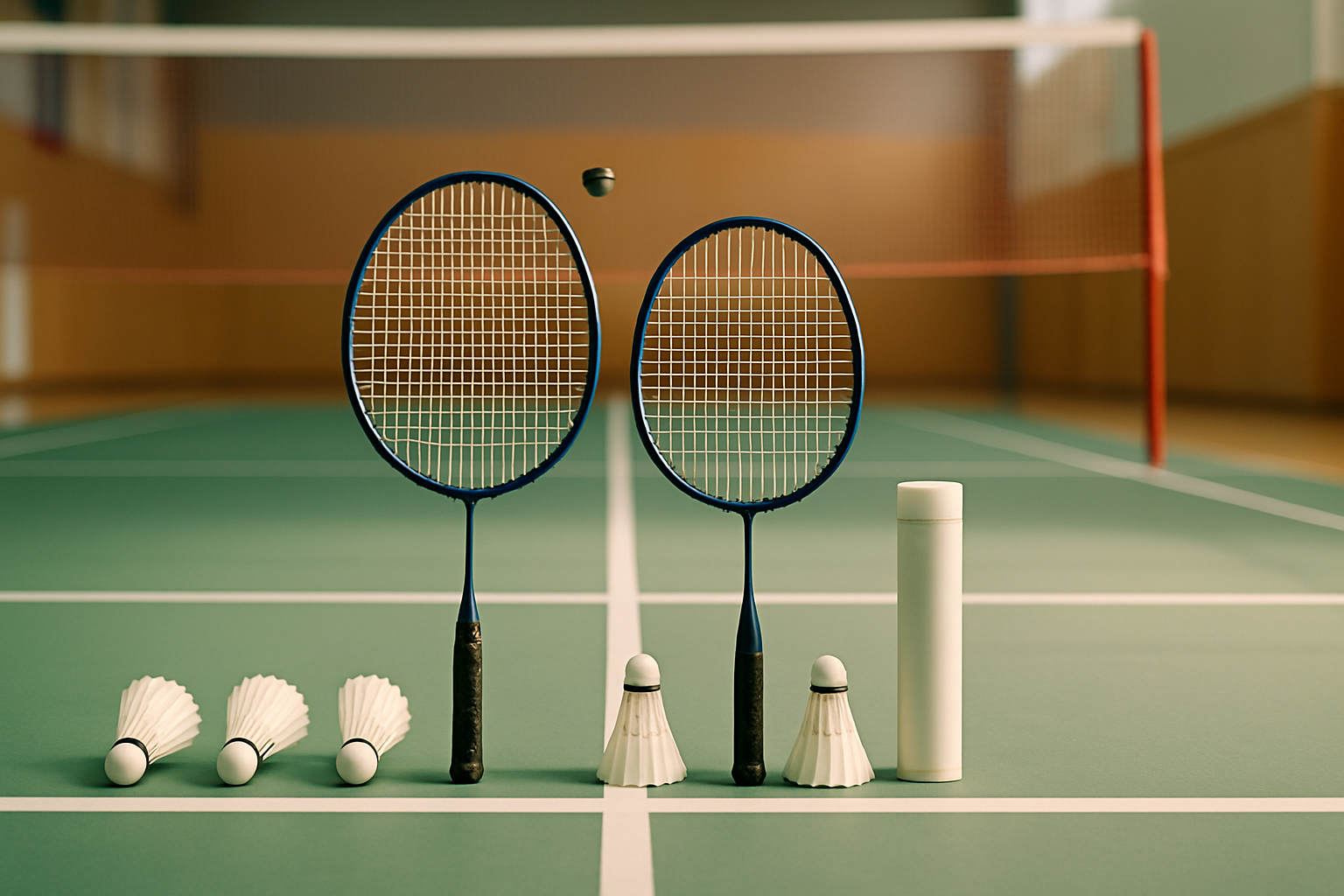
Opening a badminton studio in 2026? Here's what you'll actually spend — from flooring to lighting — across a ₹6.5–15 lakh multi-court setup.
Walk into any half-decent badminton facility in Whitefield, Baner, or Dwarka right now and you'll notice something: players have gotten picky. Purpose-built studios have been opening across these corridors for the past few years, and that's completely reset what someone expects to find on day one — proper flooring, decent lighting, equipment that doesn't feel like an afterthought. The bar has moved. If you're opening in 2026, you're not competing against the guy who threw up two courts in a warehouse basement anymore.
Budget-wise, a functional multi-court setup will run you somewhere between $8,000 and $18,000 — call it ₹6.5 to ₹15 lakh, depending on how deep you go. That money breaks down across three buckets: court infrastructure, playing equipment, and studio operations. Not equally, either. Infrastructure eats the largest share, and for good reason.
Get that part wrong and nothing else saves you.
The 10 Essentials
1. Badminton Court Flooring (PVC Sports Floor or Wooden Sprung)
Get this wrong and nothing else matters. Flooring is the most expensive line item in your entire studio build — and also the one that'll sink your reputation fastest if you cut corners. A hard or slippery surface means ankle injuries, and word travels.
For most new studios, BWF-approved PVC sports flooring is the practical choice. Yonex and Li-Ning both make branded court mats that hit the standard. If you're planning a high-volume academy (think 200+ students, back-to-back batches), wooden sprung floors are worth the higher upfront cost — the shock absorption difference is real and your players will feel it over time.
Budget somewhere between $1,500 and $5,000 per court (USD), or roughly ₹1.2 lakh to ₹4 lakh per court if you're sourcing in India.
On brands: Enlio and Sicomin PVC mats are the mid-range workhorses most suppliers are stocking right now (as of May 2026), and both are reliably available for 4-court setups without the Yonex price tag. For wooden sprung installs specifically, don't default to imported options — sports flooring contractors based in Bengaluru and Hyderabad are consistently coming in 20–30% cheaper, and the quality gap isn't what it used to be.
2. Badminton Net and Posts (Tournament Standard)
Here's something that separates a serious studio from a glorified backyard setup: the net. Players notice a sagging net in about three seconds flat — and once they do, the whole facility loses credibility.
It's not just an aesthetic thing either. BWF regulations are specific: 5 ft 1 in at the posts, 5 ft dead centre. Cheap posts drift out of that spec within a few months, sometimes sooner if they're getting moved around regularly. Suddenly your nets are drooping mid-match, rallies break down, and players start wondering what else you've skimped on.
Budget-wise, you're looking at $80–$250 per court (USD) or roughly ₹6,500–₹20,000 per court (INR). That's not where you want to cut corners.
For mid-tier reliability, the Yonex AC139 net paired with Yonex's matching posts is the default choice for most new studios — widely available, holds spec, doesn't require babysitting. If you need to bring costs down a little, Li-Ning's tournament nets are priced slightly lower and still meet industry-standard specs without any noticeable compromise in a training environment.
3. Court Line Marking (Tape or Paint)
On PVC floors, go with tape — 3M court-marking tape specifically, which is the standard most studios use. On wood, paint it permanently with any sports-grade polyurethane line paint (no need to chase a particular brand there).
Budget ₹4,000–₹16,000 per court (INR) or $50–$200 per court (USD) depending on which route you take.
The reason this can't be an afterthought: doubles lines, singles lines, service boxes — if any of these are ambiguous, you'll spend half your sessions refereeing boundary arguments instead of actually coaching. Clear lines are cheap. The time you lose without them isn't.
Tape wins on one front that paint can't match — repositioning. If your court layout ever shifts, or the tape lifts at a corner after heavy use, you fix it in ten minutes. Paint is forever, which is great right up until it isn't.
4. LED Sports Lighting (Flicker-Free, 300+ Lux)
And lighting is where a lot of new studios quietly lose credibility — not because they skimped on courts or nets, but because they installed whatever was cheap and available. Usually fluorescent tubes. Big mistake.
Here's the problem with fluorescents: at high frame rates (and your eye, tracking a shuttlecock at 300+ km/h, is essentially doing exactly that), they flicker. Visibly. Players start losing the shuttle near the net, call it a dead zone, blame their reflexes — when really it's just bad light. Don't do this to them.
The floor target is 300–500 lux, and that's the minimum for a functional recreational setup. Serious academies — the ones running competitive programmes — push to 750 lux. More even, more shadow-free, more forgiving at every corner of the court. If you're building something that's meant to last, that's your benchmark.
Budget roughly $600–$2,000 per court (USD) or ₹50,000–₹1.65 lakh per court (INR) depending on your fixture count and ceiling height.
For brands: Philips UniStrip LED and Havells sports LED highbays are the two names that keep coming up in mid-tier studio builds across India — both hit the 300+ lux threshold, both are locally stocked (so no import delays), and neither will wreck your budget the way a premium European fixture would. Solid, practical choices for most setups.
5. Shuttlecocks (Feather + Nylon Stock)
How many shuttlecocks do you actually need? Probably more than you're budgeting for right now.
A 6-court studio running 8 hours a day will chew through somewhere between 20 and 40 tubes a week — and that's not a worst-case number, that's just Tuesday. The studios that get caught short are almost always the ones that stocked only one type. You need feather shuttles for competitive players (they'll refuse to practise with anything else, and honestly they're right) and nylon for beginners and drills. Running out mid-session is the kind of thing that kills momentum and irritates coaches.
Ongoing stock will run you roughly $200–$600/month (USD) or ₹16,000–₹50,000/month (INR), depending on volume and how aggressively you negotiate with suppliers.
For brand choices: the Yonex Mavis 350 is the nylon standard at almost every coaching academy worth naming, and the Victor Champion No. 1 sits comfortably in the mid-range for feather without the price anxiety of premium tournament stock. One practical note — as of supplier listings in May 2026, ordering in 12-tube cartons drops your per-tube cost by 15–20%. Not glamorous advice, but it adds up fast.
6. Rackets (Coaching Loaner Fleet)
Picture your first trial class: twelve excited beginners walk in, and not a single one has brought a racket. That's not a problem — unless you're unprepared for it.
A loaner fleet is non-negotiable for any new studio. Aim for 10–15 rackets minimum. That range keeps trial classes running smoothly and means you're never turning away a potential student just because they showed up empty-handed.
Budget-wise, a decent starter fleet of 10 rackets will run you $150–$400 (USD) or roughly ₹12,000–₹33,000 (INR) — not a huge outlay given how much work these rackets will do.
For the actual rackets, the Yonex GR 303 and the Li-Ning Windstorm series are the go-to choices here. Both are forgiving on mishits (and beginners produce a lot of those), and they hold up reasonably well to the general punishment of loaner life — dropped, gripped wrong, swung into the floor.
One thing worth being firm about: don't put carbon-fibre premium rackets in the loaner pool. They won't survive it. Beginner play is rough on equipment in ways that are hard to overstate, and a ₹5,000 racket will be warped or cracked within a month.
7. Ball Machine / Shuttle Feeder
Here's the mistake most new studio owners make: they budget for six rackets, four nets, and premium flooring — then try to run multi-student drills with one coach and two hands. You can't feed consistent shuttles to six students simultaneously. It's physically impossible, and the training quality shows.
A shuttle feeder fixes this. Not glamorously, not expensively — it just works. Footwork drills, solo training slots, off-peak bookings you can actually sell without tying up a coach: the feeder makes all of that viable.
Budget somewhere between $300 and $900 USD (₹25,000–₹75,000 INR) depending on features and where you're sourcing from.
For mid-tier options that actually show up in real academy setups — Chennai, Hyderabad, the usual hubs — Donic Newgy and Siboasi are the two names worth your time. The Siboasi S6025 in particular (based on supplier listings as of May 2026) handles both flat and lobbed feeds with adjustable speed, which matters more than it sounds once you're running varied drill sessions.
8. Court Boundary Curtains / Backdrop Net
Shared courts without curtains between them are a session-killer. Shuttles drift across lanes constantly, play stops every few minutes, and the whole setup looks — and feels — makeshift. Backdrop curtains behind the end lines also cut down on shuttle loss, which adds up faster than most new studio owners expect.
Cost-wise: $200–$800 per court pair (USD) | ₹16,000–₹65,000 per court pair (INR).
There's no standout mid-tier brand here — and honestly, you don't need one. Most academies source directly from canvas and polyester fabricators in Surat or Ludhiana, and that's the right call. What you're looking for is 260–280 GSM polyester in dark green or black (lighter colours bounce glare straight into players' eyes). Standard stitching from a local supplier is perfectly adequate for this — it's not complicated material.
9. Scoreboard / Display (Digital or Manual)
Here's something coaches don't always think about until mid-session: you're three games in, both sides are arguing about the score, and now you've had to stop everything to sort it out. A scoreBoard — even a dead simple flip-board — prevents exactly that.
It's not just about avoiding arguments, though. A visible score adds something to the room. Players train differently when there's a number on the wall. It sounds small. It isn't.
For a new studio, you don't need to spend big here. A Nivia manual scoreboard does the job, or grab a generic 4-digit LED display off Amazon India — both fall well within the ₹4,000–₹33,000 (INR) / $50–$400 (USD) range. If you already have a spare wall-mounted TV sitting around, even better: there are several free Android scoring apps that turn it into a functional display at zero extra cost. That workaround is surprisingly popular, and honestly, it works.
Daktronics LED scoreboards are the premium end of this category — worth it if you're running regular league sessions and want the atmosphere to match. For most new studios, though? The budget options are more than adequate. Get the court right first, then upgrade the scoreboard when the membership warrants it.
10. Storage, Benches, and Changing Room Basics
Get the basics sorted before opening day: a bench area, somewhere for bags, and a changing room that doesn't make people feel like an afterthought. Steel lockers (Godrej or Nilkamal — both are standard across Chennai and Pune academies, locally sourced, reasonably priced), a few courtside benches from Cosco or any decent sporting goods supplier, and you're done. Nothing fancy required.
Cost range: $300–$1,200 (USD) | ₹25,000–₹1 lakh (INR)
Here's what's surprising: this is one of the most commonly skipped items in a new studio build. Budget goes into courts — fair enough, courts are expensive — and then players are left hunting for a corner to change in. It's a bad first impression that sticks. A functioning changing room with lockers and a proper bench area signals that you thought about the people using the facility, not just the sport happening inside it.
> If you're setting up the physical space and also trying to figure out how to actually run the place day-to-day, Best Coaching Management Software For Academies (2026) is worth a read — covers scheduling, fee tracking, and student management for everything from single-court setups to 8-court facilities.
Recommended Add-ons
Oh, and before we move on — there's a handful of add-ons that don't make the "essential" list but absolutely should be in your budget conversation.
Video analysis camera and tripod. One GoPro or an Insta360 on a tripod, stuck in the rear corner. That's it. Coaches get usable technique footage, players get something to actually watch back, and — honestly — most serious students expect this from a structured programme now. It's table stakes.
Resistance bands and agility ladders. Leave them court-side. They take up almost no space, they slot straight into warm-up routines, and a full set of mixed-resistance bands plus two agility ladders will cost you somewhere between $60 and $120 (₹5,000–₹10,000 roughly). One of the better returns per rupee spent in this entire list.
Court booking display screen. Mount a TV or tablet near the entrance showing live court availability. Your front desk staff will thank you — the constant "which court am I on?" interruptions disappear almost immediately. Most booking software already has a public display mode built in, so setup is dead simple.
A floor-standing water cooler near the court entrance does something you won't fully appreciate until you don't have one: it keeps players on the courts instead of wandering off looking for water and breaking the rhythm of timed sessions.
First-aid kit and AED unit. Non-negotiable. Full stop. An AED runs $1,000–$1,500 (₹80,000–₹1.2 lakh), which feels steep until it isn't. And by 2026, local municipal sport facility regulations in several regions are expected to mandate it anyway — so budget for it now rather than scramble later.
Shoe loaner rack. Four or five pairs of proper court shoes in common sizes, sitting near the entrance for trial students. It's a trivial cost. It prevents someone from rolling an ankle in running shoes on day one, and it quietly limits your liability in ways that are worth far more than the rack itself.
Optional Gear by Studio Style
Competitive Academy Focus
Picture this: fifteen academy players standing around waiting while you dig through your phone trying to pull up last week's match footage. That's the moment you realise a dedicated coaching video screen — tablet-mounted near the benches, not balanced on someone's kit bag — isn't a luxury. It's just sensible.
For a competitive setup, the equipment list shifts considerably. A professional ball machine with programmable drill sequences is non-negotiable; the ability to repeat the exact same feed across fifty reps is what separates structured academy training from glorified recreational play. Pair that with a wall-mounted tactical whiteboard (proper size, not the small portable kind that wobbles) and your between-game analysis sessions actually have somewhere to live.
Then there's agility testing. A timing gate system lets you run measurable sprint and movement drills — and more importantly, lets players see their own numbers improve over weeks. That feedback loop matters enormously at the academy level, where the difference between a motivated sixteen-year-old and a disengaged one is often just whether they can track their own progress.
Recreational and Social Club Focus
The biggest mistake new social clubs make? Blowing the budget on court-level gear while the lounge looks like a storage room with chairs. Your members — especially the recreational crowd who show up for the vibe as much as the game — notice that stuff immediately.
So here's where to actually put the money: proper lounge seating (not folding chairs dragged in from somewhere), a decent Bluetooth speaker setup so casual sessions don't feel like a library, and a serious bulk order of beginner-friendly shuttles. You'll burn through those faster than you think.
And don't overlook the entrance. A trophy cabinet or wall-of-fame display right where people walk in does something surprisingly powerful for a community's sense of identity — it takes time to build, sure, but it's worth planning the wall space for it from day one.
Children's Coaching Academy
Adjustable net posts are non-negotiable if you're running under-10 sessions — you need to drop that net height, full stop. Foam-tipped shuttles for the absolute beginners (the ones who've never held a racket in their lives), colourful boundary markers so kids actually understand where the court ends, and parent viewing benches along one wall. That last one matters more than people expect. Parents who can watch without hovering tend to stay calmer, and calmer parents mean calmer kids on court.
High-Performance Training Centre
Here's something most club owners don't budget for until it's too late: the gap between a good training centre and a high-performance one isn't just about court quality — it's about everything surrounding the court.
Start with lighting. You need 750+ lux minimum. Anything less and your athletes are tracking shuttle flight under conditions that actively work against them. Not ideal.
Then there's the video analysis setup — multi-angle cameras, properly positioned, so coaches can pull footage from more than one perspective. A single camera pointing down the court misses half of what matters. Get the angles right from the start, because retrofitting this later is a genuine headache.
Heart rate monitors for interval training, a dedicated strength-and-conditioning corner with resistance equipment — these aren't optional extras if you're serious about performance development. They're the difference between a studio that trains players and one that actually develops them.
All of this falls into what we'd call big-ticket territory. Don't fold these costs into your general equipment budget and wonder why the numbers don't work. Plan a separate line item for high-performance infrastructure before you finalise anything else.
Where to Buy by Region
United States
- Amazon US — honestly, it'll cover most of what you need to get started: shuttle feeders, nets, loaner rackets, the usual accessories. Flooring's the exception — that almost always means going to a specialist.
- Badminton Warehouse (badmintonwarehouse.com) — worth bookmarking if you want a proper selection of rackets and shuttles rather than whatever a general platform happens to stock.
- Sport Court Inc. — the name to know for PVC sports flooring and modular court setups. Don't expect a listed price; call or email for a quote.
United Kingdom
- Amazon UK — shuttlecocks, nets, the usual accessories. Next-day delivery means you're not scrambling when stock runs low mid-week.
- Sweatband.com — worth bookmarking if you're buying Li-Ning or Yonex in any volume. Their sale pricing on both brands comes around often enough that it's rarely worth paying full price.
Europe
- Amazon DE — if you need variety and you need it fast, this is the default. Accessories across every category, decent stock levels, and none of the hunting around you'd do with specialist retailers.
- Decathlon (decathlon.de / .fr / .es) — honestly, Perfly gear punches well above its price point. It's not premium, but for loaner rackets, starter shuttles, and beginner kits that are going to take a beating? It's hard to argue with. The .de, .fr, and .es storefronts all carry the same range, so wherever your studio is based in Europe, you're covered.
India
- Decathlon — The biggest mistake new studio owners make is ordering nets and rackets online without touching them first. Don't. Decathlon has stores in Bengaluru, Mumbai, Delhi, Hyderabad, Chennai, and Pune, and walking in lets you actually check shuttle quality, grip weight, net tension — things that matter and that no product photo will tell you. Start here.
- Amazon India — Fine for LED lighting (Philips and Havells both hold up well), scoreboards, and storage furniture. But for anything large, pull up the offline price first. You'd be surprised how often a local electrical supplier beats Amazon on Philips panels by a fair margin.
- Sports specialists worth knowing: Valson Sports in Chennai, Nivia showrooms in Delhi, Cosco Sport in Mumbai — these carry mid-to-high-tier badminton gear that most general stores simply won't stock. And if you're ordering shuttles in bulk (which you will be, constantly), skip the retailer entirely. Direct contact with Yonex or Li-Ning distributors in your city cuts costs by 10–20%. That adds up fast.
- Flooring: Here's where people consistently overpay — imported PVC court flooring ordered online, with logistics costs baked in, when local contractors do it cheaper and better. The sports flooring contractors clustered around Bengaluru's Rajajinagar industrial area and Hyderabad's Kukatpally are worth calling before you commit to anything.
Mistakes New Studios Make
1. Cheap PVC flooring to cut launch costs. Don't. Seriously — this is the one mistake that actively kills your reputation before word of mouth has any chance to build. Experienced players clock a bad floor in their first rally. They leave, they tell their club mates, and suddenly your studio is "that place with the dodgy floor." It's also the single hardest thing to rip out and redo once you're operational. Get it right before opening day. Full stop.
2. Blowing the budget on rackets, skimping on lights. This one's surprisingly common. New owners load up on premium loaner stock — convinced players care deeply about the rackets they borrow — while fitting out the ceiling with basic fluorescent tubes. Here's what actually happens: nobody complains about a mid-range loaner racket. Everyone notices when they can't track a shuttle cleanly or walk off court with a headache. Lighting is infrastructure. Racket stock is inventory. Prioritise accordingly.
3. Zero acoustic treatment. Six courts running simultaneously in an untreated hall is genuinely rough. The sound bounces everywhere — coaches are shouting over the din, players can't hear corrections, and the whole environment feels chaotic rather than professional. It doesn't take much to fix: foam panels on back walls, heavy curtains on non-court surfaces. Basic stuff, but the difference is night and day.
4. Opening without a booking system. Walk-ins work for maybe a fortnight. Then the court conflicts start. Then the double-bookings. Then an angry parent is standing at your front desk at 6pm wanting to know why his daughter's slot was given to someone else. Get a booking and fee management system live before you open — even a simple one. The free fee invoice generator from Lynk handles the essentials while you're still figuring out which full studio software actually fits your setup.
5. Buying for the courts you wish you had. Ordering shuttle feeders, locker banks, and digital scoreboards for eight courts when you're opening with three is a cash-flow problem and a storage problem rolled into one. Your equipment footprint should match your opening-day reality — not an optimistic projection. Add gear as courts fill up and revenue justifies it.
Frequently Asked Questions
How many courts do I need to make a badminton studio financially viable?
Start with four courts if you're in a Tier-1 city — that's the floor, not the ideal. Anything less and the numbers simply don't work: rent, one full-time coach, basic overheads. Four courts covers all of that. Barely, sometimes, but it covers it.
Two courts can work, but the location has to do a lot of the heavy lifting. Nagpur, Coimbatore, smaller cities where rent isn't eating half your revenue — that's where a two-court setup makes sense. Or bolt it onto an existing sports complex where the fixed costs are already shared.
Below two courts? You're not running a studio. You're running a court rental business — which is fine, but it's a different thing entirely.
Do I need BWF-certified flooring to attract serious players?
Here's what most studio owners get wrong: they assume serious players will only set foot on BWF-stamped flooring. Not true. BWF certification is really about one thing — hosting official tournaments. That's it. If you're not running sanctioned events, you don't need it.
What you do need is an anti-slip PVC sports floor that delivers consistent cushioning and the right friction underfoot. That's the actual spec that matters. Players who've been around the game a while aren't checking for a certification badge when they walk onto your court — they're feeling for grip, testing for dead spots, noticing whether the surface plays uniformly from the baseline to the net.
Brand certification is secondary. Surface quality isn't.
What's a realistic timeline from space acquisition to opening day?
How long is this actually going to take? That's the question most people are sitting with when they sign a lease and stare at an empty warehouse.
Honest answer: six to twelve weeks, if your fit-out is the standard kind — flooring, lighting, net posts, nothing more exotic than that. The thing that catches people off guard is lead time. Imported PVC court mats can take three to five weeks just to arrive, and LED lighting procurement has a habit of slipping too. Nobody tells you this until you're already behind schedule.
Add changing rooms and a reception area to the mix? Tack on another four to six weeks. Minimum. Budget more time than you think you need — and then budget a little more on top of that.
> Related reading: Equipment Checklist for a New Gym & Fitness Studio (2026) — useful if you're adding a fitness conditioning area alongside your courts.
> Running a badminton academy involves more than gear. Managing student enrolments, issuing certificates, and tracking fee payments adds up fast. Start your free trial of Lynk to handle scheduling, invoicing, and student management in one place — and use the free certificate generator to reward your players as your programme grows.