Afterschool Activities for Kids: Ideas for All Ages and Abilities
By Swathi N ·
Afterschool programs are more than a way to fill time after school. They are where children explore interests, build skills, and learn to work with others outside the classroom. For coaches, tutors, and academy owners, the challenge isn’t just running sessions—it’s keeping children engaged every day while managing limited time, space, and energy. The right mix of afterschool activities makes programs more effective, easier to manage, and more enjoyable for both students and instructors. Below is a practical list of afterschool activity ideas, along with simple principles to help you structure sessions that work across age groups and learning styles.
Afterschool programs are more than a way to fill time after school. They are where children explore interests, build skills, and learn to work with others outside the classroom. For coaches, tutors, and academy owners, the challenge isn’t just running sessions—it’s keeping children engaged every day while managing limited time, space, and energy. The right mix of afterschool activities makes programs more effective, easier to manage, and more enjoyable for both students and instructors. Below is a practical list of afterschool activity ideas, along with simple principles to help you structure sessions that work across age groups and learning styles.
Key Principles for Building Afterschool Programs
Before finalising your activity list or curriculum, it’s helpful to step back and think about how your program is structured. These principles apply whether you’re just starting out or refining an existing afterschool offering.
1. Listen to Student Feedback
Student input doesn’t always come in formal feedback forms. Often, you’ll notice what works through enthusiasm, participation levels, and energy during sessions. Pay attention to which activities children naturally gravitate toward and which ones lose momentum.
Where possible, give students limited choices—especially older children. Allowing them to vote on activities or themes creates a sense of ownership and makes them more invested in the program.
2. Plan Activities Around Time Blocks
Afterschool programs usually run on tight schedules, often between school dismissal and parent pickup times. Activities should be designed so they can be set up, completed, and wrapped up within the allotted time.
Children respond better when activities feel complete rather than rushed or abruptly cut short. Leaving buffer time also helps manage late pickups and transitions between activities.
3. Keep Expanding Your Activity Mix
Repetition can quickly lead to boredom, especially in daily or year-round afterschool programs. While structure is important, flexibility keeps programs fresh.
Many afterschool centres serve as the primary space where children explore new interests beyond academics. Introducing new activities—seasonal projects, short workshops, or rotating themes—keeps engagement high and makes your role as an instructor more dynamic.
Popular Afterschool Activities
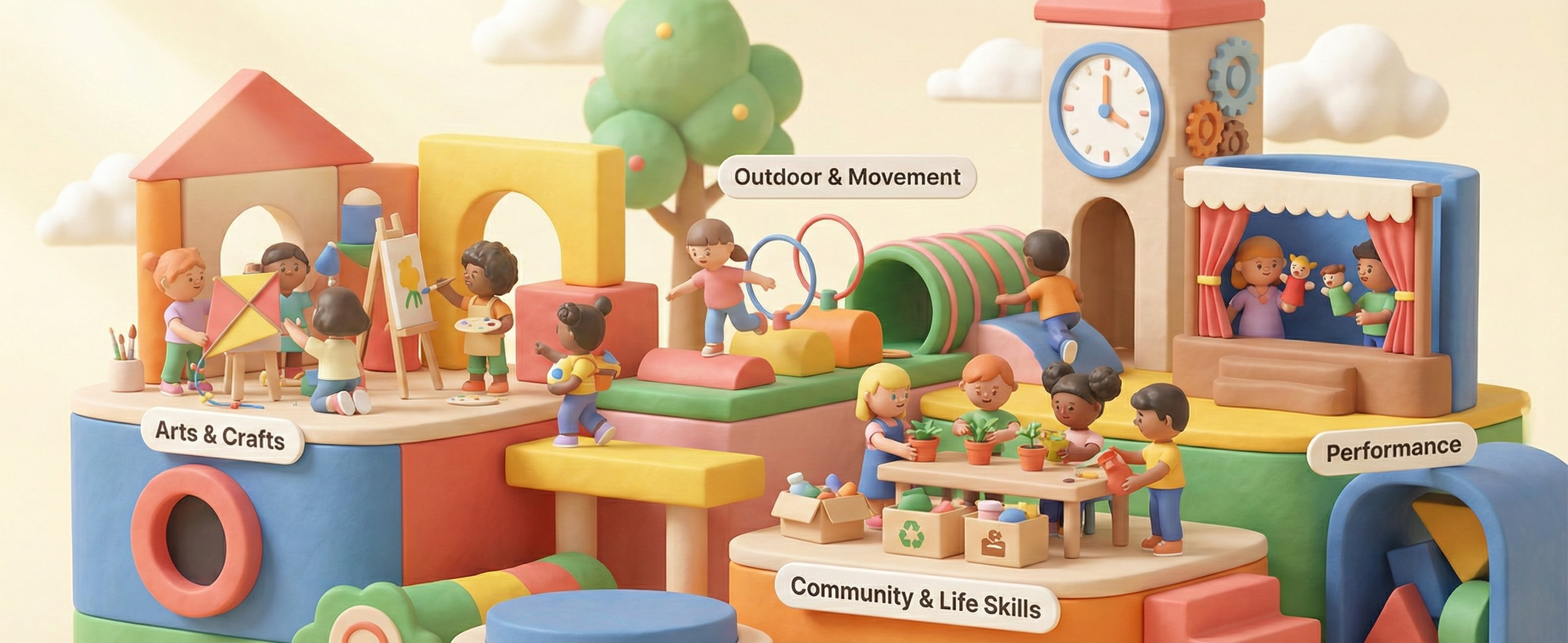
Below are activity ideas organised by category. These work well in schools, residential societies, academies, and independent afterschool centres.
Arts and Crafts Activities
Creative activities help children express themselves while improving focus and fine motor skills.
1. Homemade Kites
A classic activity with an twist. Children can design and build paper kites while learning basic concepts of balance and aerodynamics.
2. Chalk Art
Using outdoor spaces for chalk drawing encourages creativity and collaboration. Themes can change weekly to keep it fresh.
3. DIY Snow Globes or Terrariums
Using jars, water, glue, and decorative elements, children can create miniature worlds that they proudly take home.
4. Story Creation and Illustration
Ask students to write and illustrate short stories individually or in groups, then share them with the class.
Outdoor and Movement-Based Activities
Physical play is essential after long hours of sitting in classrooms.
5. Obstacle Courses
Use cones, ropes, chairs, and mats to design simple courses that promote agility, balance, and teamwork.
6. Nature Exploration
Encourage children to observe plants, insects, and birds around them. Keeping a small observation journal adds a learning element.
7. Sports Skill Games
Short drills in football, cricket, badminton, or athletics work well for mixed-age groups when structured as games rather than formal training.
Community and Life Skills Activities
Afterschool programs are a great space to build empathy and responsibility.
8. Acts of Kindness Projects
Children can create thank-you cards, help organise shared spaces, or plan small initiatives to help their community.
9. Donation Drives
Simple drives for books, clothes, or stationery help children understand social responsibility in an age-appropriate way.
Game-Based Activities
Games help build teamwork, communication, and problem-solving skills.
10. Indoor Bowling or Target Games
Using bottles or soft balls, children can set up their own scoring systems and compete in teams.
11. Guess the Character
Similar to charades, children act out characters or professions while others guess using yes-or-no questions.
12. Drawing and Guessing Games
Pictionary-style games work well across age groups and encourage creativity and quick thinking.
Writing and Performance Activities
These activities build confidence and communication skills.
13. Letter Writing
Children write letters to family members or friends, learning structure, expression, and empathy.
14. Theme Days
Choose themes like space, animals, festivals, or professions and plan activities around them.
15. Puppet Shows and Skits
Children create simple puppets and perform short stories, encouraging collaboration and storytelling.
Managing Afterschool Programs Smoothly
As afterschool programs grow, managing schedules, batches, attendance, and communication can become challenging. This is where having the right operational support matters.
Lynk is designed to help coaches and academy owners manage their programs more efficiently—by organising batches, tracking attendance, sharing updates with parents, and keeping day-to-day operations structured. When administrative work is streamlined, instructors can focus more on delivering engaging activities and improving student experiences.
Final Thoughts
Strong afterschool programs are built on thoughtful planning, variety, and consistency. By offering a mix of creative, physical, social, and reflective activities, you create an environment where children look forward to coming back each day.
With clear structure and the right tools in place, afterschool programs can grow sustainably while continuing to make a meaningful impact on children’s learning and development.